
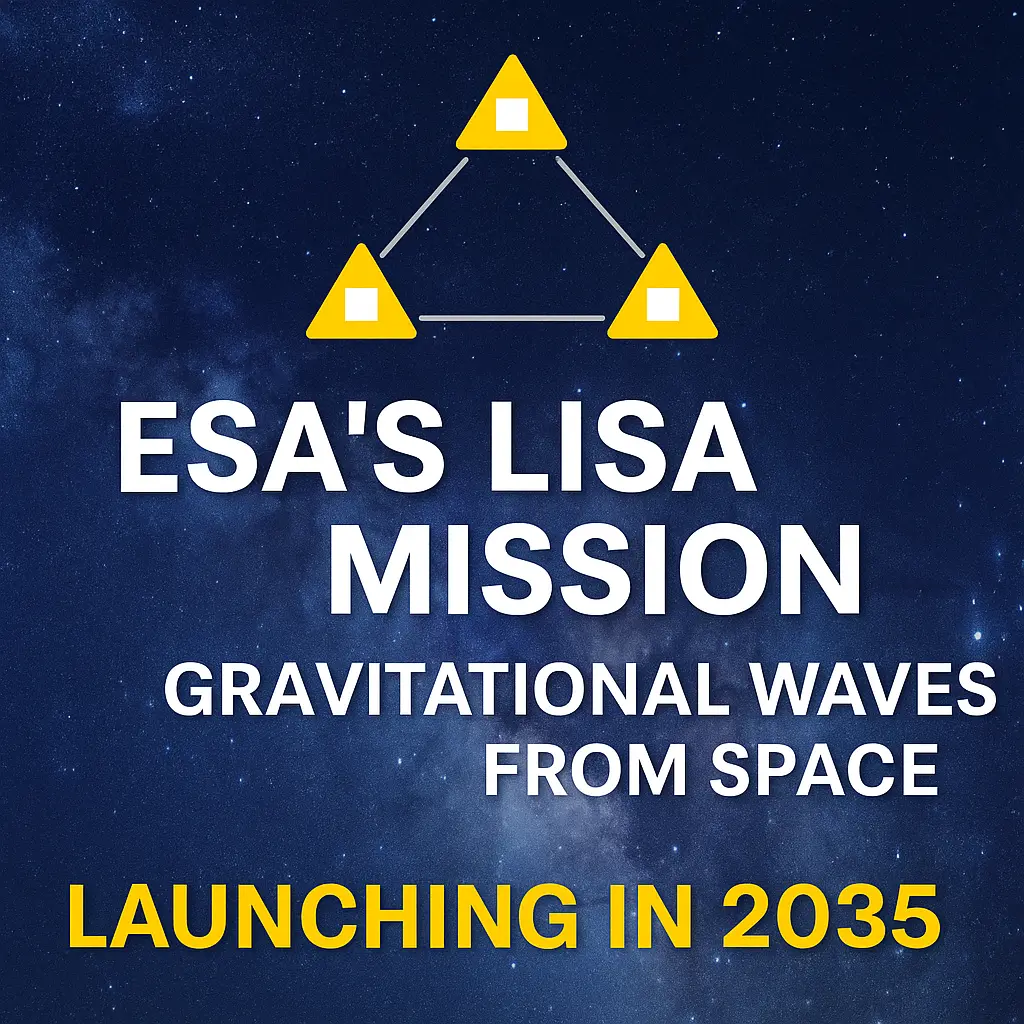
ESA’s LISA Mission: Unveiling Gravitational Waves from Space
Discover how ESA’s Laser Interferometer Space Antenna (LISA) will transform our understanding of the Universe.
ESA’s LISA Mission: Unveiling Gravitational Waves from Space Read More »
Home /
Articles About /
Physics
From solar storms that could knock out the internet to the gravitational waves rippling across the universe, this is where SpaceInfo Club tracks the physics behind everything that happens in space. Coverage spans space weather, radiation, planetary science, and the missions built to study them.
Also filed under Astronomy Space Exploration History
Discover how ESA’s Laser Interferometer Space Antenna (LISA) will transform our understanding of the Universe.
ESA’s LISA Mission: Unveiling Gravitational Waves from Space Read More »
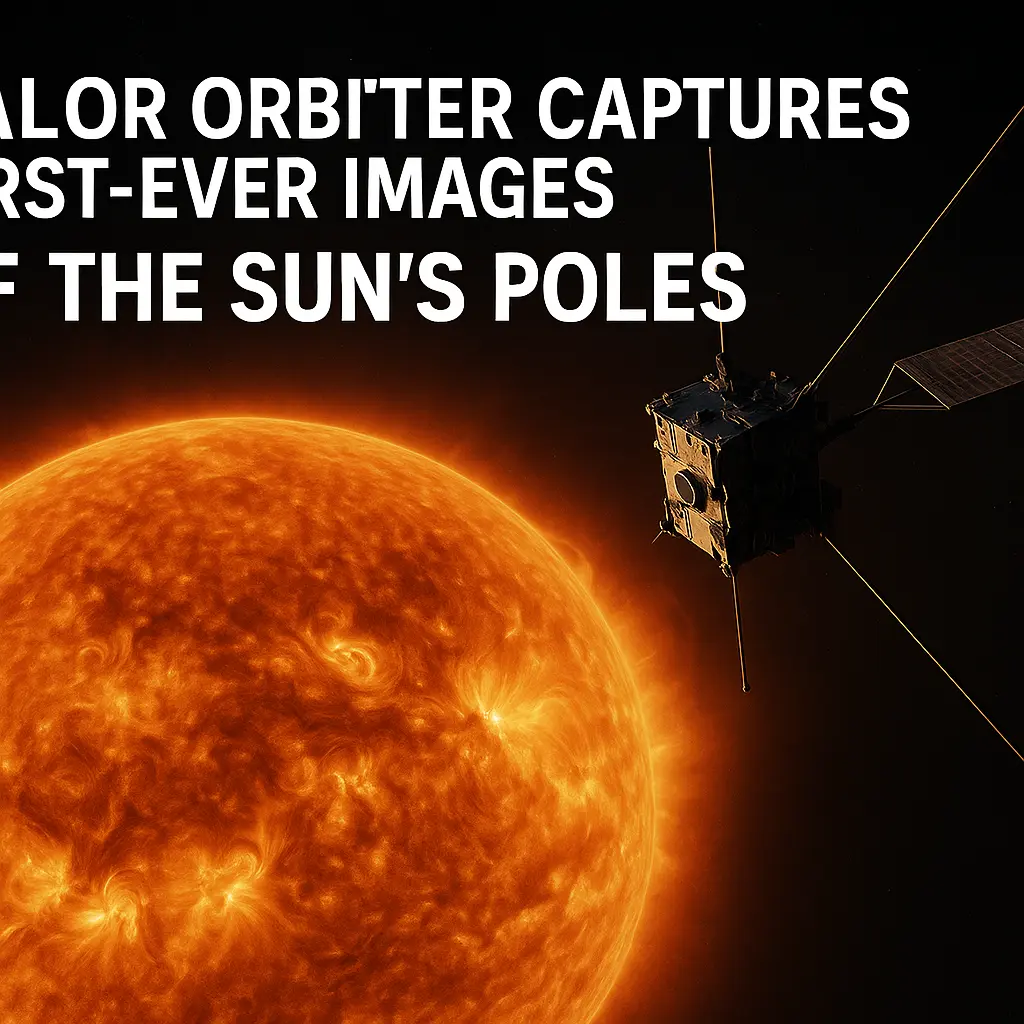
The ESA-led Solar Orbiter mission has made history by capturing the first-ever images of the Sun’s polar regions—a view never seen before!
Solar Orbiter Opens New Frontier with First-Ever Views of the Sun’s Poles Read More »
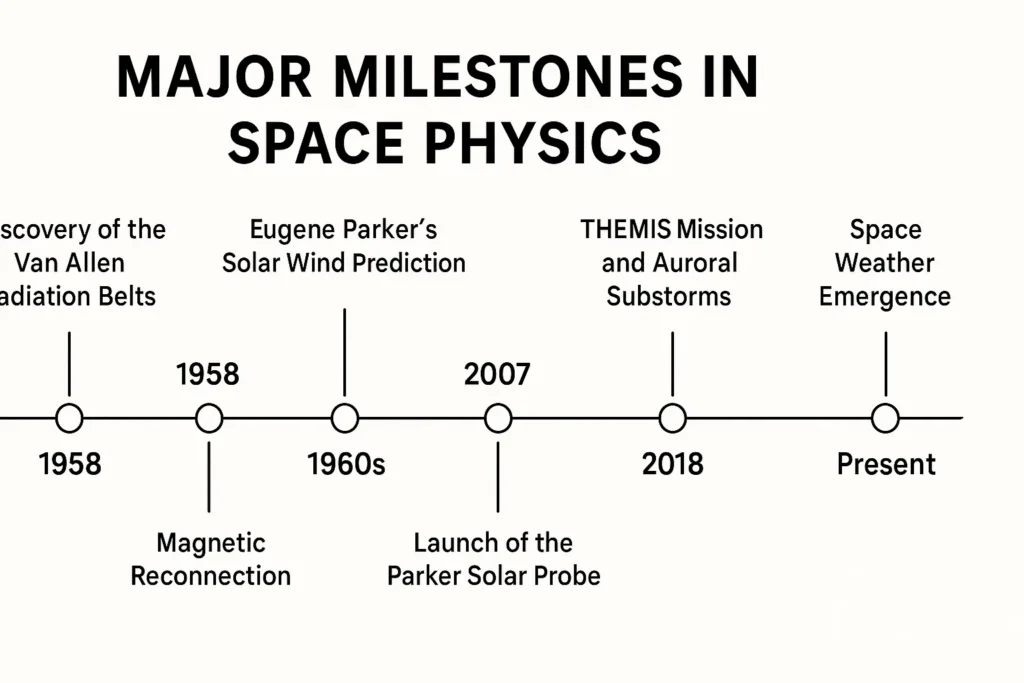
Space physics is a vital subdiscipline of astrophysics and geophysics, focusing on the behavior of plasma in space environments—particularly around the Earth, the Sun, and throughout the solar system. It informs critical research in areas such as space weather, planetary magnetospheres, and solar-terrestrial interactions. Over the past century, pioneering theoretical frameworks and revolutionary satellite missions
A Historical Perspective on Key Discoveries in Space Physics Read More »
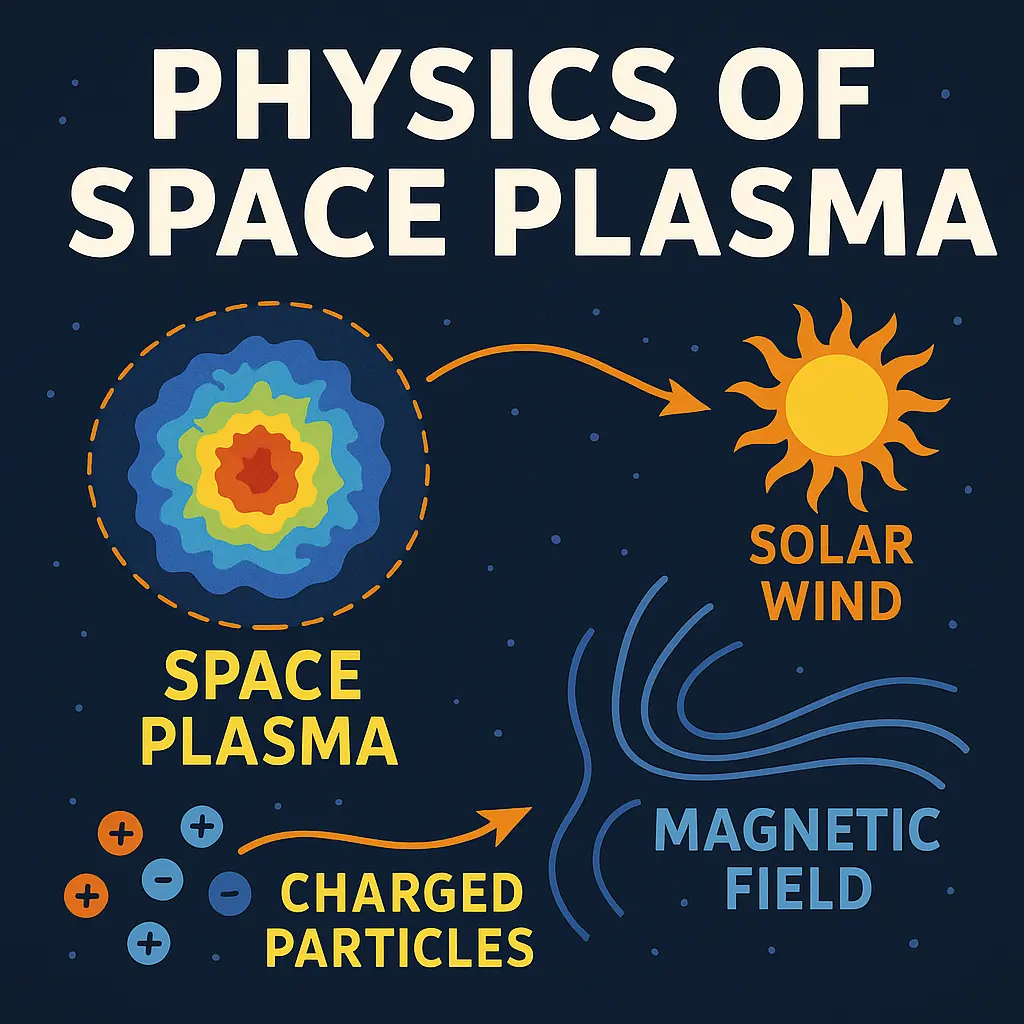
From shaping planets to driving the Sun’s activity, plasma is a force both powerful and pervasive.
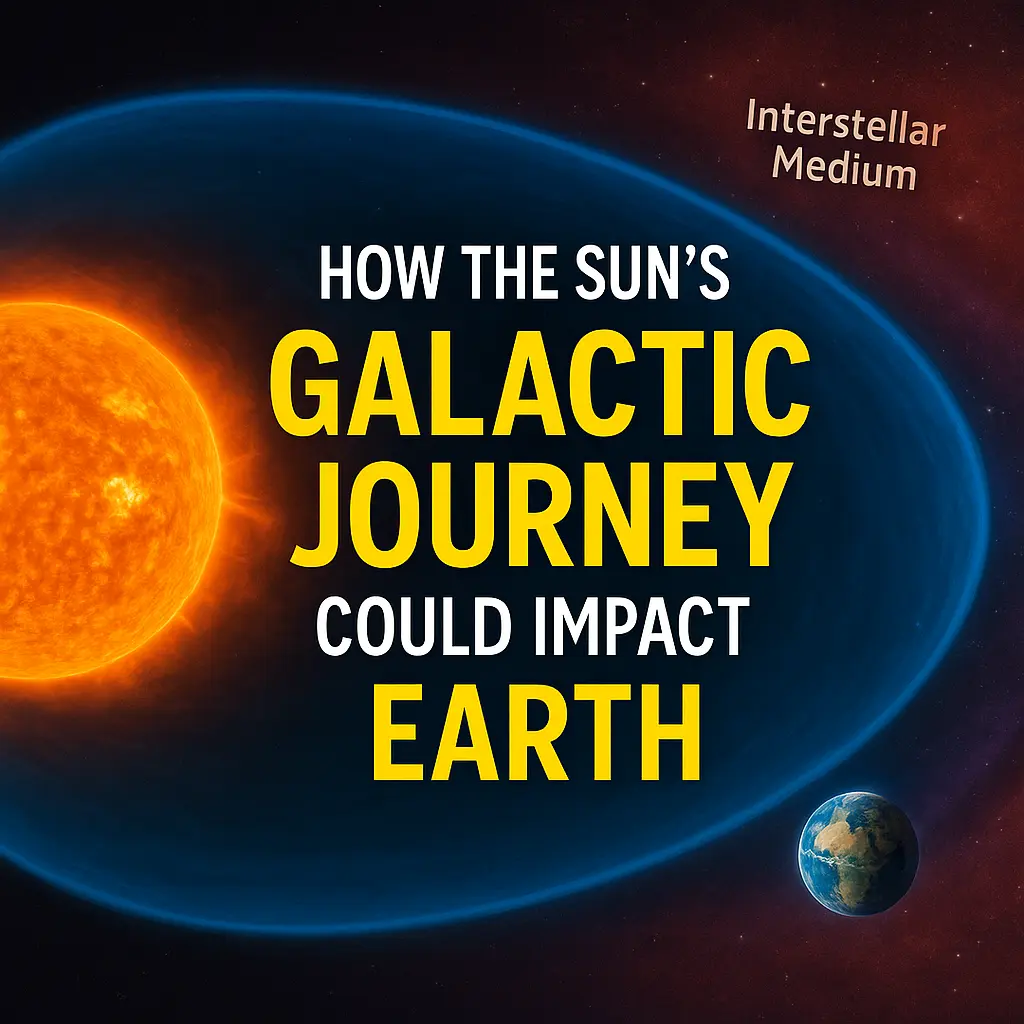
As the Sun travels through the galaxy, it moves through clouds of interstellar gas and dust — and this journey could reshape the protective bubble around our solar system: the heliosphere.
How the Sun’s Journey Through Space Could Affect Earth Read More »
The Halloween Storms of October–November 2003 represent one of the most significant space weather events of the 21st century. Marked by a series of intense solar flares, coronal mass ejections (CMEs), and widespread geomagnetic disturbances, these storms severely impacted satellite operations, communication systems, power infrastructure, and aviation. This article provides a comprehensive overview of the
The Halloween Storms of 2003: A Landmark Event in Space Weather History Read More »
In March 1989, a powerful solar storm underscored the vulnerability of modern technological infrastructure to space weather. This geomagnetic storm, triggered by a massive solar eruption, caused significant disruptions on Earth, including a major power outage in Quebec. It remains one of the most impactful space weather events in recorded history. 🌞 Solar Origins The
The March 1989 Geomagnetic Storm: A Wake-Up Call from Space Read More »
The May 1921 geomagnetic storm, also known as the “New York Railroad Storm,” ranks among the most intense space weather events recorded in the modern era. Despite its severity and widespread impact on telegraph systems, railroad infrastructure, and communication technologies, it remains underrepresented in public discourse and academic literature.
The May 1921 Geomagnetic Storm: A Forgotten Threat from the Sun Read More »
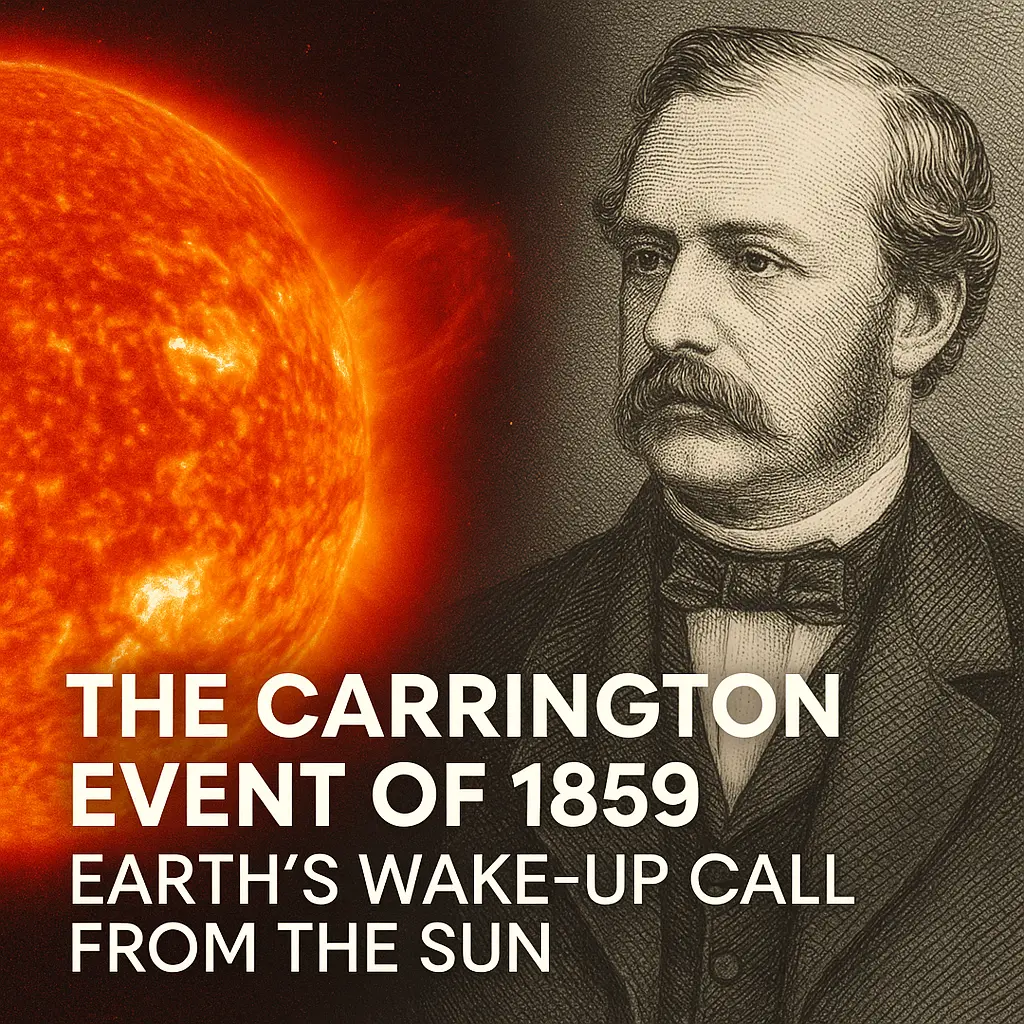
Earth was bombarded by a massive coronal mass ejection (CME), a vast burst of solar plasma and magnetic field that traveled from the Sun to Earth at an unusually high speed.
The Carrington Event of 1859: Earth’s Wake-Up Call from the Sun Read More »
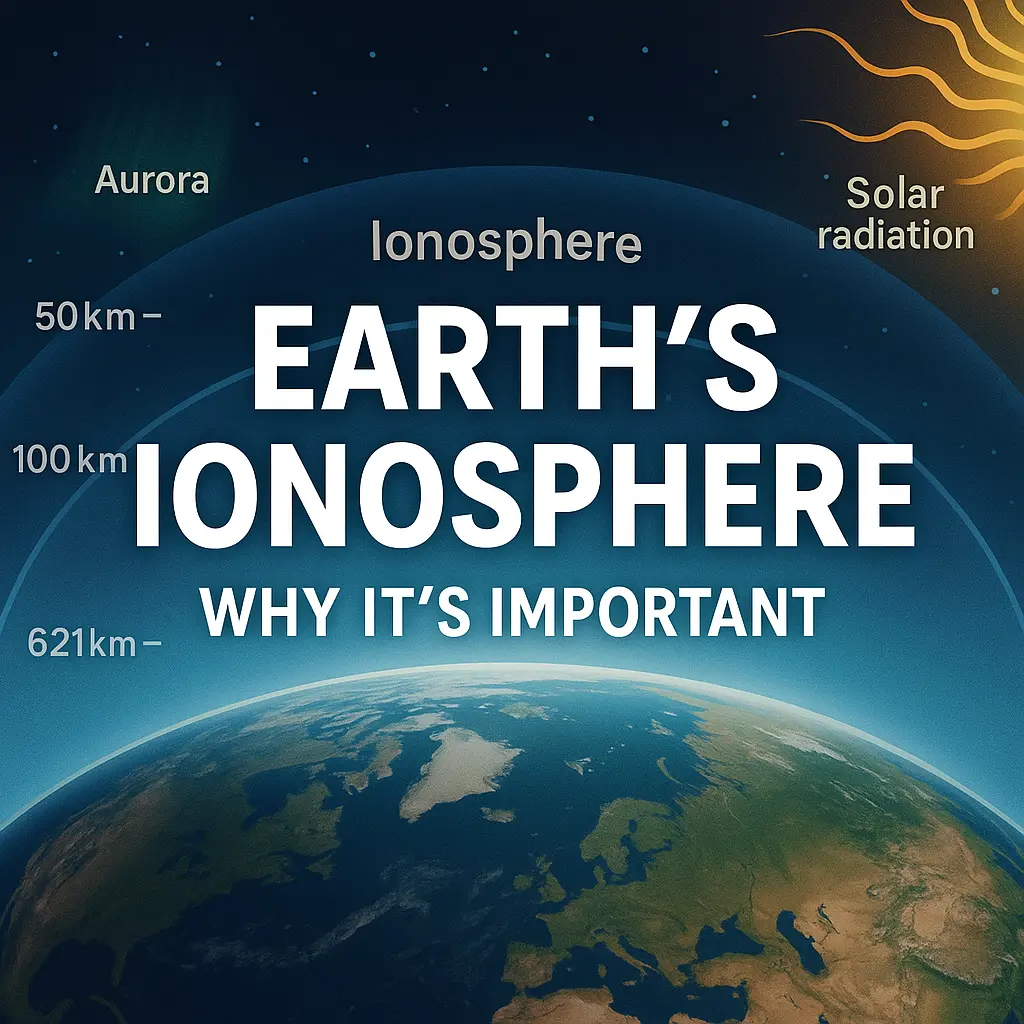
The Earth’s ionosphere is a crucial layer of our atmosphere, playing an essential role in protecting life on Earth and facilitating global communications. Stretching from approximately 50 km (31 miles) to 1,000 km (621 miles) above Earth’s surface, the ionosphere is a region where solar and cosmic radiation ionizes atmospheric particles, creating a highly dynamic
Earth’s Ionosphere: A Vital Atmospheric Layer Read More »