
Join the mailing list Free weekly briefing, no spam.
Italian aerospace startup Spacewear has announced a major breakthrough in advanced textile engineering: a new high-performance fabric capable of withstanding extreme doses of gamma radiation. The material will serve as a core component of the company’s upcoming spacesuit platform, the Smart Flight Suit 3 (SFS3)—the latest evolution of its astronaut-grade protective apparel.
According to the company, the textile underwent months of testing within laboratories operated by Italy’s National Research Council (CNR). During these experiments, the material preserved its mechanical and molecular integrity even when exposed to radiation levels reaching 100,000 Gy. For comparison, local radiation peaks during the 1986 Chernobyl disaster measured around 100 Gy per hour—a thousandfold lower than the doses the Spacewear textile endured.
This unprecedented resilience places the material among the most stable radiation-resistant textiles currently under evaluation for extreme environments, from deep-space missions to high-altitude aviation.
“This result represents a fundamental step toward the next generation of safe, lightweight and sustainable space suits,” said Corinna Sperandini, CEO of Spacewear. “We are building materials designed for interplanetary exploration, but also to enhance quality, safety, comfort and integrated design for next-generation technical apparel here on Earth.”
Shielding Astronauts From the Moon’s Most Persistent Hazard
In parallel with its radiation-proof textile, Spacewear is pursuing research on new fabrics engineered to mitigate one of the most underestimated dangers of lunar exploration: lunar dust.
Sharp, abrasive and electrostatically adhesive, moon dust is notorious for infiltrating suit joints, coatings and life-support interfaces. NASA has long identified it as one of the primary engineering challenges for sustained lunar surface operations.
Spacewear’s research team is developing material solutions specifically tailored to resist and repel these particles. These innovations will directly feed into future new-generation lunar suits, enhancing durability, comfort and mission safety.
Space Technology as Downstream Innovation
Beyond its contributions to human spaceflight, Spacewear aims to transfer its aerospace know-how into downstream applications, particularly in the aeronautical and technical-wear sectors.
Materials and equipment engineered for orbital or interplanetary environments are being repurposed for high-performance, Earth-based uses—creating aviation gear and technical apparel with superior comfort, flexibility and protection. Remarkably, these innovations maintain a strong commitment to eco-sustainability, relying predominantly on natural raw materials despite their high-tech performance profile.
“Our vision is to create an innovation pipeline that connects space and Earth,” added Sperandini. “Materials and equipment designed for astronauts today may become part of everyday life for ordinary people tomorrow.”
A Rising Italian Leader in Advanced Textiles
With this latest achievement, Spacewear reinforces its position as a leading Italian innovator in smart materials and advanced textile research. The company continues to cultivate collaborations with scientific institutions and research centers, while keeping sustainability and practical utility at the core of its mission.
Images provided by the company include:
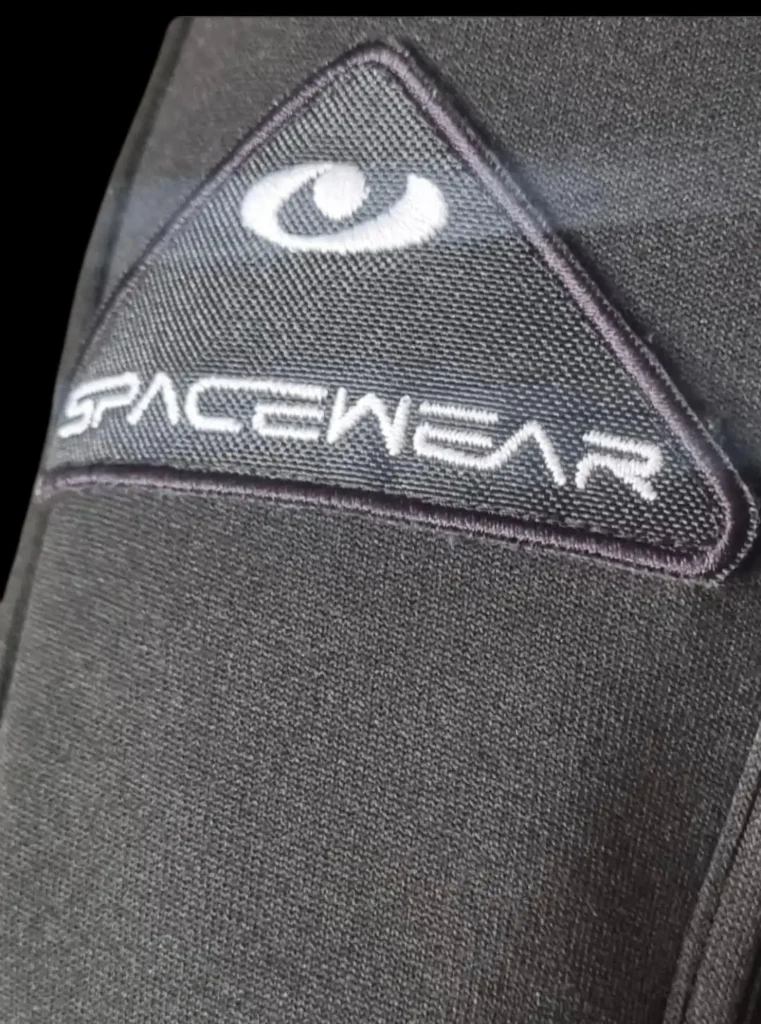
- a detailed view of Spacewear’s newly developed material
- the Spacewear SFS2 spacesuit displayed at the award-winning Italy Pavilion at Expo Osaka 2025
As global interest grows in lunar missions, private spaceflight and human-rated exploration systems, breakthroughs like Spacewear’s radiation-resistant textile highlight the crucial role of materials science in shaping the future of space exploration—and in inspiring the next generation of high-performance technical apparel back on Earth.