
Space Law Interview: Alexandra Dolce, Esq.
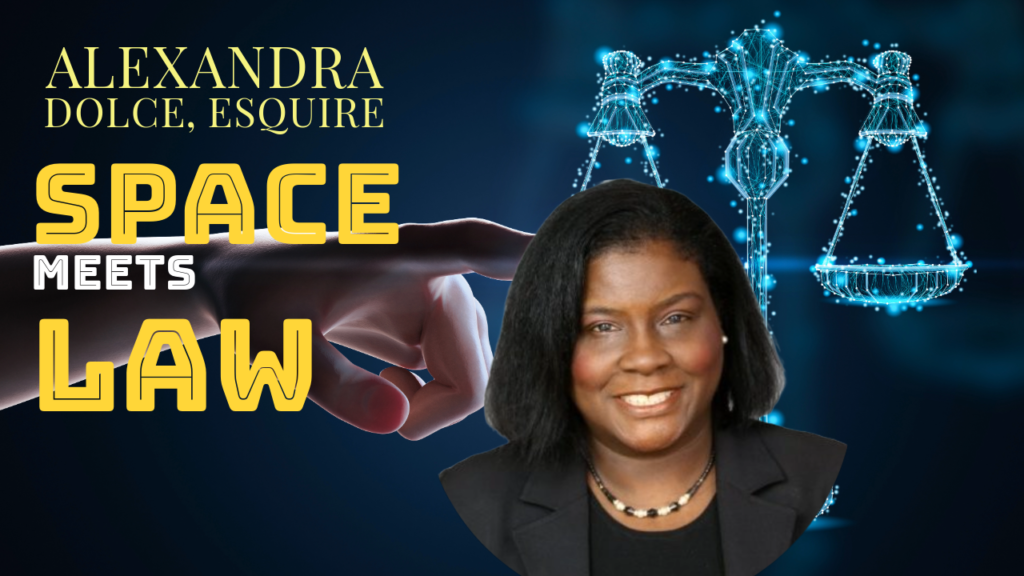
Space Meets Law
Alexandra Dolce, Esq. is Senior Legal Consultant in the Procurement Department of the New York City Housing Authority (NYCHA), an expert and a reference point in her field. She has recently joined the Institute on Space Law and Ethics of For All Moonkind, and in this interview she tells us what space law looks like as spaceflight becomes more commercial.
Key Takeaways
- Alexandra Dolce says space law is not growing as fast as space exploration and technology, at least in the United States, with “main gaps” remaining around commercial activity in outer space.
- An open legal question she raises: whether the duty of care applied to negligence in space travel and tourism will be higher or lower than on Earth.
- In her view the Outer Space Treaty, built on peace and cooperation, did not anticipate commercial activity, and updated legislation is “definitely needed”.
At a Glance
- Role
- Senior Legal Consultant, Procurement Department, New York City Housing Authority (NYCHA)
- Space law
- Institute on Space Law and Ethics, For All Moonkind (recently joined)
- Based in
- New York City, United States
- Focus
- Legal frameworks of commercial spaceflight
About the Interview
Space law is a relatively new branch of the legal field, even though the discipline has existed since the beginning of human space exploration. We asked Alexandra three questions on where it stands today: the gaps around commercial activity, the legal and ethical questions raised by private space companies, and whether the Outer Space Treaty still fits the way we use space.
The Interview
Space Law is a relatively new branch in the field, even though from the very beginning of human exploration of Space this discipline has existed. Can you provide an overview of the current state of space law and its evolution over the years, especially in light of recent advancements in space exploration and technology?
Believe it or not, space law is not growing as fast as the recent advancements in space exploration and technology, at least in the United States. There have been some advancements recently (Orbital Sustainability Act), however, overall there are main gaps that need to be addressed and filled in reference to commercial activity in outer space.
As space activities become more commercialized, what legal challenges and ethical considerations arise in regulating private space companies and their interactions in outer space?
There are so many, I could spend the whole day talking about this. Some legal considerations are whether the level of scrutiny will be the same for activities in outer space as compared to their earthly counterparts. For example, how will negligence be assessed under the purview of space travel and tourism? In other words, will the duty of care standard be increased or decreased based on the fact that outer space is novel territory. This is one example. I could think of many more.
The Outer Space Treaty is a foundational document for space law. How well do you think it has adapted to the changing landscape of space activities, and are there areas that may need revision or improvement?
The Outer Space Treaty (“OST”) has not adapted to the changing landscape of current space activity. Remember the OST was promulgated way before commercial space activity and the level of technology we have and use today existed. Therefore, it did not anticipate and doesn’t make room to anticipate commercial activity. The OST is a treaty based on peace and cooperation. Profit and peace are not always friends, and many times don’t cooperate. Updated legislation to address a myriad of legal issues and potential legal issues is definitely needed.
This interview was first published as a preview of a longer article in the SpaceInfo Magazine.
Editorial note. This interview was conducted by The SpaceInfo Club. Answers are published as provided by the interviewee and reflect their personal views. Spotted an error or want to suggest a correction? Contact us.