
Episode 1 of 4 · From Earth to Space
From Migrations to Deliberate Exploration
Why do we venture beyond familiar worlds?
In the first of four episodes, Prof. Alfonso Giordano questions a familiar story: that humans explored out of necessity first and out of curiosity later. A political and economic geographer at Luiss University in Rome, he looks at the dispersal of Homo sapiens, Polynesian wayfinding and the ancient Mediterranean, then asks what is really driving us towards the Moon and Mars.
This series is a written Q&A. Prof. Giordano wrote the answers in English for The SpaceInfo Club, and we publish them as submitted. The summary, key takeaways, FAQ and sources are editorial additions by The SpaceInfo Club.
Key Takeaways
- Migration and exploration are different things. People can migrate along familiar routes without discovering anything, and explore without settling.
- Climate pressure has no single outcome. Hazards can lead to forced displacement, adaptive migration or immobility, depending on resources, institutions, networks and technology.
- The dispersal beyond Africa was gradual. It unfolded along different routes and in several phases over tens of thousands of years, not as one expedition.
- Distance depends on capability. An ocean can be a barrier for one society and a corridor for another. In space, accessibility also depends on technology, orbital dynamics and infrastructure.
- Reaching, operating and settling are separate achievements. Giordano sees no demographic case for treating the Moon or Mars as alternatives to Earth. Today’s missions rest on curiosity, technological ambition, economic interests and geopolitical competition.
1. You have spent much of your academic career studying population and migration. Did human exploration begin as a response to necessity?
I would be cautious about that idea, partly because migration and exploration are not quite the same thing. People can migrate along familiar routes without seeking to discover anything new, just as they can explore unfamiliar environments without intending to settle there.
In studying population and migration, I have come to recognise climate change as an increasingly important driver of human mobility, particularly where it undermines livelihoods or forces people to leave their homes. But acknowledging its significance does not mean assuming that environmental pressures produce the same responses everywhere. Climate-related hazards can trigger forced displacement, encourage migration as a form of adaptation, or leave vulnerable populations unable to move. Economic resources, demographic dynamics, institutions, social networks and technological capabilities influence these different outcomes. Understanding human mobility therefore requires us to consider both the capacity to move and the possibility of remaining safely in place.
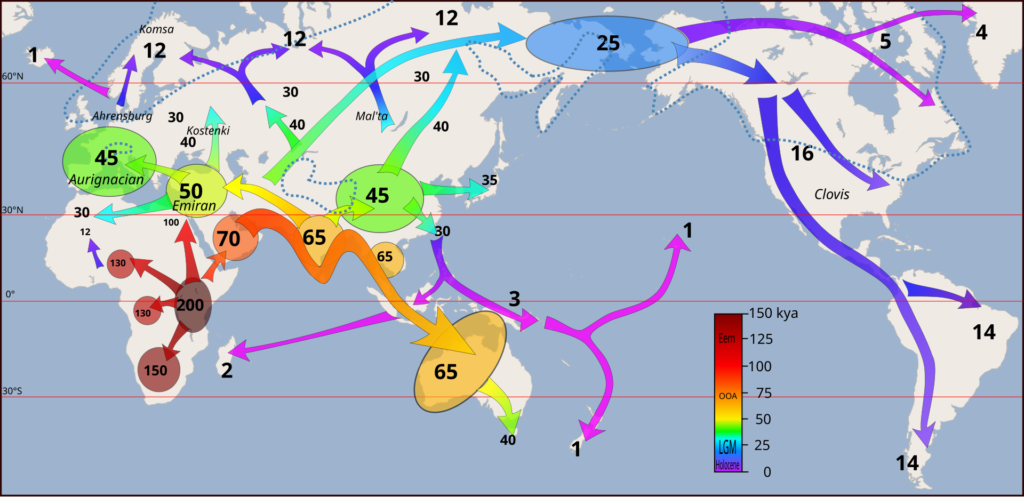
Consider the dispersal of Homo sapiens beyond Africa. This was not a single expedition or a linear journey into the unknown. It involved complex movements, occurring through different routes and phases over tens of thousands of years. Much of this expansion took place gradually, across generations, as populations adapted to changing environments and extended their geographical range.
What interests me is the interaction between population, environment and human agency. Geography shapes opportunities and constraints, but it does not predetermine human choices. The same environmental pressure may encourage movement in one society and adaptation in another.
This is also why I would resist the idea that exploration follows an inevitable historical progression from necessity to curiosity. Human mobility has always involved different combinations of constraints, opportunities, ambitions and choices. We should keep that complexity in mind when we turn our attention to outer space.
2. What can Polynesian navigation and ancient Mediterranean exploration teach us about how humans expand into new geographical spaces?
These examples are especially interesting because they show that exploration depends not only on the desire to move, but also on the ability to make distant places accessible.
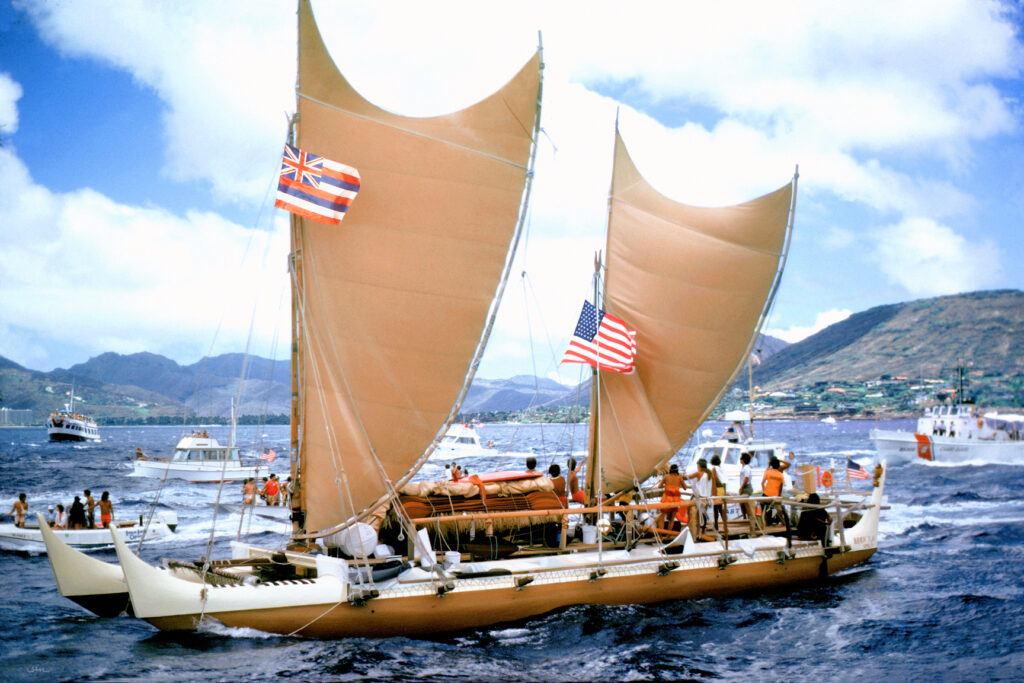
Polynesian navigators crossed enormous stretches of the Pacific through an extraordinary understanding of stars, winds, ocean swells and other environmental signals. Many of these voyages were deliberately planned, rather than accidental journeys carried by currents. Navigators transported people, food plants and animals, making it possible to establish communities on distant islands.
We should nevertheless be cautious about assigning a single motivation to these movements. The precise combination of social, economic and political circumstances that encouraged particular voyages is not always recoverable from the historical and archaeological evidence. What is clear is that exploration required sophisticated knowledge, technological capabilities and collective organisation.
The ancient Mediterranean offers a complementary example. Phoenician and Greek maritime activities connected ports, settlements and commercial networks across an increasingly interconnected sea. Trade, migration, political ambitions and the establishment of new communities interacted with one another. These were not simply journeys into empty spaces: they also involved encounters, exchanges and conflicts with populations already living in the territories concerned.
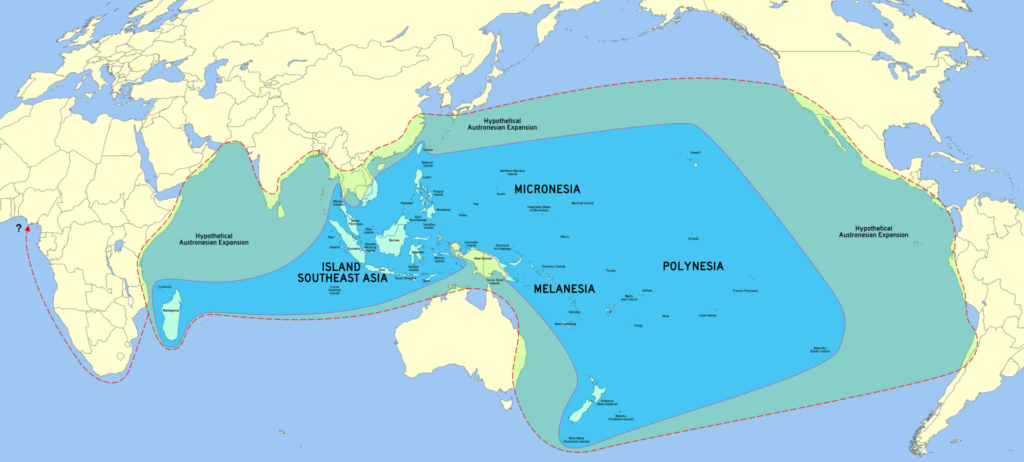
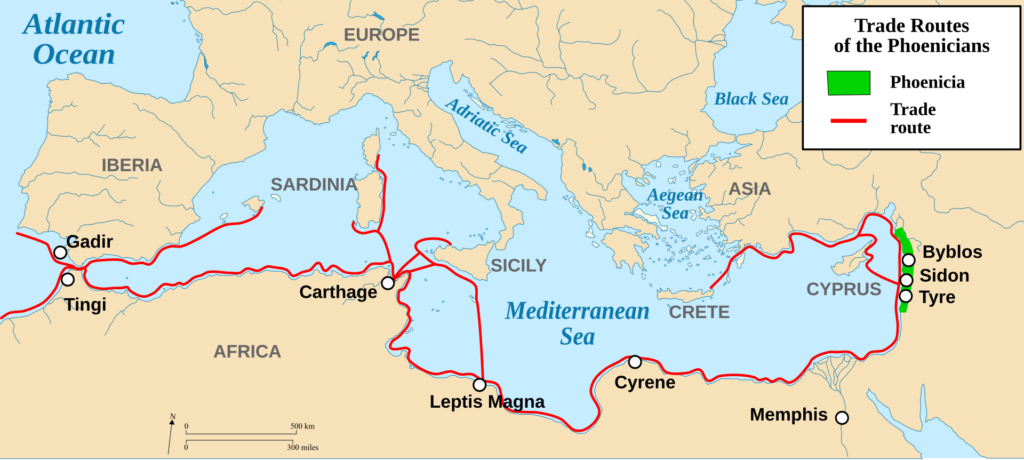
What I find particularly revealing is how exploration changes the geographical meaning of distance.
An ocean may represent a formidable barrier for one society and a corridor of communication for another. The physical distance remains the same, but its practical significance changes as knowledge, technologies and networks develop.
This is a valuable lesson for understanding space exploration. Even beyond Earth, geographical accessibility cannot be reduced to kilometres. It also depends on technological capabilities, orbital dynamics, infrastructure and the organisation of human activities. Reaching a destination is therefore not simply a question of how far away it is, but of the means and relationships that make it accessible.
3. Today, as humanity looks towards the Moon and Mars, are we exploring out of necessity or by choice?
I would begin by distinguishing necessity from the reasons we use to justify exploration.
From a demographic perspective, there is no convincing argument for treating the Moon or Mars as alternatives to Earth. Extraterrestrial settlements cannot realistically be considered solutions to terrestrial population pressures or environmental crises under foreseeable technological and economic conditions. Even a limited human presence on either celestial body requires complex systems for protection, energy, water, food and life support.
Some advocates of space settlement propose another argument: establishing a self-sustaining human presence beyond Earth could eventually provide a safeguard against catastrophic threats to our civilisation. This is a legitimate subject for discussion, but it remains a long-term proposition whose feasibility has yet to be demonstrated, rather than an established necessity driving human migration today.
Space exploration is currently shaped by a combination of scientific curiosity, technological ambition, economic interests and geopolitical competition. In that respect, some motivations are familiar from the history of terrestrial exploration, although the environmental conditions and political contexts are profoundly different.
There is, however, a distinction I consider essential: reaching a place, operating there and establishing a lasting human presence are three very different achievements.
This is particularly important from an exogeographical perspective. The question is not simply whether humans can reach the Moon or Mars, but under what environmental, technological and organisational conditions they might sustain activities and eventually establish settlements there.
And beyond technical feasibility, we must also consider who would participate in these activities, how access and opportunities would be distributed, and which political and institutional arrangements might emerge.
History does not provide a blueprint for humanity’s future beyond Earth. But it teaches us something fundamental: exploration is never only about discovering new places. It is also about how societies acquire the capacity to reach them, transform their relationships with them and, sometimes, make them part of their lived world.
Frequently Asked Questions
Did human exploration begin as a response to necessity?
Prof. Giordano is cautious about that idea. In his view migration and exploration are not the same thing, and environmental pressure produces different responses in different societies: displacement in some cases, adaptation in others, and in others no possibility of moving at all.
What can Polynesian navigation teach us about space exploration?
That exploration depends on the ability to make distant places accessible. Polynesian navigators read stars, winds and ocean swells, and carried people, food plants and animals to establish communities on distant islands. Giordano draws the parallel that accessibility beyond Earth depends on technology, orbital dynamics, infrastructure and organisation, and not on kilometres alone.
Are the Moon and Mars alternatives to Earth for a growing population?
From a demographic perspective, Giordano sees no convincing argument for that under foreseeable technological and economic conditions. Even a limited human presence needs complex systems for protection, energy, water, food and life support.
What is exogeography?
Exogeography studies the relationship between humans and extraterrestrial environments, including the planning of habitable space on other celestial bodies. Giordano coordinates SPHERE, the Luiss research unit that applies it to space policy. Source: Luiss SPHERE.
Sources and Further Reading
- Groucutt, H. S., Petraglia, M. D., Bailey, G. et al. (2015). Rethinking the dispersal of Homo sapiens out of Africa. Evolutionary Anthropology, 24(4), 149–164. doi:10.1002/evan.21455
- Wilmshurst, J. M., Hunt, T. L., Lipo, C. P. and Anderson, A. J. (2011). High-precision radiocarbon dating shows recent and rapid initial human colonization of East Polynesia. PNAS, 108(5), 1815–1820. doi:10.1073/pnas.1015876108
- IPCC (2022). Climate Change 2022: Impacts, Adaptation and Vulnerability. Working Group II, Chapter 7: Health, Wellbeing and the Changing Structure of Communities. ipcc.ch
- Smithsonian Ocean (n.d.). Circumnavigating our Changing Oceans, on the voyaging canoe Hōkūleʻa and its 1976 voyage from Hawaiʻi to Tahiti. ocean.si.edu
- Giordano, A. (2025). The new space age. Integrating social sciences and humanities in policy-making. Luiss CISS-SPHERE Policy Report No. 1. doi:10.13140/RG.2.2.29068.37768/1