Sebastiano from SpaceInfo Club

Aerospace Engineer, Content Creator and founder of the SpaceInfo Club. Sebastiano explains one space topic properly every week, from missions and telescopes to the space economy and careers, drawing on primary sources and conversations with scientists and engineers.

Sunita Williams Record Breaking after Starliner FAILURE: Spacewalk

In a stunning demonstration of resilience and expertise, NASA astronaut Sunita Williams recently etched her name into the annals of space exploration history by breaking the record for the longest cumulative spacewalking time by a female astronaut. Amid technical challenges that have extended her mission aboard the International Space Station (ISS), Williams’ record-breaking extravehicular activity

Sunita Williams Record Breaking after Starliner FAILURE: Spacewalk Read More »
The History and Evolution of Spacesuits

Since the dawn of space exploration, spacesuits have played a critical role in enabling humans to survive and operate in the harsh environment of space. Over the decades, these life-supporting garments have evolved from basic pressure suits to highly sophisticated systems designed for prolonged extravehicular activity (EVA). This article explores the history and evolution of

The History and Evolution of Spacesuits Read More »

Auroras: The Celestial Dance of Solar and Earthly Forces

Auroras, also known as the northern and southern lights (Aurora Borealis and Aurora Australis, respectively), are one of the most spectacular natural light displays visible in Earth’s polar regions. These luminous phenomena arise from the complex interplay between solar activity and Earth’s magnetic field, producing a mesmerizing spectacle of colors dancing across the sky. Understanding

Auroras: The Celestial Dance of Solar and Earthly Forces Read More »

NASA’s Europa Clipper Mars Gravity Assist

On March 1, 2025, NASA’s Europa Clipper spacecraft executed a critical gravity assist maneuver around Mars, marking a pivotal milestone on its journey to Jupiter’s moon Europa. Launched on October 14, 2024, aboard a SpaceX Falcon Heavy rocket from Kennedy Space Center, Europa Clipper is tasked with investigating Europa’s habitability. The Mars gravity assist significantly

NASA’s Europa Clipper Mars Gravity Assist Read More »

March 2025 Solar Eclipse and the Phenomenon of Solar Eclipses

On March 29, 2025, a partial solar eclipse will be visible across various parts of the Northern Hemisphere, providing an exciting opportunity for astronomers and skywatchers alike. This celestial event occurs when the Moon passes between the Earth and the Sun, partially obscuring the Sun’s light. To fully appreciate this event, it is essential to

March 2025 Solar Eclipse and the Phenomenon of Solar Eclipses Read More »

Gravitational Waves Einstein Space

Gravitational Waves: A New Window into the Universe

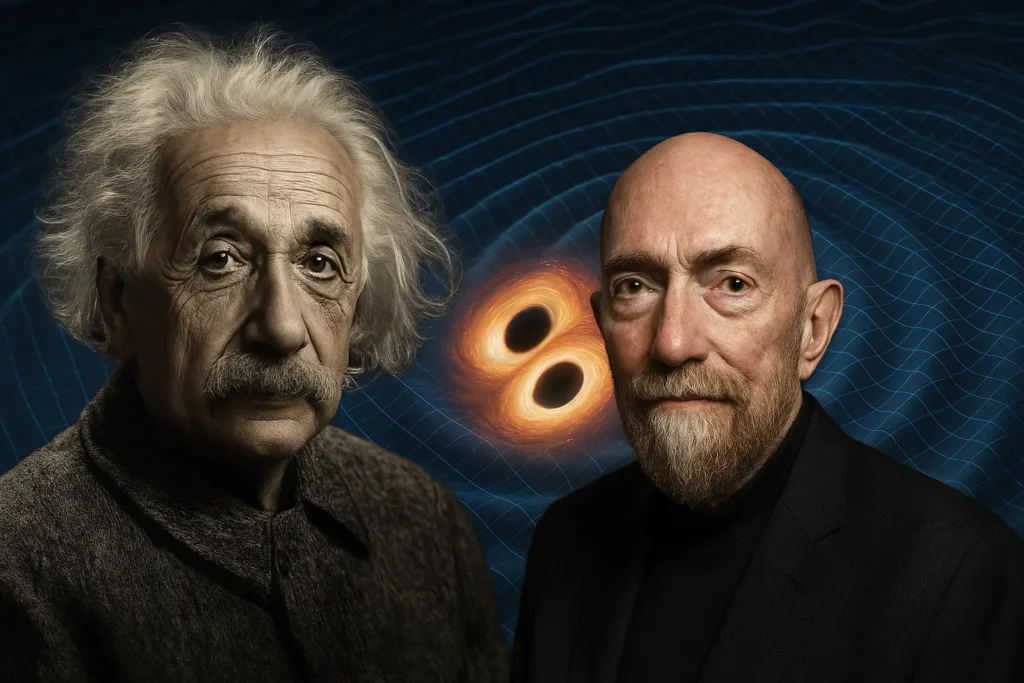
Gravitational waves, first predicted by Albert Einstein in 1916 as a consequence of his General Theory of Relativity, represent one of the most profound discoveries in modern astrophysics. These ripples in spacetime, caused by the acceleration of massive objects, provide a novel means of observing and understanding the universe. Since their first direct detection in

Gravitational Waves: A New Window into the Universe Read More »

Blaze Star Explosion

Blaze Star Explosion

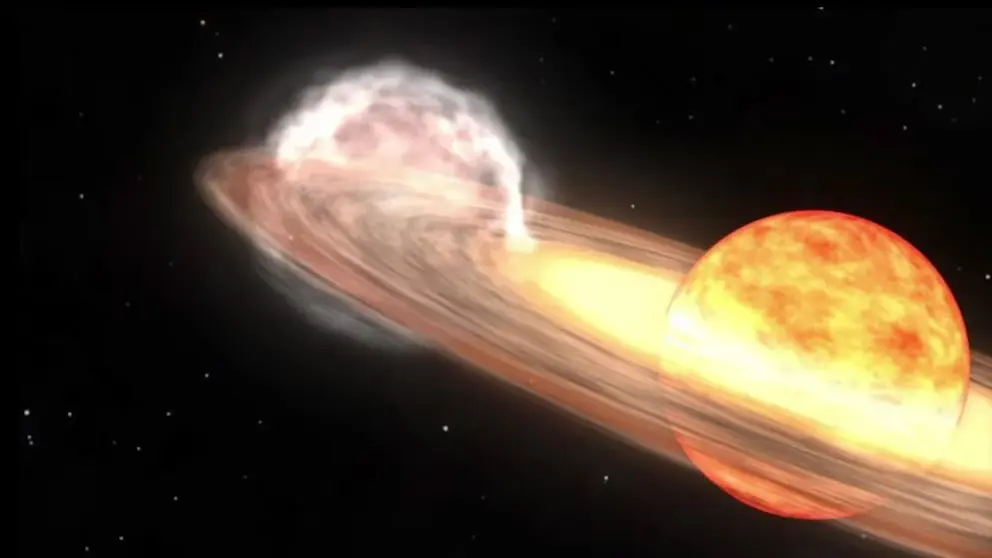
The astronomical community eagerly awaits the potential explosion of T Coronae Borealis (T CrB), commonly known as the “Blaze Star,” a recurrent nova located approximately 3,000 light-years away in the constellation Corona Borealis. If predictions hold, this rare event will mark the first such occurrence since 1946, offering sky-watchers a unique opportunity to witness a

Blaze Star Explosion Read More »

Firefly Wants Blue Origin’s Honeybee Robotics for the Moon

Firefly Wants Blue Origin’s Honeybee Robotics for the Moon

Firefly Aerospace has announced its selection of Blue Origin’s Honeybee Robotics to provide a lunar rover for its third lunar mission, set to launch in 2028. The mission will explore the Gruithuisen Domes, a scientifically significant and enigmatic volcanic formation on the Moon’s near side. This collaboration highlights a growing trend of commercial partnerships leveraging

Firefly Wants Blue Origin’s Honeybee Robotics for the Moon Read More »

Physiological Adaptations to Long-Term Microgravity

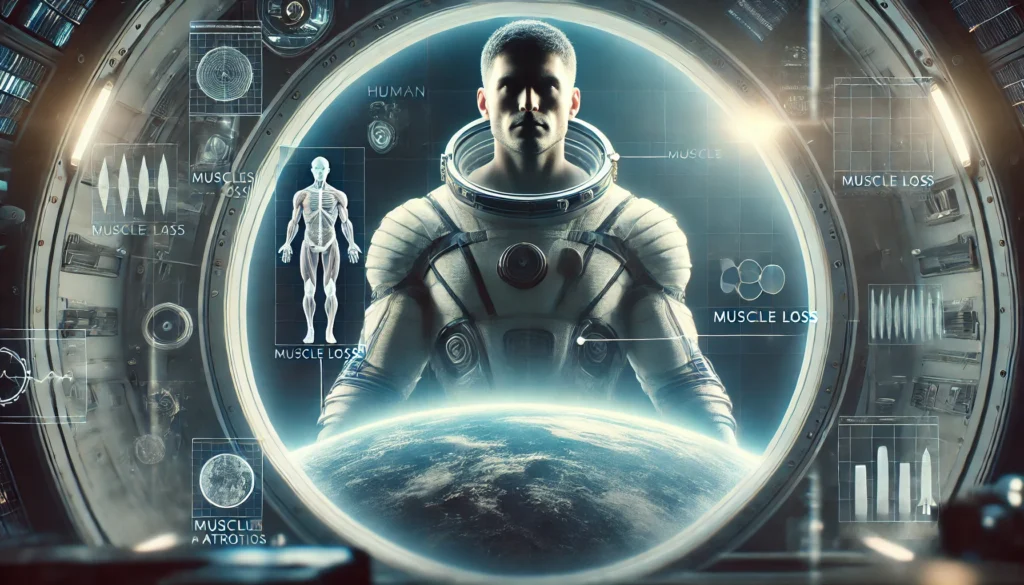
Space exploration has pushed the boundaries of human endurance, exposing astronauts to prolonged periods in microgravity environments. Understanding how the human body adapts to such conditions is crucial for the planning of long-duration missions to the Moon, Mars, and beyond. This article discusses the major physiological changes that occur in the human body after several

Physiological Adaptations to Long-Term Microgravity Read More »

Shopping Cart