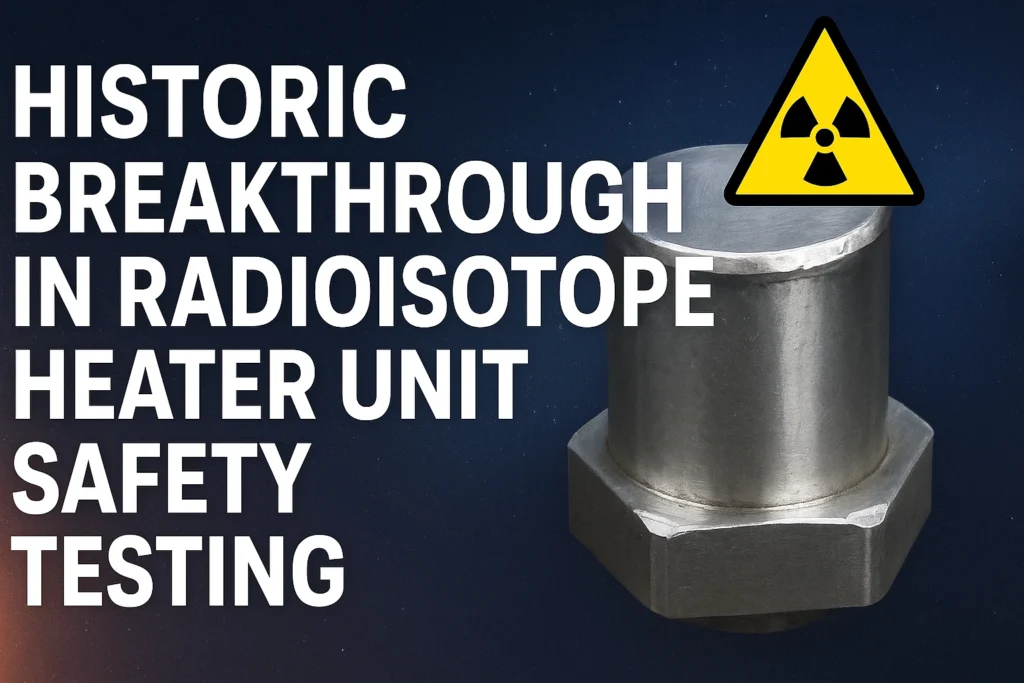
A pioneering UK–European collaboration has reached a major milestone in the development of next-generation radioisotope power systems, completing the most comprehensive safety testing campaign ever conducted for a European-built Radioisotope Heater Unit (RHU). The work, carried out by scientists at Space Park Leicester and Perpetual Atomics Ltd. as part of the European Space Agency’s ENDURE programme, marks a critical advance toward a fully independent European capability in radioisotope power technologies.
UK Space Science Sets Course for 2035: Leicester Event to Shape the Future
Boeing Starliner – Key Anomalies Analysis
Long March-10: The Rocket That Could Take China to the Moon
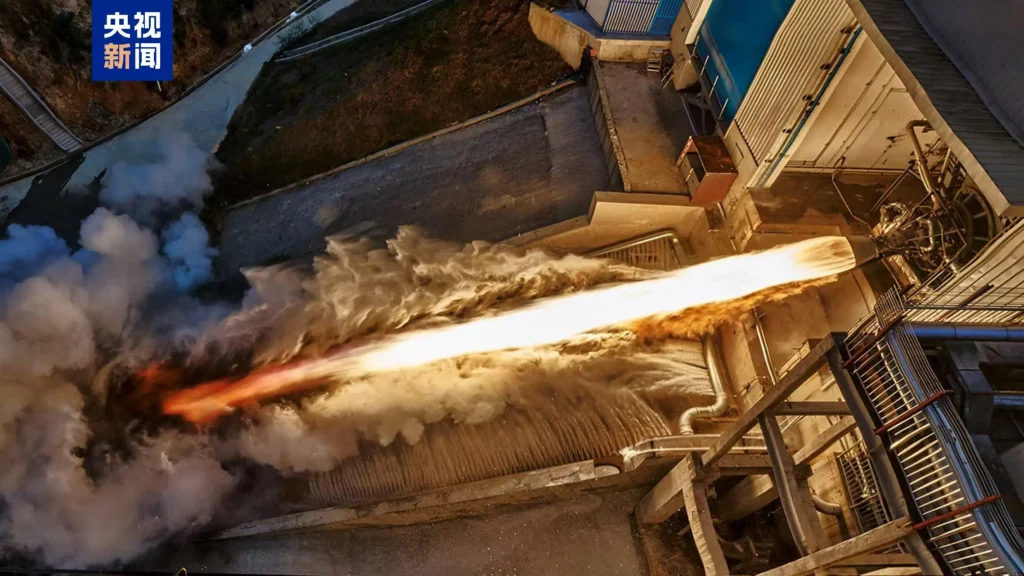
The Liqing-2 Engine: Powering China’s Commercial Reusable Rockets
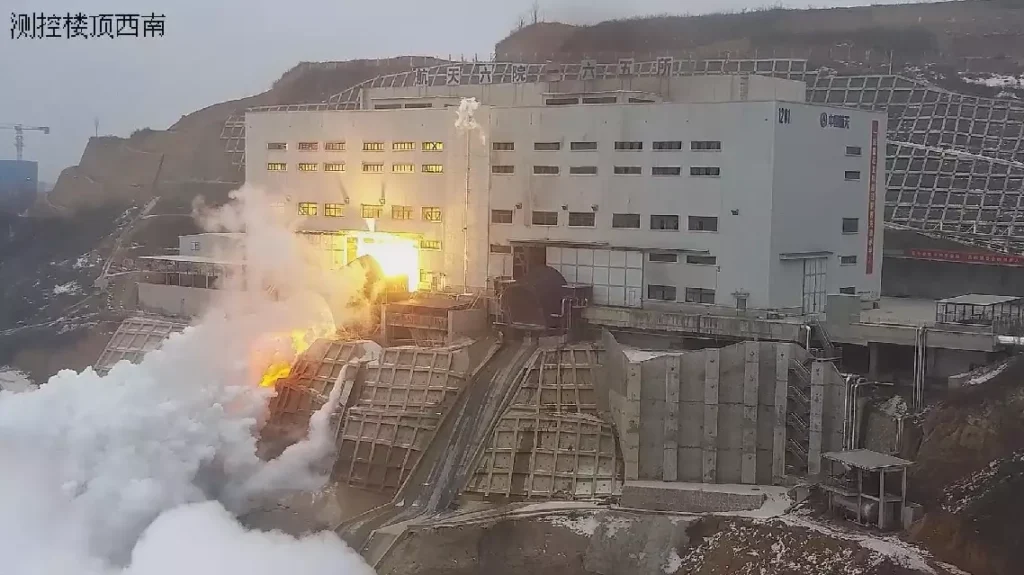
China Tests a 240-Ton Reusable Rocket Engine
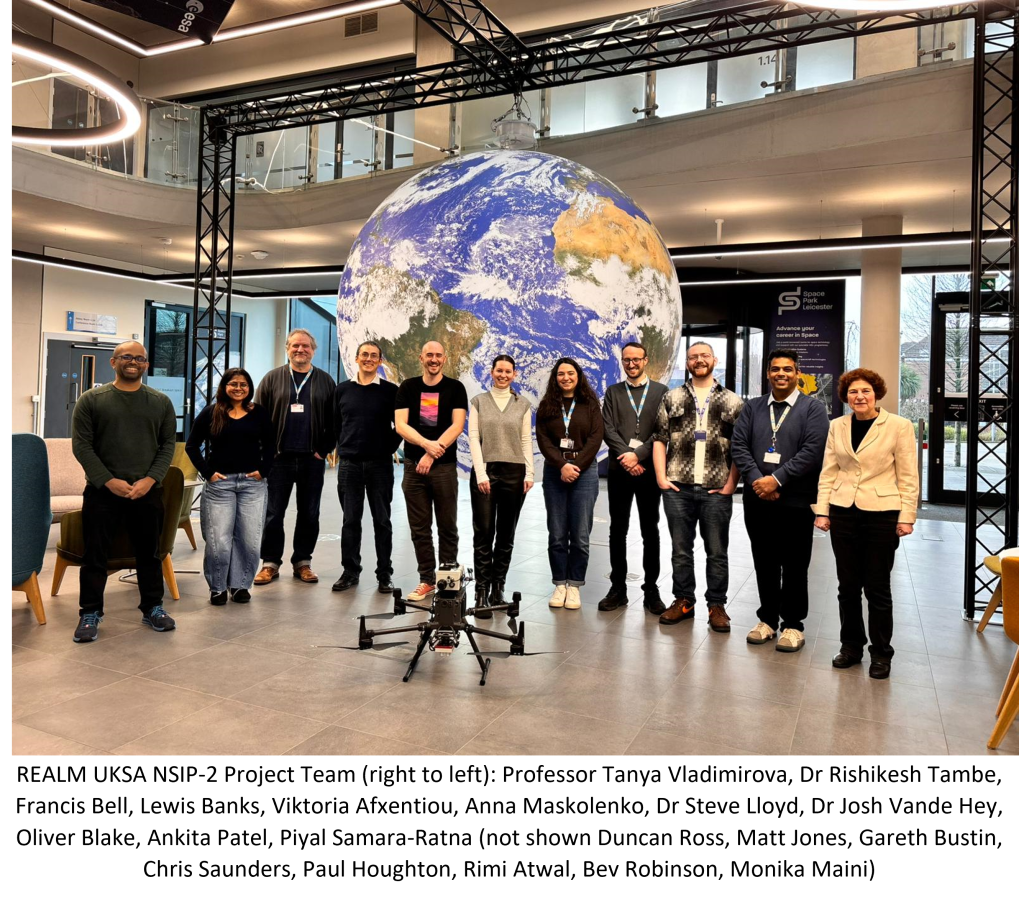
Taking AI to a New REALM: Space-Optimised Machine Learning Comes of Age at Space Park Leicester
The achievement represents a significant leap forward for americium-powered systems—an area where the UK, led by the University of Leicester, has maintained global leadership for more than two decades. These systems, which generate heat and electricity from the natural decay of radioisotopes, are essential for powering spacecraft operating in remote, cold, or dark environments where solar energy is insufficient. They are seen as key enablers for future missions to the outer planets, permanently shadowed regions of the Moon, and other extreme destinations.
Extreme Testing for Extreme Missions
At the centre of this latest breakthrough is the successful completion of high-velocity impact trials on the RHU’s primary containment capsule, known as the clad. The capsule—manufactured from a specialised welded platinum-alloy developed in Leicester—houses the americium-241 fuel form that will eventually provide heat for spacecraft systems.
Over several weeks, tens of fully representative clad subassemblies were subjected to intense and destructive testing at the University of Dayton Research Institute’s impact physics facility in Ohio, USA. Using both simulated fuel pellets and operational manufacturing techniques, the team carried out:
- Flyer-plate impacts exceeding 1,000 m/s (approximately Mach 3.5)
- Terminal-velocity impact tests at 70 m/s to mimic a spacecraft’s ground strike after atmospheric re-entry
- High-velocity impacts of 110 m/s and above onto steel targets
Across all scenarios, the clads performed exceptionally well, allowing researchers to evaluate—and validate—a core part of the safety basis required for the future deployment of radioisotope power systems.
“Safety is absolutely central to the development of radioisotope technologies,” said Professor Richard Ambrosi, Chief Science Officer, founder, and Director of Perpetual Atomics. “These tests address the fundamentals of that safety envelope and highlight the world-leading capabilities we have cultivated in Leicester. The implications are historic.”
A European Capability Takes Shape
The safety campaign forms part of ESA’s ENDURE (European Devices Using Radioisotope Energy) initiative, launched in 2022 to create a sovereign European supply chain for radioisotope power systems—from material production to launch readiness. With the UK’s unique expertise in americium-241 fuel processing and component design, Leicester has become a cornerstone of this continental effort.
A spin-out of the University of Leicester, Perpetual Atomics was founded to translate two decades of scientific leadership into practical and commercially deployable power solutions for space. The company focuses on high-reliability systems capable of operating during long lunar nights, in deep-space environments, and on planetary surfaces far from the Sun.
Matthew Cook, Head of Space Exploration at the UK Space Agency, hailed the achievement:
“This breakthrough demonstrates exactly the kind of world-leading innovation that positions the UK at the forefront of space technology. Radioisotope power systems will be essential for ambitious deep-space missions and extreme environments like the Lunar South Pole. This successful safety campaign is a critical step forward.”
A Milestone for Space Park Leicester
Since opening in 2021, Space Park Leicester has rapidly become a UK hub for space engineering, planetary science, and satellite innovation. The facility’s close collaboration between academia, government laboratories, and private industry has enabled high-impact projects like the current campaign.
“Perpetual Atomics is going from strength to strength,” said William Wells, CEO of Space Park Leicester. “Born from the University’s decades of expertise in space nuclear power and supported by the collaborative ecosystem here at Space Park, the company is translating cutting-edge research into real-world impact.”
Professor Emma Bunce, Director of the Institute for Space at the University of Leicester, underscored the broader scientific significance:
“As we set our sights on increasingly challenging environments—whether the Ice Giants, distant moons, or the dark surfaces of far-off worlds—we will need power systems like these. This achievement opens the door to missions the space community could previously only imagine.”
A Platform for Future Exploration
Perpetual Atomics, launched in 2024, aims to develop and deliver the full vertical stack of radioisotope power capabilities—from material science and fuel form manufacturing to flight hardware and launch safety documentation. Dr Alessandra Barco, Senior Research Associate at Leicester and Director of Systems, Launch Safety & Regulation at Perpetual Atomics, said the latest results underline the company’s momentum:
“This development highlights our unparalleled global leadership in radioisotope power technologies across the entire vertical, including launch safety testing.”
With this campaign now successfully completed, the UK and its European partners are positioned closer than ever to deploying home-grown radioisotope power units aboard future spacecraft. For missions into the coldest, darkest, and most remote corners of the Solar System, these technologies may prove indispensable.