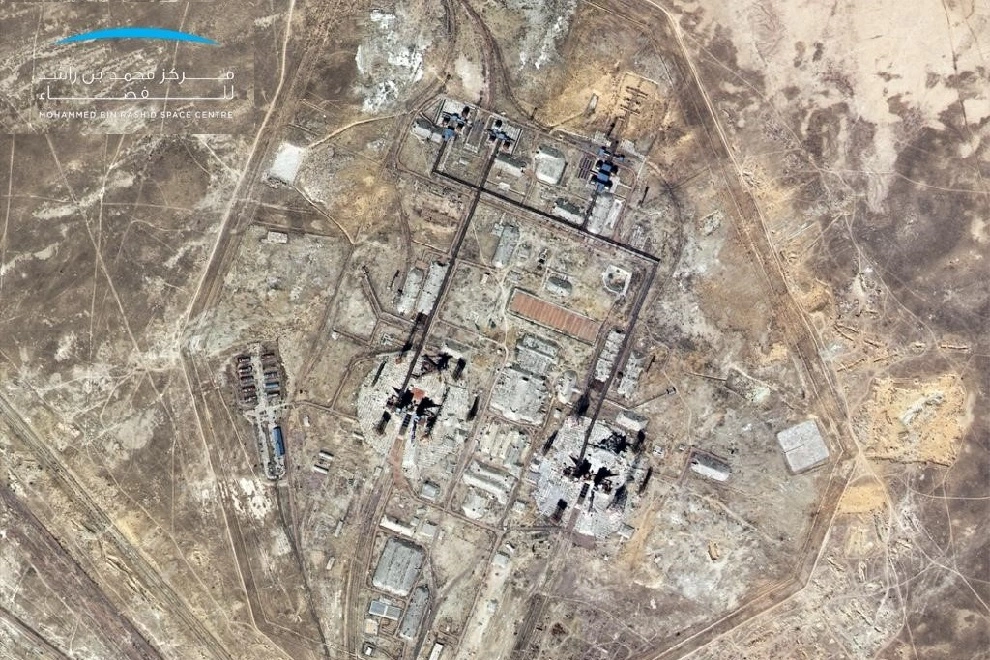
On 27 November 2025, a Soyuz rocket lifted off from Kazakhstan’s Baikonur Cosmodrome carrying two Russian cosmonauts and NASA astronaut Donald Pettit on mission Soyuz MS-28. The ascent was flawless; the spacecraft reached orbit and docked with the International Space Station (ISS) as planned. Yet beneath this seemingly routine success lay a structural catastrophe on the ground—one whose consequences are now reshaping Russia’s human-spaceflight program.
During liftoff, the service cabin—a vital section of infrastructure situated beneath the launch vehicle at Site 31/6, Russia’s only operational pad for crewed missions—collapsed into the flame trench. Engineers confirmed that the structure had suffered a critical failure either during or immediately after ignition, leaving the pad severely damaged and unfit for further launches .
The incident marks one of the most consequential ground-infrastructure failures in modern spaceflight history. With Site 31/6 offline, Russia—one of the world’s leading spacefaring nations for more than six decades—finds itself temporarily unable to launch astronauts.
A Single Point of Failure
The collapse at Site 31/6 exposed a structural vulnerability that experts had warned about for years: Russia had consolidated its entire crewed-launch capability onto a single pad. The other historic pad at Baikonur, Gagarin’s Start (Site 1), was retired from crewed service in 2019 and has yet to be fully modernized. No other Russian spaceport—neither Plesetsk nor the newer Vostochny Cosmodrome—currently hosts a human-rated Soyuz launch facility.
As a result, the damage at Site 31/6 leaves Russia without any certified location capable of carrying out a crewed mission. Analysts describe this as the country’s first loss of human-spaceflight access since the early years of the space age .
Early assessments suggest repairs may take months to more than a year, depending on structural integrity analyses and availability of replacement hardware. Some reports indicate Russia has spare components from prior pad refurbishments, but the scale of the collapse may require new fabrication and extensive reconstruction efforts .
ISS Logistics: A Tighter Timeline
While the Soyuz MS-28 crew arrived safely and will not require immediate rescue or rotation, the long-term implications for ISS operations are significant. Russia is traditionally responsible for multiple critical logistical tasks:
- periodic Progress cargo resupply missions
- thruster burns to maintain ISS orbital altitude and stability
- crew rotation for Russian segments
The next cargo mission, Progress MS-33, originally planned for December 2025, now faces postponement due to the pad outage. ISS partners are preparing contingency logistics, including the possible reallocation of supply missions to U.S. commercial providers to compensate for delays .
For now, NASA has emphasized that there is no immediate danger to the ISS crew, but long-term planning will depend heavily on Russia’s repair schedule and whether backup capacity can be established or accelerated .
Impact on Russia’s Space Program
The Baikonur failure reverberates well beyond short-term ISS operations. Russia has been positioning itself for a more independent space future—planning a new national space station (ROSS), expanding cooperation with non-Western partners, and modernizing infrastructure at Vostochny. This accident interrupts those ambitions at a critical moment.
1. Strategic and Political Consequences
Roscosmos now faces its most serious credibility test in decades. The inability to launch cosmonauts undermines Russia’s long-standing claim of being a consistent, reliable human-spaceflight partner. Internationally, the event may accelerate the shift of ISS operational leadership toward the U.S., Europe, and private companies.
2. Technical and Industrial Pressures
Russia’s space industry has struggled with underinvestment and aging infrastructure. Independent analysts note that the service cabin collapse likely stems from decades-old structural components originally designed for earlier generations of Soyuz launch vehicles. Modernizing these systems has been repeatedly delayed due to cost and scheduling pressures.
3. Future Infrastructure Development
Attention now turns to Vostochny Cosmodrome, which Roscosmos has long touted as its next-generation spaceport. However, certifying Vostochny for human-rated Soyuz launches will require significant upgrades—and until these are completed, Russia remains dependent on Baikonur repairs.
A Turning Point in Human Spaceflight
Incidents that reshape national space programs are rare, but the Baikonur pad collapse qualifies. It is not a technological failure of Russia’s Soyuz spacecraft—one of the most reliable launch vehicles in history—but rather a stark reminder that human spaceflight depends on vast, aging, and often unseen terrestrial infrastructure.
For Russia, the path forward is uncertain. Engineers must rebuild a launch complex designed in the Cold War era, while policymakers must decide whether to accelerate long-delayed modernization plans or continue relying on patched legacy hardware. For the ISS, the coming months will test the resilience and flexibility of an international partnership that has already weathered geopolitical storms.
One thing is clear: the Baikonur mishap is more than a damaged launch pad. It is a strategic inflection point—one that may shape the future of Russian spaceflight for years to come.