November 5, 2025
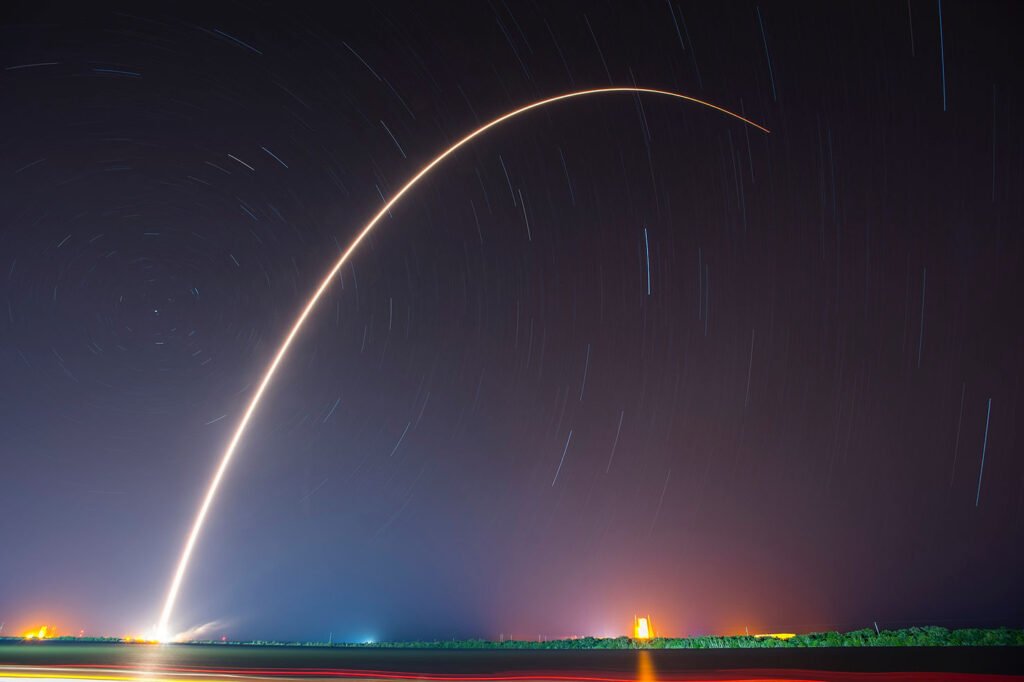
In a landmark moment for European space science and Earth observation, the Copernicus Sentinel-1D satellite has successfully reached orbit aboard an Ariane 6 launcher from Europe’s Spaceport in French Guiana. The launch, which occurred at 22:02 CET on November 4, marks the completion of the first-generation Sentinel-1 constellation—Europe’s cornerstone radar mission within the Copernicus Earth observation programme.
A Seamless Launch and a Critical Signal
Thirty-four minutes after liftoff, Sentinel-1D separated from the Ariane 6 and entered its intended orbit. At 23:22 CET, mission control confirmed the acquisition of signal—an essential milestone indicating that communication had been established with the satellite and that it was operating as expected.
This achievement reinforces Europe’s continued capacity to deploy, operate, and maintain high-performance Earth observation infrastructure despite growing global competition in the space sector.
Completing the First Generation: A Strategic Milestone for Europe
The Sentinel-1D mission concludes a remarkable era for the European Space Agency (ESA) and the European Commission’s Copernicus Programme. Once fully commissioned, Sentinel-1D will operate alongside Sentinel-1C to ensure continuous, high-resolution radar imaging coverage of Earth’s surface—day or night, and under any weather conditions.
Simonetta Cheli, ESA’s Director of Earth Observation Programmes, described the launch as “an important one for ESA,” emphasizing that the mission “completes the Copernicus Sentinel-1 constellation” and secures data continuity for critical environmental monitoring services across Europe and beyond.
Cheli added that the mission “will provide accurate, reliable, and actionable radar data” vital for tracking movements in ice sheets, forests, and ground surfaces—data that underpin climate research, disaster management, and maritime surveillance.
Cutting-Edge Technology for an Evolving Earth
Sentinel-1D will replace the long-serving Sentinel-1A, which has operated for more than 11 years—far beyond its expected lifetime. Together with Sentinel-1C, it will orbit Earth on an opposing track, 180 degrees apart, optimizing global revisit times and data acquisition frequency.
Each satellite carries a C-band Synthetic Aperture Radar (SAR) and an Automatic Identification System (AIS) receiver. The combination allows for simultaneous mapping of Earth’s surface and tracking of maritime traffic. This dual capability has made Sentinel-1 indispensable for both scientific and security applications—ranging from monitoring sea ice to detecting illegal fishing and tracking ships in distress.
Both satellites are compatible with Europe’s Galileo navigation system and other global navigation constellations, enhancing positioning accuracy and integration with complementary Earth observation missions such as ESA’s upcoming Earth Explorer Harmony mission.
A Legacy of Scientific Impact
Since its first launch in 2014, the Sentinel-1 programme has fundamentally reshaped how scientists and policymakers observe environmental change. By offering systematic, high-resolution radar data, Sentinel-1 has made it possible to monitor Earth’s surface dynamics with unprecedented precision—even through cloud cover or darkness.
Applications of Sentinel-1 data include:
- Assessing ice flow and subglacial flooding beneath Greenland’s ice sheet.
- Measuring glacier retreat and its contribution to sea-level rise.
- Detecting land deformation after earthquakes and volcanic activity.
- Observing massive methane leaks linked to human activity.
- Monitoring deforestation and fire damage in tropical regions.
This rich archive of continuous radar data has also enabled the European Ground Motion Service to monitor subsidence, landslides, and ground shifts across the continent—supporting urban planning, infrastructure management, and disaster risk reduction.
Ariane 6: Europe’s Path to Autonomous Access to Space
The launch of Sentinel-1D on Ariane 6 underscores Europe’s commitment to maintaining independent access to space. Standing more than 60 meters tall, Ariane 6 represents a new generation of modular launchers designed for flexibility and cost-efficiency. Its ability to support both low-Earth orbit and deep-space missions will play a central role in ensuring Europe’s competitiveness in an increasingly commercialized launch market.
Professional Analysis: A Mission of Strategic and Scientific Continuity
The Sentinel-1D launch holds significance far beyond its technical success. It reinforces Europe’s autonomy in space-based observation at a time when global demand for climate and security data is surging. With the first-generation constellation now complete, ESA and the European Commission have secured uninterrupted radar coverage—a vital continuity that ensures decision-makers, scientists, and emergency responders have access to trusted data.
From a strategic perspective, the mission demonstrates Europe’s resilience in maintaining complex, multi-partner programmes amid geopolitical and industrial pressures. The collaboration between ESA, the European Commission, Thales Alenia Space, and Airbus Defence and Space highlights the strength of Europe’s integrated space ecosystem.
From a scientific standpoint, Sentinel-1D represents both continuity and evolution: continuity in providing reliable, open-access radar data, and evolution in integrating advanced tracking systems and interoperability with future missions.
In a global context increasingly reliant on environmental intelligence, the successful deployment of Sentinel-1D sends a clear message—Europe remains a leader in space technology, data accessibility, and climate observation.
Looking Ahead
As Sentinel-1D begins its commissioning phase, attention will shift to the next generation of Copernicus missions—set to provide even higher-resolution, multispectral, and hyperspectral observations. But for now, the successful launch of Sentinel-1D not only completes an era—it ensures that the Copernicus Sentinel-1 mission will continue to serve as a cornerstone of global Earth observation for years to come.