
Neuroscience in Space: Interview with Shauna Anderson
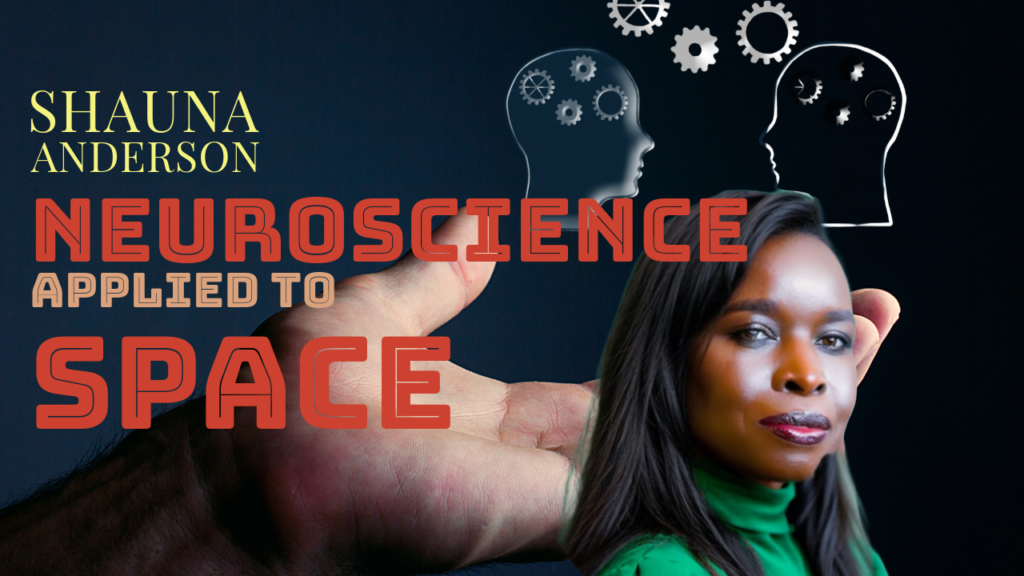
Neuroscience Applied to Space
Shauna Anderson is a researcher working at the intersection of healthcare, engineering and space medicine, and a member of NASA’s L’SPACE program. She conducts research with BioLife Health Center, the CRPS Warriors Foundation and Arizona State University, is co-founder of The North Winds and team leader at the Arizona Cancer Evolution Center. Her earlier roles include Strategic Advisor for the U.S. Presidential Campaign, and her career began in the US Army.
Key Takeaways
- Shauna Anderson sees brain-computer interfaces as a way for astronauts to communicate directly from the brain to an external device, with spin-offs for treating speech and physical impairments on Earth.
- She points to studies showing that months in space are linked to declines in dexterity, dual tasking and motion perception (Yin et al., 2023).
- Mitigation measures she proposes for long missions: simulated gravity studies, remote biomedical monitoring of early psychological changes, regular exercise programmes and custom mental health treatment plans.
At a Glance
- Research
- BioLife Health Center, CRPS Warriors Foundation, Arizona State University
- Leadership
- Co-founder, The North Winds · Team leader, Arizona Cancer Evolution Center
- Space programme
- NASA L’SPACE program
- Earlier career
- US Army; Strategic Advisor for the U.S. Presidential Campaign
- Focus
- Neuroscience applied to space: microgravity, cognition and mental health
About the Interview
How many connections are there between space and neuroscience? We asked Shauna two questions: how neuroscience research can be integrated into space exploration, and what extended missions such as those to Mars may mean for the mental and cognitive well-being of astronauts.
The Interview
As a member of NASA’s L’SPACE program, how do you envision the integration of neuroscience research in space exploration, and what potential benefits do you foresee for both fields?
There are several ways in which neuroscience research can be integrated into space exploration:
Brain-Computer Interface Technology (BCI): Neuroscience Researchers can design technologies that transmit brain signals into output commands. The output commands enable astronauts to communicate directly from the brain to an external device allowing a high degree of accuracy and ultimately mission success. When applying this development to healthcare, researchers are able to design treatments for individuals who have speech, and other physical impairments.
Neuroscience research can also provide a comprehensive understanding on the effects of microgravity on the human brain as well as design effective measures to prevent negative effects of microgravity effects on the brain, such as cognitive decline. Studies show that astronauts who spend several months on space mission display significant decline in cognitive functions, such as dexterity, dual tasking, and motion perception, (Yin, et al., 2023). Further development will provide insight into diseases and illnesses such as Parkinson’s and Alzheimer’s disease.
And just as common with any other high stress career, mental health and wellness are important factors to understand and treat accordingly. I believe in order to effectively treat mental health disorders; we must treat the person and not just the disorder. Developing custom individual treatments are expensive but essential. As a researcher at the intersection of healthcare, engineering and space medicine, my priority is to develop effective and equally accessible treatments.
Given your background as a clinical researcher and neuroscientist, how do you believe extended space missions, such as those to Mars, might impact the mental and cognitive well-being of astronauts, and what measures can be taken to mitigate potential challenges?
Microgravity has a detrimental effect on cognitive functions as well as mental health. And possibly increases the chance of an astronaut being prone to brain injuries. I am currently conducting a study on how complex post-traumatic stress disorder can effect cognitive functions. So far, the study has shown that over 90 percent of individuals who participated in the study report having symptoms that are more related to brain injuries. Although microgravity is more of a physical phenomenon it has the potential to contribute to mental stress and anxiety. And when you add the other ingredients that come along with space travel, such as, isolation, high-pressure missions, and poor sleep quality, we see the combination of cognitive decline and developing mental health issues.
Clinical research can mitigate these issues by conducting simulated gravity studies, to investigate the ability to maintain a simulated gravitational force that will decrease or eliminate the effect of microgravity on the human body, remote biomedical monitoring to detect early psychological changes, and effective and regular exercise programs that are focused on cardio health, bone density and muscle mass preservation. And again effective custom mental health treatment plans.
This interview was first published as a preview of a longer article in the SpaceInfo Magazine.
Editorial note. This interview was conducted by The SpaceInfo Club. Answers are published as provided by the interviewee and reflect their personal views. Spotted an error or want to suggest a correction? Contact us.