Join the mailing list Free weekly briefing, no spam.
Pillars of Creation – Credit: NASA, ESA, CSA, STScI; Image Processing: Joseph DePasquale (STScI), Anton Koekemoer (STScI), Alyssa Pagan (STScI)
Anniversary Special — December 25
On December 25, 2021, while much of Earth was celebrating the holidays, a rocket rose from French Guiana carrying the most ambitious space observatory ever built: the James Webb Space Telescope (JWST). Four years later, Webb has not only met expectations—it has redefined them. From rewriting our understanding of the early universe to transforming how we search for life beyond Earth, JWST has become one of the most influential scientific instruments in human history.
As we mark four years since launch, this SpaceInfo Club anniversary special looks back at Webb’s journey, its most transformative discoveries, and why its story is only just beginning.
From Launch to Legacy: A Brief JWST Timeline
December 25, 2021 — Launch Day
JWST launches aboard an Ariane 5 rocket, beginning a tense month-long journey to its destination nearly 1.5 million kilometers from Earth at the Sun–Earth L2 point.
January 2022 — The Great Unfolding
In one of the riskiest engineering sequences ever attempted in space, Webb successfully deploys its sunshield, mirrors, and instruments—earning its reputation as a “telescope that had to unfold perfectly.”
July 2022 — First Images Released
NASA releases Webb’s first full-color images, including the iconic deep field that reveals thousands of galaxies in a patch of sky the size of a grain of sand.
2023–2025 — The Science Revolution
JWST enters full scientific operations, delivering unprecedented data on exoplanets, star formation, black holes, and the earliest galaxies in the universe.
Working in Space Without Being an Engineer: Who the Industry Needs Now
The Hardest Part of Building New Space Is Not What You Think
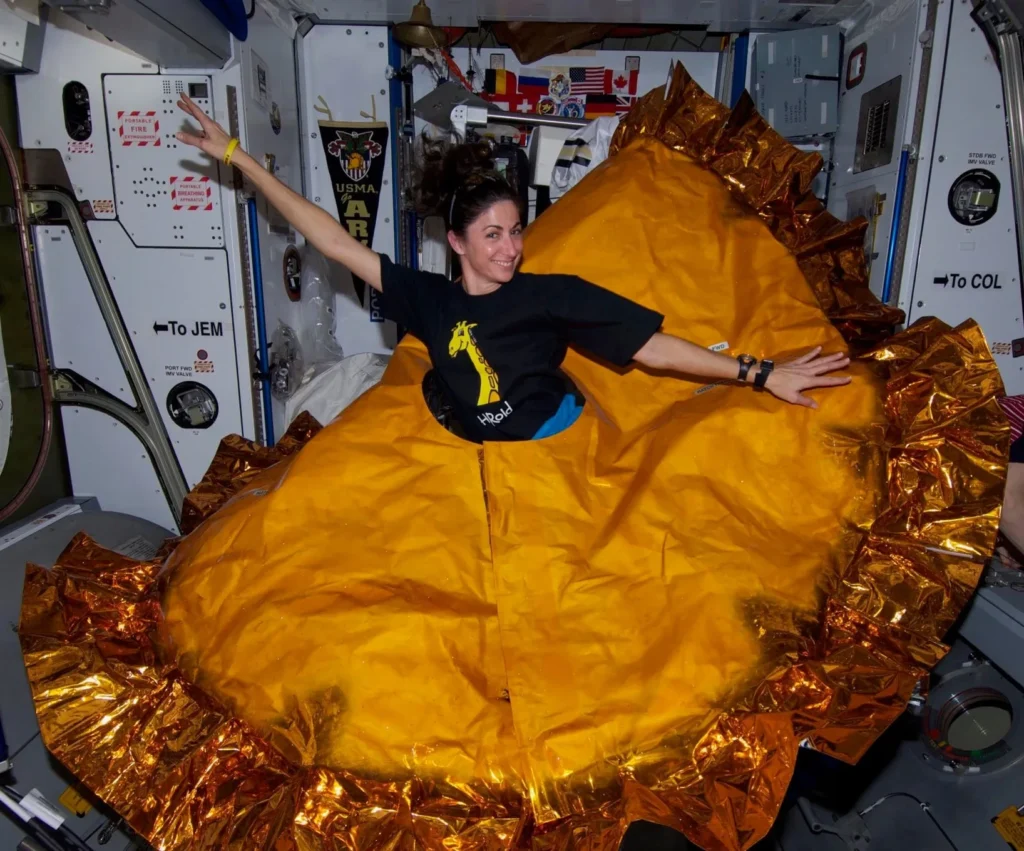
Halloween on the International Space Station: How Astronauts Celebrate in Orbit
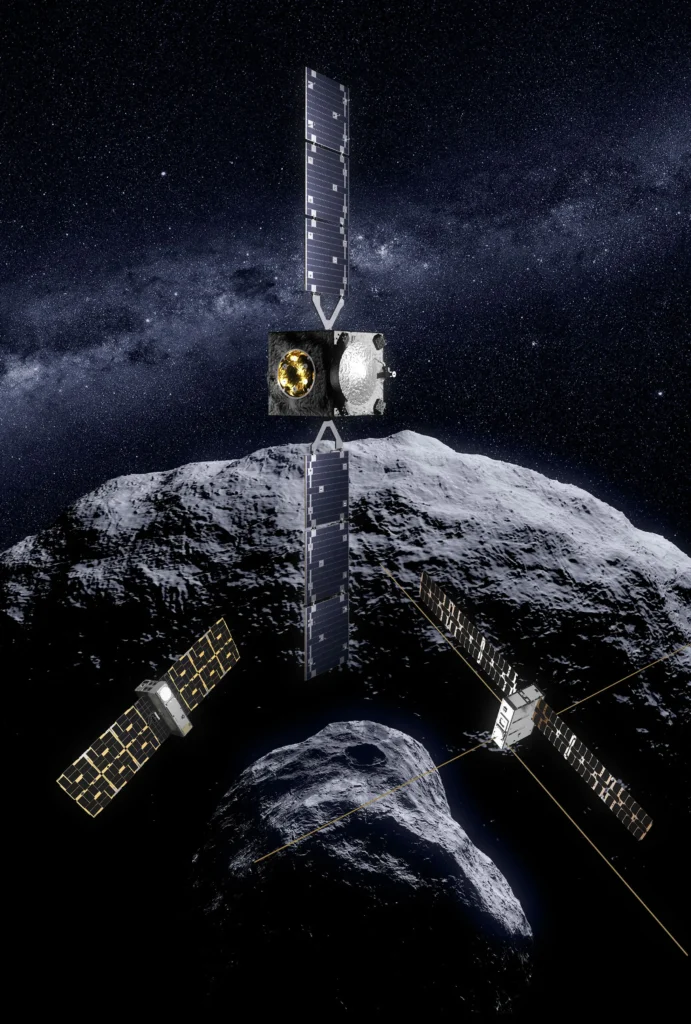
ESA’s Hera and NASA’s DART: What Europe’s Asteroid Mission Will Measure at Didymos
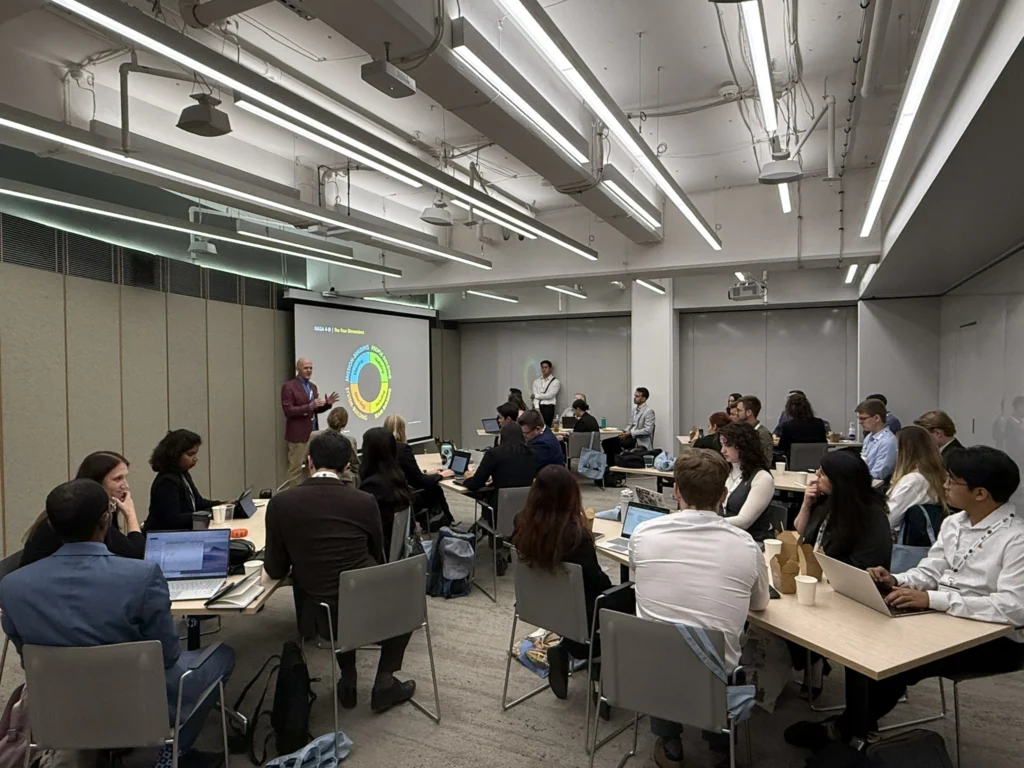
Executive Guide to Space at Space Park Leicester: Three Days Inside a Space Mission

MO-Nav on Talon-A: What a Mach 5 GPS-Denied Test Proves
The Most Transformative Discoveries So Far
In just four years, JWST has reshaped multiple fields of astronomy.
🌌 Rewriting Cosmic History
Webb detected galaxies that formed far earlier than expected—some appearing just a few hundred million years after the Big Bang. These findings challenge long-standing models of galaxy formation and suggest the early universe evolved faster than previously believed.
🪐 Exoplanet Atmospheres, Revealed
For the first time, scientists can directly analyze the atmospheres of distant worlds. JWST has detected water vapor, carbon dioxide, methane, sulfur compounds, and complex clouds on exoplanets—turning theoretical models into measurable science.
🌱 Clues to Habitability
While JWST has not discovered life, it has identified chemical conditions that could support it. Observations of rocky exoplanets and ocean worlds have elevated the search for biosignatures from speculation to rigorous investigation.
🌟 Stellar Nurseries in Stunning Detail
Webb’s infrared vision has peered through dense cosmic dust, revealing newborn stars and planetary systems with clarity never before possible.
How JWST Changed the Direction of Space Science
JWST’s success has influenced not just discoveries, but priorities.
- Future missions now prioritize infrared astronomy, building on Webb’s strengths.
- Exoplanet science has moved center stage, becoming a primary focus for upcoming observatories.
- International collaboration has expanded, with Webb serving as a model for large-scale global science projects.
- Theoretical models are being rewritten, forced to adapt to Webb’s unexpected findings.
In many ways, JWST didn’t just answer questions—it created entirely new ones.
What Scientists Hope to Discover Next
Looking ahead, Webb’s most exciting chapters may still lie in the future.
- Potential biosignatures in the atmospheres of Earth-sized exoplanets
- The first truly primordial galaxies, formed from untouched cosmic material
- Better understanding of black hole growth in the early universe
- Detailed studies of icy moons and their chemistry in our own solar system
Each observation pushes closer to answering humanity’s oldest questions: Where did we come from? Are we alone?
Why the James Webb Space Telescope Will Matter for Decades
JWST was designed for longevity. With ample fuel, a stable orbit, and instruments still operating at peak performance, the telescope is expected to deliver groundbreaking science well into the 2030s and beyond.
More importantly, its data archive will serve generations of researchers—much like the Hubble Space Telescope continues to do decades after launch. Webb’s discoveries will be studied, reanalyzed, and reinterpreted long after its final observation.
Four Years In—and Just Getting Started
Four years ago, the world watched with cautious hope as JWST left Earth. Today, that hope has transformed into awe. Webb has changed how we see the universe—and how we see ourselves within it.
As SpaceInfo Club celebrates this milestone, one thing is clear: the James Webb Space Telescope is not just a scientific instrument. It is a time machine, a storyteller, and a reminder that even in a vast, ancient cosmos, humanity is capable of extraordinary vision.
Here’s to the next discoveries—and the many years of wonder still ahead. 🚀✨
Working in Space Without Being an Engineer: Who the Industry Needs Now
The Hardest Part of Building New Space Is Not What You Think
Halloween on the International Space Station: How Astronauts Celebrate in Orbit
ESA’s Hera and NASA’s DART: What Europe’s Asteroid Mission Will Measure at Didymos
Executive Guide to Space at Space Park Leicester: Three Days Inside a Space Mission