Join the mailing list Free weekly briefing, no spam.
NASA photo by David Higginbotham
The James Webb Space Telescope (JWST) represents one of the most ambitious scientific and engineering projects ever undertaken. Designed to observe the universe primarily in infrared light, Webb allows astronomers to peer deeper into cosmic history than any previous space observatory. Central to its success are its four advanced scientific instruments and a suite of groundbreaking engineering innovations—most notably its deployable sunshield and segmented mirror system.
This article explores the instruments onboard JWST and the revolutionary technologies that make its discoveries possible.
Scientific Instruments Onboard JWST
1. NIRCam (Near-Infrared Camera)
NIRCam is Webb’s primary imaging instrument and a cornerstone of its mission. Operating in the near-infrared range (0.6–5 microns), it is optimized to detect light from the earliest stars and galaxies formed after the Big Bang.
Key capabilities:
- High-resolution imaging of distant galaxies
- Detection of faint exoplanets and brown dwarfs
- Precise wavefront sensing for mirror alignment
NIRCam produced Webb’s first iconic deep-field images, showcasing thousands of galaxies in a tiny patch of sky.
2. NIRSpec (Near-Infrared Spectrograph)
NIRSpec enables Webb to perform spectroscopy—breaking light into its component wavelengths—to determine the physical and chemical properties of celestial objects.
Unique features:
- Microshutter array with ~250,000 tiny shutters
- Ability to observe over 100 objects simultaneously
- Analysis of star formation, galaxy evolution, and exoplanet atmospheres
This multiplexing capability dramatically increases Webb’s scientific efficiency.
3. MIRI (Mid-Infrared Instrument)
MIRI extends Webb’s vision into the mid-infrared (5–28 microns), allowing it to study cooler objects that are invisible to near-infrared instruments.
Scientific strengths:
- Imaging and spectroscopy of protoplanetary disks
- Detection of cold dust, asteroids, and distant galaxies
- Operates at ~7 Kelvin using an advanced cryocooler
MIRI reveals hidden structures inside star-forming regions and dusty galaxies.
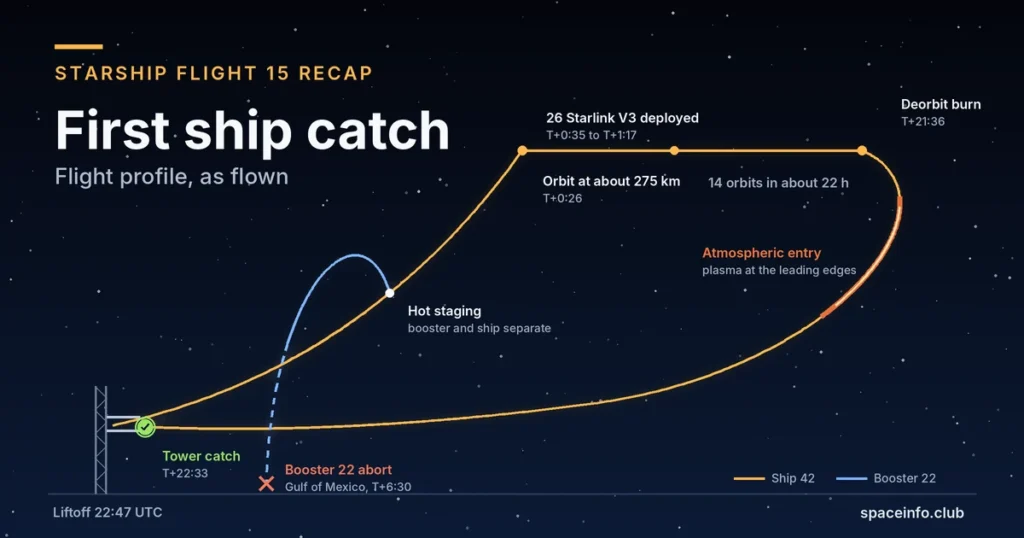
Starship Flight 15 Recap: First Ship Catch, 14 Orbits and a Booster Abort

Artemis IV: What We Know About NASA’s First Planned Moon Landing Mission (November 2026 Update)
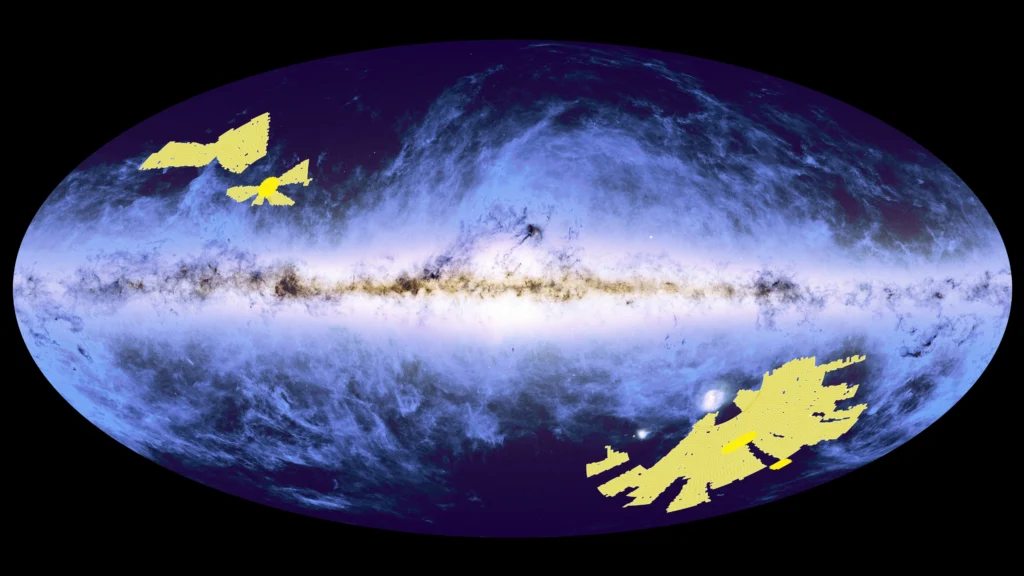
Euclid DR1-Foundation: What the New Data Release Contains

Artemis III Explained: Mission Profile, the Gemini Parallel and Why Docking in Earth Orbit Comes Before the Moon
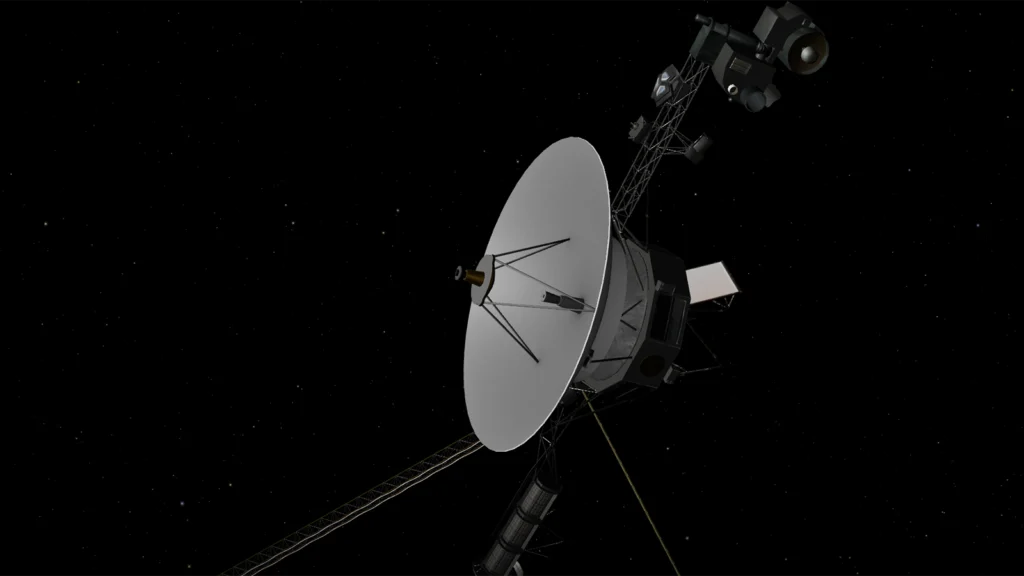
Voyager 1 Reaches One Light-Day From Earth
The short version Voyager 1 reaches one light-day from Earth on Wednesday, November 18, 2026,…

From Space Park Leicester to the Farm Gate: CGI Gives £26,000 to Gorse Hill City Farm
Photo Credits: Space Park Leicester A company that builds satellite ground software has just…
4. FGS/NIRISS (Fine Guidance Sensor / Near-Infrared Imager and Slitless Spectrograph)
This dual-purpose instrument plays a crucial operational and scientific role.
Functions include:
- Ultra-precise telescope pointing and stabilization
- Slitless spectroscopy for exoplanet atmosphere studies
- Detection of water vapor, carbon dioxide, and other molecules
FGS/NIRISS is essential for Webb’s exoplanet characterization missions.
Engineering and Technological Innovations
The Unfolding Five-Layer Sunshield
One of Webb’s most extraordinary engineering achievements is its five-layer sunshield, roughly the size of a tennis court. Since infrared observations require extremely cold temperatures, the sunshield protects the telescope from heat emitted by the Sun, Earth, and Moon.
Engineering highlights:
- Reduces temperatures from ~110°C to below −230°C
- Layers made of Kapton with aluminum and silicon coatings
- Complex multi-step autonomous deployment in space
The success of the sunshield deployment was critical—without it, Webb’s mission would not be possible.
Segmented, Deployable Primary Mirror
Webb’s 6.5-meter primary mirror consists of 18 hexagonal beryllium segments, coated in gold to optimize infrared reflectivity. Because it was too large to fit inside any rocket fairing fully assembled, the mirror was folded for launch and later deployed in space.
Why it matters:
- Collects over six times more light than Hubble
- Adjustable segments aligned with nanometer precision
- Enables unprecedented sensitivity and resolution
Lagrange Point Orbit (L2)
JWST operates at the Sun–Earth L2 Lagrange point, about 1.5 million kilometers from Earth. This stable gravitational location allows the sunshield to permanently block sunlight while providing a thermally stable environment and uninterrupted views of deep space.
Conclusion
The James Webb Space Telescope is not just a successor to Hubble—it is a technological leap forward. Its powerful instruments (NIRCam, NIRSpec, MIRI, and FGS/NIRISS) work in harmony with revolutionary engineering systems like the unfolding sunshield and segmented mirror. Together, they enable Webb to explore the formation of the first galaxies, probe exoplanet atmospheres, and deepen our understanding of the universe.