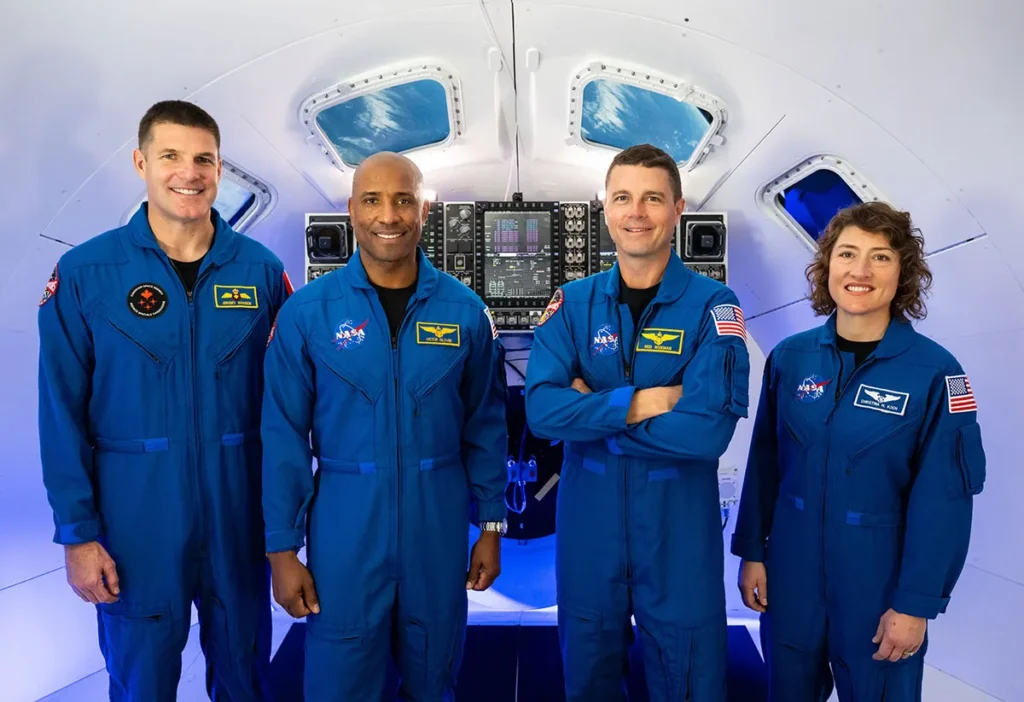
Photo: ARTEMIS II Astronauts – NASA, James Blair
NASA is entering the final stretch toward one of the most anticipated space missions of the decade: Artemis II, the first crewed journey to the Moon since the Apollo era. As launch preparations intensify at Kennedy Space Center in Florida, the mission marks a historic return of astronauts beyond low Earth orbit—and a crucial step toward a sustained human presence on the Moon.

BepiColombo Separates From Its Transfer Module Today

BepiColombo Sheds Its Transfer Module as the Mercury Arrival Begins
A SpaceX Rocket Stage Is About to Crash into the Moon. Here’s Why Scientists Are Excited

Juno Peers Beneath Io’s Surface and Finds Heat Rising From Within
NASA Reveals “Asteroid” Is Actually an Active Comet, Highlighting the Importance of Precision Planetary Defense

Psyche’s Close Encounter with Mars Gives NASA a Crucial Dress Rehearsal
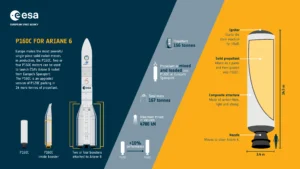
Ariane 6 Sets a New European Record with Upgraded Boosters

Spacewear CEO Corinna Sperandini Receives Italy’s “Le donne di ora” Award – But Let’s talk about Technology and Innovation

Leicester Showcases Why the UK Space Sector Is More Than Just Launches
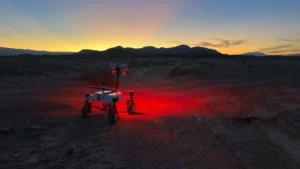
NASA’s ERNEST Rover Prototype Paves the Way for Future Lunar and Martian Exploration
A New Chapter in Lunar Exploration
Artemis II is part of NASA’s broader Artemis program, an ambitious effort to return humans to the Moon, establish long-term lunar exploration, and prepare for future missions to Mars. While Artemis I successfully tested the Space Launch System (SLS) rocket and Orion spacecraft without a crew in 2022, Artemis II will be the program’s first mission to carry astronauts.
The four-member crew—Reid Wiseman, Victor Glover, Christina Koch, and Canadian Space Agency astronaut Jeremy Hansen—will spend roughly 10 days in space, traveling thousands of kilometers beyond the Moon’s far side before returning to Earth. Although the mission will not include a lunar landing, it is anything but a simple flyby.
What Artemis II Will Do
The primary goal of Artemis II is to test critical systems with humans aboard. Engineers and mission planners will evaluate Orion’s life-support systems, navigation, communications, and the spacecraft’s heat shield during high-speed reentry into Earth’s atmosphere.
The mission will follow a free-return trajectory, looping around the Moon in a path that naturally brings the spacecraft back to Earth—an added safety measure that was also used during Apollo missions. This flight profile allows NASA to verify that both the rocket and spacecraft can safely carry astronauts on deep-space missions.
In short, Artemis II is the proving ground that must succeed before astronauts can once again walk on the lunar surface during later Artemis missions.
Launch Windows and Preparations
NASA has identified multiple launch windows between early February and April 2026, with the earliest opportunity currently opening in early February. In the weeks leading up to launch, the towering SLS rocket and Orion spacecraft are scheduled to roll out to Launch Pad 39B, followed by final testing and a full countdown rehearsal.
The exact launch date will depend on technical readiness, weather conditions, and final management reviews—standard practice for missions of this complexity and importance.
Why Artemis II Matters
Beyond its technical objectives, Artemis II represents a symbolic and practical return to deep space. It will be the first crewed lunar mission in more than 50 years, demonstrating that humanity is ready to explore farther, stay longer, and work together—this time with international partners—on the next era of space exploration.
The knowledge gained from Artemis II will directly shape Artemis III and beyond, including the first planned landing of astronauts near the Moon’s south pole and the eventual construction of a sustainable lunar infrastructure.
Stay With Us for the Journey Ahead
As Artemis II moves closer to launch, SpaceInfo Club will be following every milestone—from rollout and testing to launch day and the astronauts’ journey around the Moon. This article is just the beginning. In the coming weeks and months, we’ll bring you deeper insights, mission updates, and behind-the-scenes looks at how humanity is preparing to return to the Moon.
The countdown has begun—and the next giant leap is almost here. 🚀