As humanity prepares for a new era of sustained lunar exploration, one of the most unexpected challenges engineers face is not rockets, habitats, or radiation — but time itself.
Recently, Chinese researchers announced the development of a new lunar timekeeping software designed to precisely synchronize clocks between Earth and the Moon. While this may sound like a minor technical detail, accurate timekeeping is a fundamental requirement for navigation, communication, and long-term operations on the lunar surface. The effort highlights a deeper scientific reality: time does not pass at the same rate on the Moon as it does on Earth.
Why Time Runs Differently on the Moon
According to Einstein’s theory of relativity, gravity affects the flow of time. The stronger the gravitational field, the more slowly time passes. Earth, with its relatively strong gravity, slows time slightly compared to places with weaker gravity.
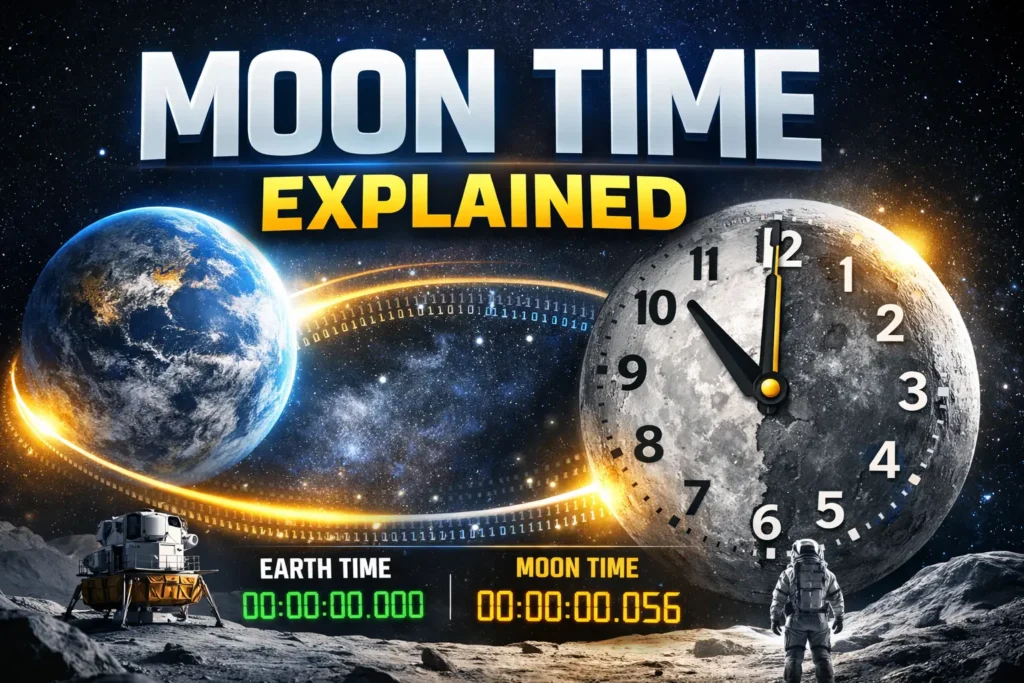
The Moon’s gravity is much weaker — about one-sixth of Earth’s. As a result, a clock placed on the Moon ticks slightly faster than an identical clock on Earth.
The difference is very small but measurable:
- Time on the Moon runs ahead of Earth time by roughly 56 microseconds per day
- A microsecond is one millionth of a second
To a human, this difference is completely imperceptible. However, to spacecraft, satellites, and navigation systems that rely on extreme precision, this tiny mismatch can quickly become a serious problem.
Why Microseconds Matter in Space
Modern space missions depend on precise timing to determine position and coordinate operations. Spacecraft navigation works by measuring how long it takes for radio signals to travel between spacecraft, satellites, and Earth. Even a tiny timing error can translate into large positioning errors.
Over time, uncorrected differences between Earth time and lunar time can lead to:
- Navigation errors, potentially placing landers or rovers kilometers away from their intended targets
- Communication mismatches between orbiters, surface systems, and Earth-based controllers
- Synchronization problems across lunar satellites, scientific instruments, and future surface infrastructure
As missions last longer and systems become more interconnected, these errors accumulate. What begins as microseconds can eventually undermine mission safety, reliability, and accuracy.
A New Approach to Lunar Timekeeping
To address this challenge, researchers have developed software that calculates the precise difference between Earth time and lunar time by accounting for gravity, orbital motion, and relativistic effects. Instead of treating the Moon as an extension of Earth-based timing systems, the software allows lunar missions to operate with a dedicated and corrected lunar time reference.
This approach enables engineers to:
- Convert between Earth time and Moon time accurately
- Maintain synchronization across multiple lunar systems
- Reduce long-term timing drift in extended missions
Such tools are an essential foundation for future lunar activity, especially as operations shift from short missions to continuous human and robotic presence.
Why Lunar Timekeeping Is Critical for the Future
The Apollo missions lasted days. Future lunar missions will last months and years, involving permanent infrastructure such as:
- Lunar communication satellites
- Autonomous rovers and construction robots
- Navigation networks similar to GPS
- Scientific observatories and human habitats
All of these systems require a shared, reliable time reference. Without correcting for the Moon’s faster time, the complexity of coordinating lunar operations would increase significantly.
Establishing precise lunar timekeeping is not just a technical upgrade — it is a necessary step toward building a functioning lunar ecosystem.
Looking Ahead
As global interest in the Moon grows, timekeeping will become as essential as power systems, propulsion, and life support. The development of lunar-specific time standards marks a shift in how humanity approaches space exploration: not as brief visits, but as long-term presence.
Mastering time at the level of microseconds may seem abstract, but it is one of the invisible technologies that will make future Moon exploration possible — safely, accurately, and sustainably.
BepiColombo Separates From Its Transfer Module Today
BepiColombo separates from its Mercury Transfer Module today, 3 September 2026, at 14:00 CEST (12:00…
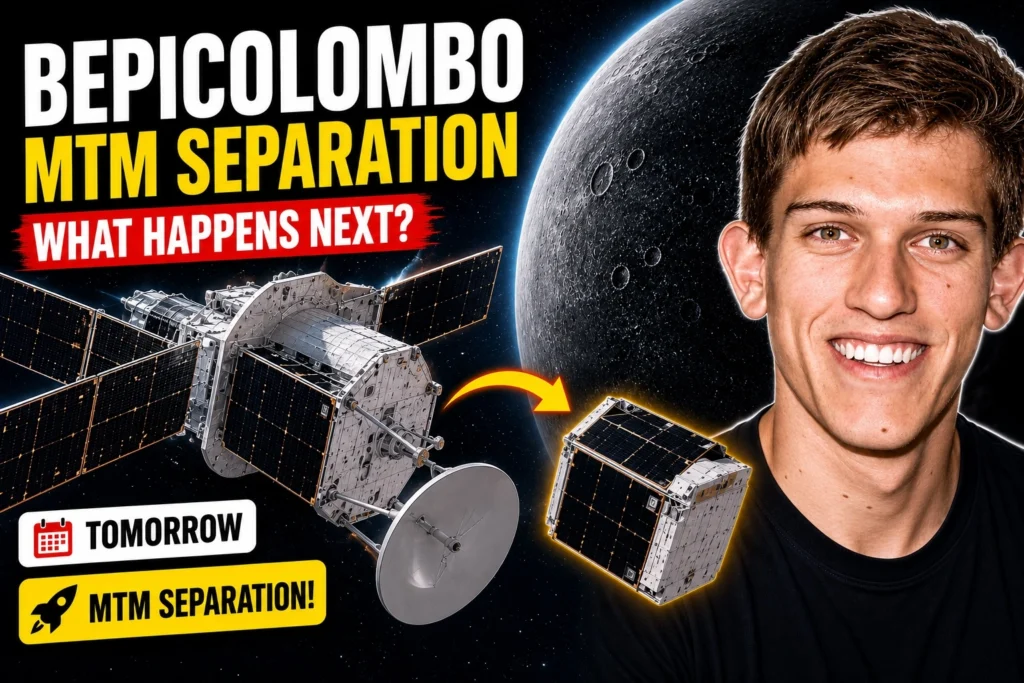
BepiColombo Sheds Its Transfer Module as the Mercury Arrival Begins
After eight years and nine planetary flybys, ESA–JAXA’s BepiColombo mission is about to reach a…
A SpaceX Rocket Stage Is About to Crash into the Moon. Here’s Why Scientists Are Excited
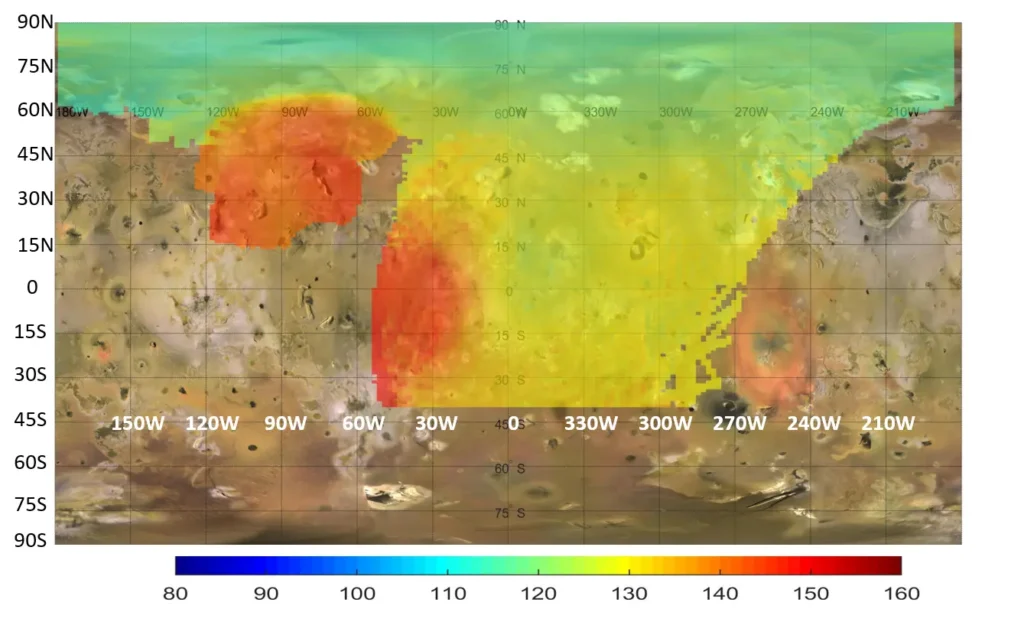
Juno Peers Beneath Io’s Surface and Finds Heat Rising From Within
NASA Reveals “Asteroid” Is Actually an Active Comet, Highlighting the Importance of Precision Planetary Defense
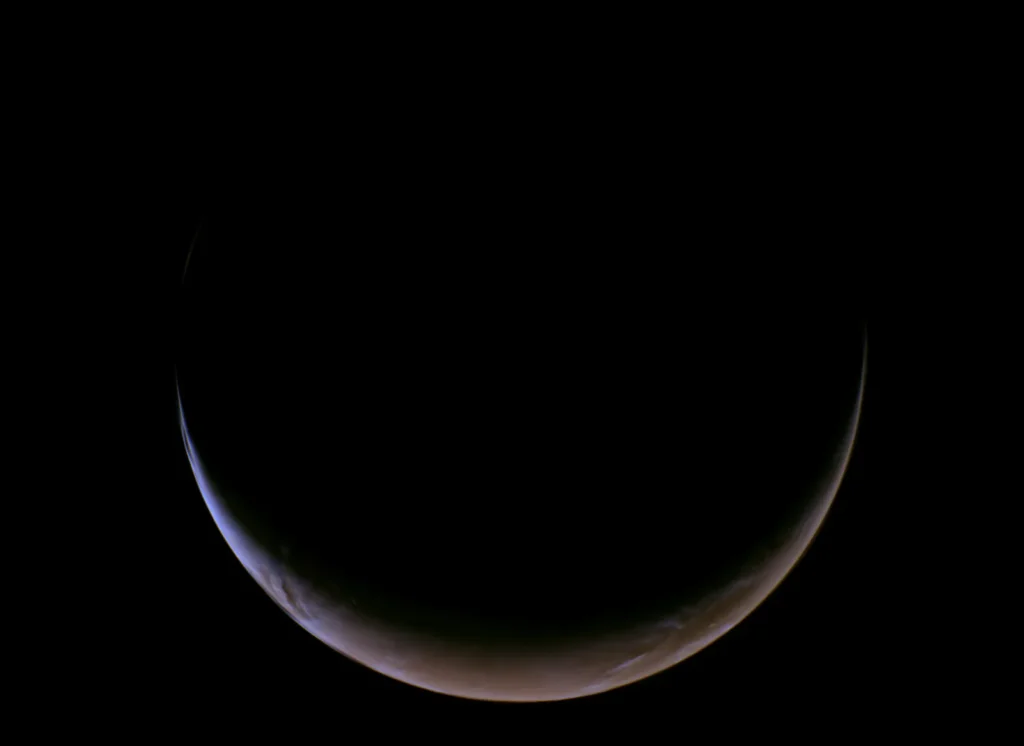
Psyche’s Close Encounter with Mars Gives NASA a Crucial Dress Rehearsal
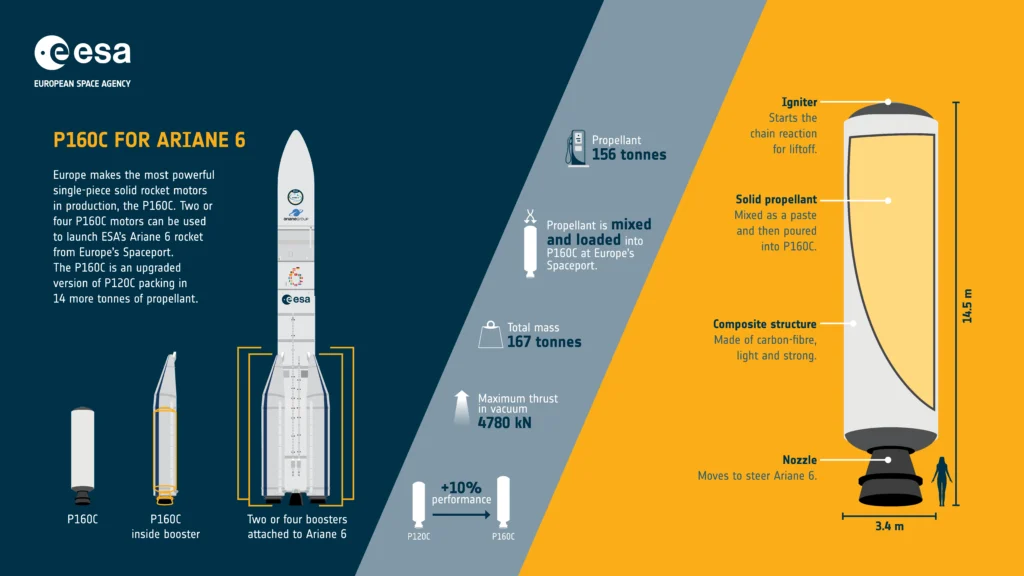
Ariane 6 Sets a New European Record with Upgraded Boosters

Spacewear CEO Corinna Sperandini Receives Italy’s “Le donne di ora” Award – But Let’s talk about Technology and Innovation
Cover Image: Le Donne di Ora Prize – Credits Invitalia The recognition highlights a growing…
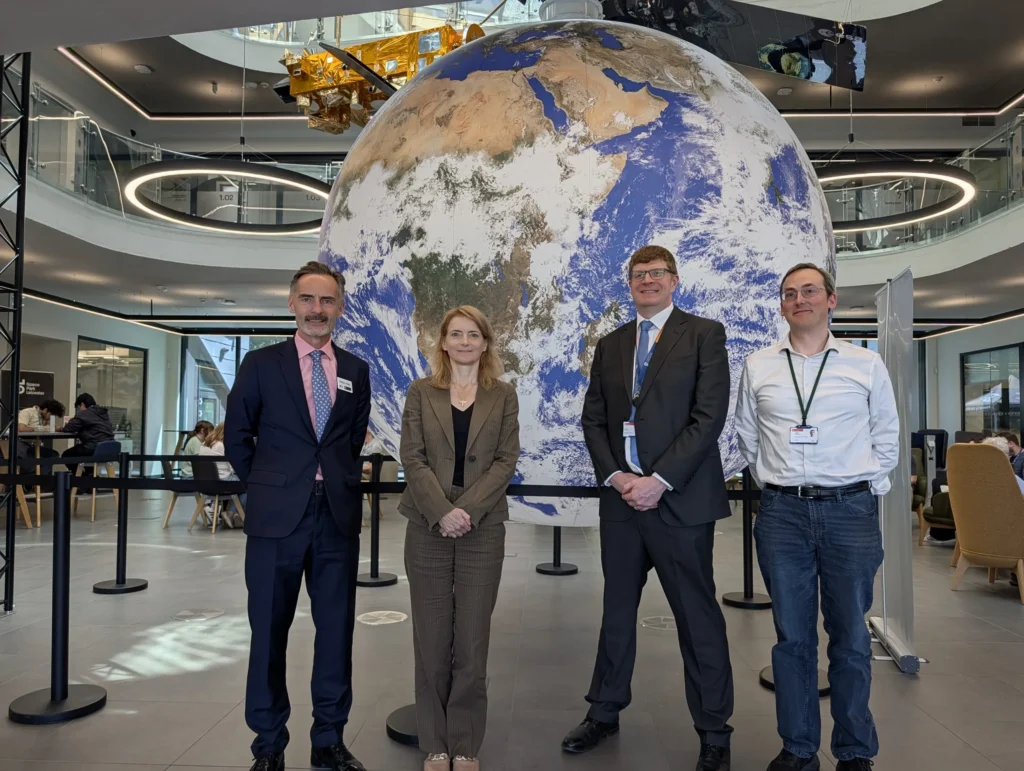
Leicester Showcases Why the UK Space Sector Is More Than Just Launches