
Join the mailing list Free weekly briefing, no spam.
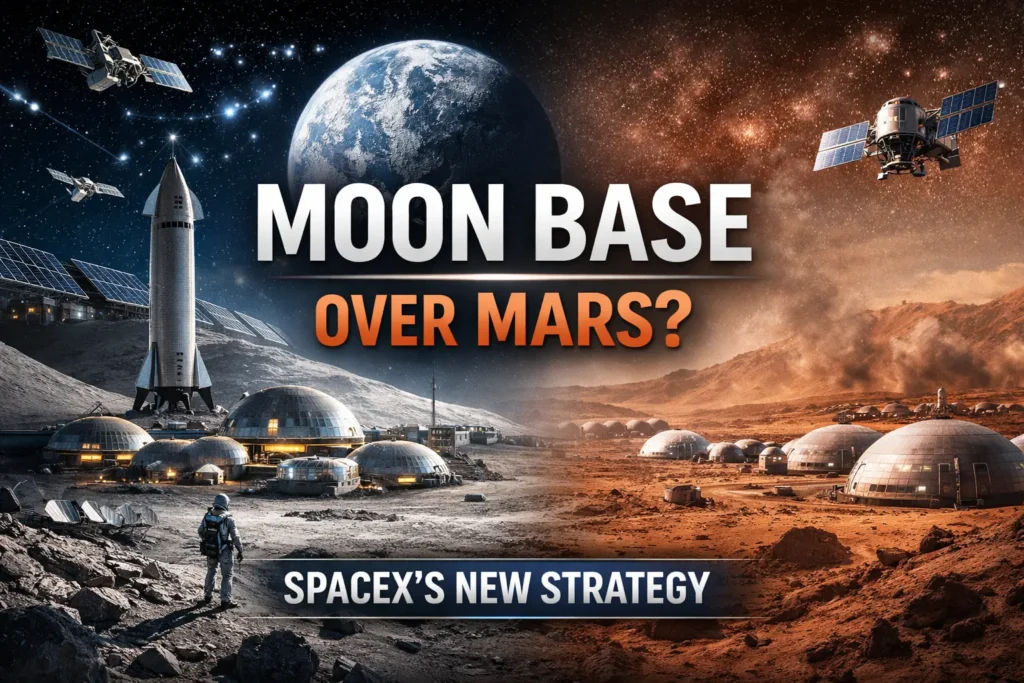
In a dramatic strategic shift that’s reverberating across the global space industry, Elon Musk and SpaceX have announced they will prioritize building a permanent, self-growing city on the Moon before focusing on Mars. This marks a notable departure from the company’s long-standing emphasis on establishing a city on the Red Planet. At the same time, SpaceX’s integration of xAI and advanced artificial intelligence infrastructure into its broader space roadmap is reshaping how we think about human expansion beyond Earth.
Why SpaceX Is Choosing the Moon Over Mars
Faster Development Timeline
Elon Musk has indicated that a self-growing lunar city could be achievable in less than a decade—significantly sooner than a self-sustaining Martian settlement, which could take decades due to longer travel times and limited launch windows between Earth and Mars.
- Moon travel time: approximately two days, with launch windows roughly every 10 days
- Mars travel time: approximately six months, with launch windows roughly every 26 months
The ability to iterate quickly with frequent missions makes the Moon a far more practical proving ground for infrastructure, life-support systems, and industrial operations that will eventually support deeper space expansion.
Musk has emphasized that SpaceX’s overarching mission—to secure the long-term future of humanity as a multiplanetary species—remains unchanged. However, the Moon provides a faster and more achievable near-term path to establishing a permanent human foothold beyond Earth.
What “Self-Growing” Means
The concept of a “self-growing city” refers to a settlement designed to expand over time with increasing autonomy. Rather than depending entirely on continuous resupply from Earth, such a city would scale organically through infrastructure development, local manufacturing, and potentially resource utilization.
Key components may include:
- Lunar manufacturing facilities
- Robotic and autonomous construction systems
- Satellite assembly and launch infrastructure
- Resource extraction and in-situ utilization
The Moon’s lower gravity and lack of atmosphere make it an attractive environment for launching heavy payloads and assembling space-based infrastructure. A lunar base could eventually serve as both a settlement and a logistics hub supporting orbital and deep-space operations.
Executive Guide to Space at Space Park Leicester: Three Days Inside a Space Mission
MO-Nav on Talon-A: What a Mach 5 GPS-Denied Test Proves
Scariest Objects in Space: Ghost Nebula, Witch Head Nebula and the Demon Star
Griffin-1 Lunar Lander Completes Environmental Testing at NASA JPL
NASA 4-D Executive Space Programme: Eight Questions Answered by Paul Hawkins

Halloween Fireballs 2026: When to See the Orionid and Taurid Meteor Showers
Perseverance Passes Opportunity’s Driving Record: What 45 Kilometers on Mars Really Means
Why Space Teams Fail: Paul Hawkins on NASA’s 4-D Leadership System
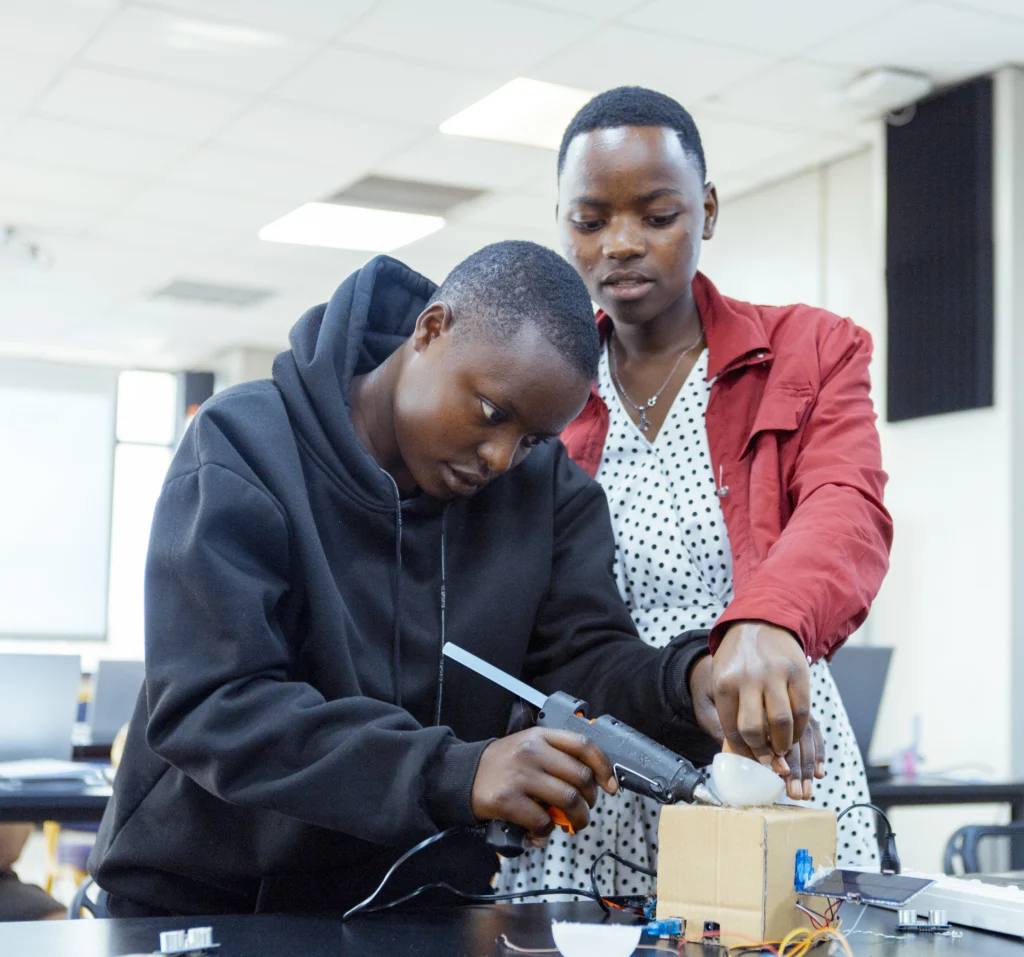
Leicester Scientists Help Train East Africa’s Next Generation of Climate Researchers
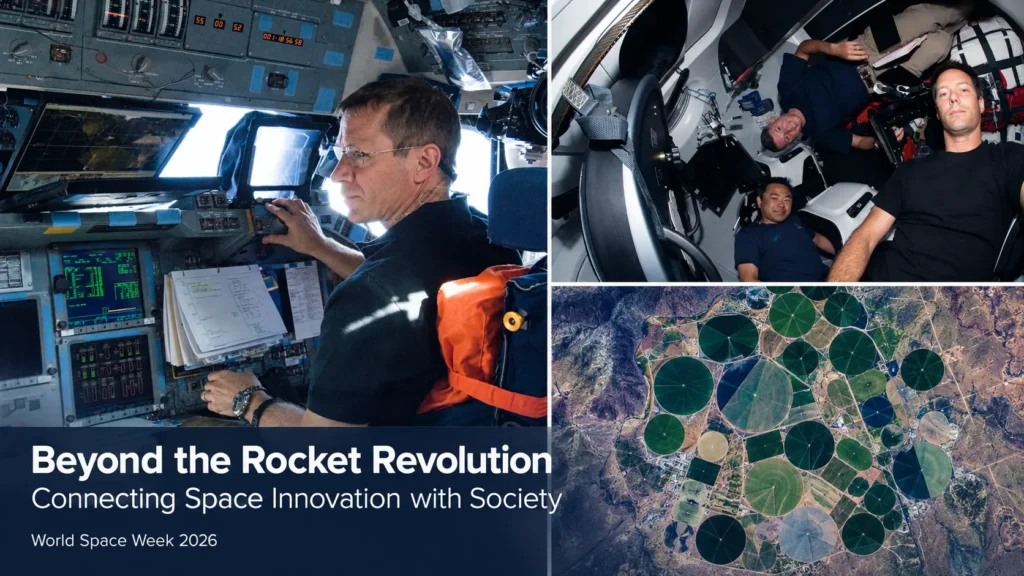
Beyond the Rocket Revolution: Connecting Space Innovation with Society
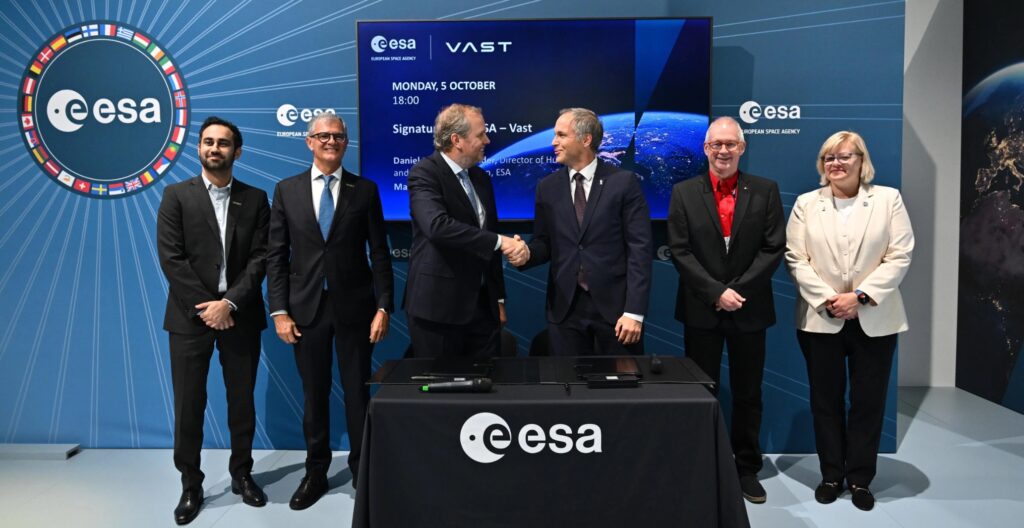
ESA and Vast: the new MoU and Europe’s future after the ISS
The xAI Acquisition and the Space-Based Compute Vision
One of the most consequential developments in this strategy is the integration of xAI into SpaceX’s broader ecosystem. This move signals an ambitious plan to merge advanced AI development with space infrastructure and launch capability.
Under Musk’s emerging vision:
- Large-scale AI compute infrastructure could be deployed in orbit.
- Satellites may host powerful data processing systems.
- Space-based solar energy and thermal radiation could provide advantages for powering and cooling high-performance computing systems.
As terrestrial data centers face growing energy constraints and cooling challenges, space-based computing presents a long-term alternative. Starship’s heavy-lift capacity and reusability are central to making this concept economically feasible.
In this framework, the Moon becomes more than a destination for astronauts. It could evolve into a manufacturing and deployment hub for orbital AI systems and satellite constellations, supporting a new industrial layer in space.
Starship, Artemis, and Strategic Context
SpaceX’s fully reusable Starship system is central to the Moon-first strategy. Designed to transport both cargo and crew, Starship enables high-cadence, high-mass deliveries to lunar orbit and the surface.
SpaceX’s partnership with NASA through the Artemis program further reinforces the lunar emphasis. Artemis aims to return astronauts to the Moon later this decade, and SpaceX’s lunar lander variant of Starship is a key component of those missions.
Additional strategic drivers include:
- Increasing global competition in lunar exploration
- Technological readiness compared to Mars missions
- Lower logistical complexity and cost relative to Mars
By focusing on the Moon first, SpaceX can refine systems, reduce risk, and build operational experience before committing to the more demanding challenge of Mars colonization.
Mars Is Not Abandoned—But It Is Deferred
Mars remains a core long-term objective for SpaceX. Musk continues to describe a future city on Mars as essential to ensuring humanity’s long-term survival.
However, rather than pursuing Mars as the immediate next step, SpaceX appears to be adopting a phased approach:
- Develop robust lunar infrastructure.
- Expand orbital industrial and compute capabilities.
- Leverage these systems to support eventual Mars missions.
This approach allows SpaceX to build technological maturity and economic foundations that could significantly lower the barriers to interplanetary settlement.
Building the Foundations of a New Space Economy
The Moon-first strategy suggests the emergence of a layered space economy that includes:
- Permanent lunar settlements
- Orbital AI and compute networks
- Satellite manufacturing and deployment ecosystems
- Long-term Mars expansion
If successful, this integrated model could transform the Moon into both a human habitat and a central node in a space-based industrial network. The combination of reusable launch systems, autonomous robotics, AI development, and strategic lunar infrastructure may redefine how humanity expands into the solar system.
Conclusion
SpaceX’s decision to prioritize a Moon city over immediate Mars colonization represents a pragmatic recalibration rather than a retreat from ambition. By combining rapid lunar development, advanced AI integration, and heavy-lift launch capabilities, the company is positioning the Moon as the first major step toward a sustainable multiplanetary civilization.
Far from diminishing the vision of Mars, this strategy may ultimately strengthen it—creating the infrastructure, economic base, and technological depth required to make human life beyond Earth not just possible, but scalable.