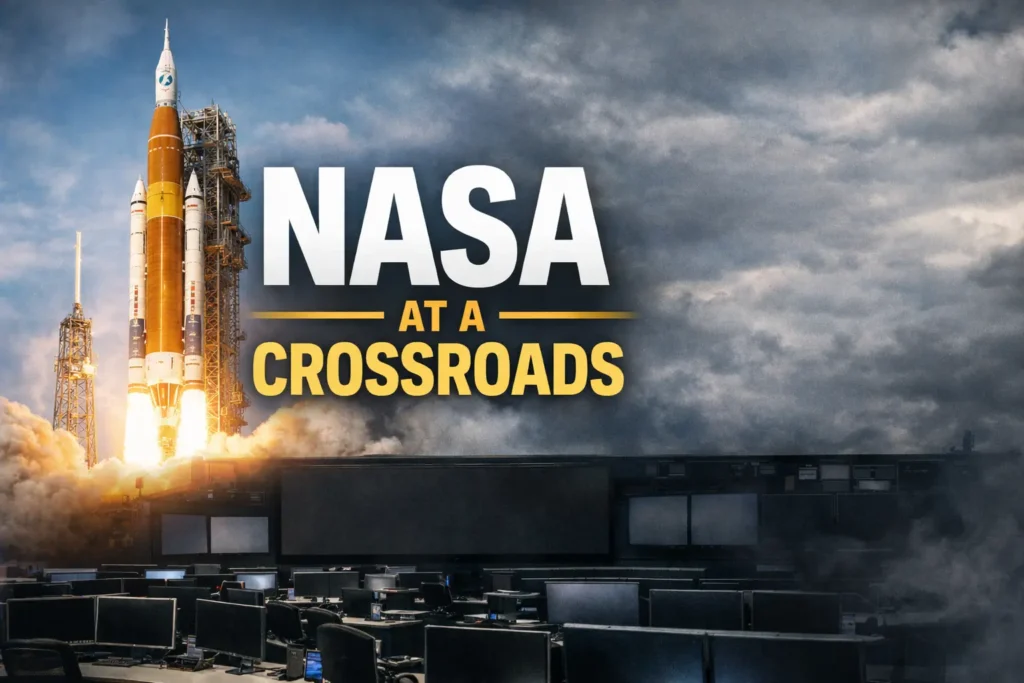
After a turbulent year marked by political uncertainty, budget battles, and operational disruption, NASA enters 2026 at a critical inflection point. The re-appointment of Jared Isaacman as NASA Administrator during President Donald Trump’s second administration, combined with the effects of the November 2025 U.S. federal government shutdown, has already left a measurable imprint on the agency.
While none of these developments has derailed NASA’s flagship missions outright, together they have reshaped internal priorities, strained the workforce, and raised important questions about the long-term balance between exploration, science, and institutional stability.
Celeste Takes Flight: Europe’s Next Step in Satellite Navigation Innovation

Dallas Campbell to Bring the Story of Space Exploration to Life at Space Park Leicester
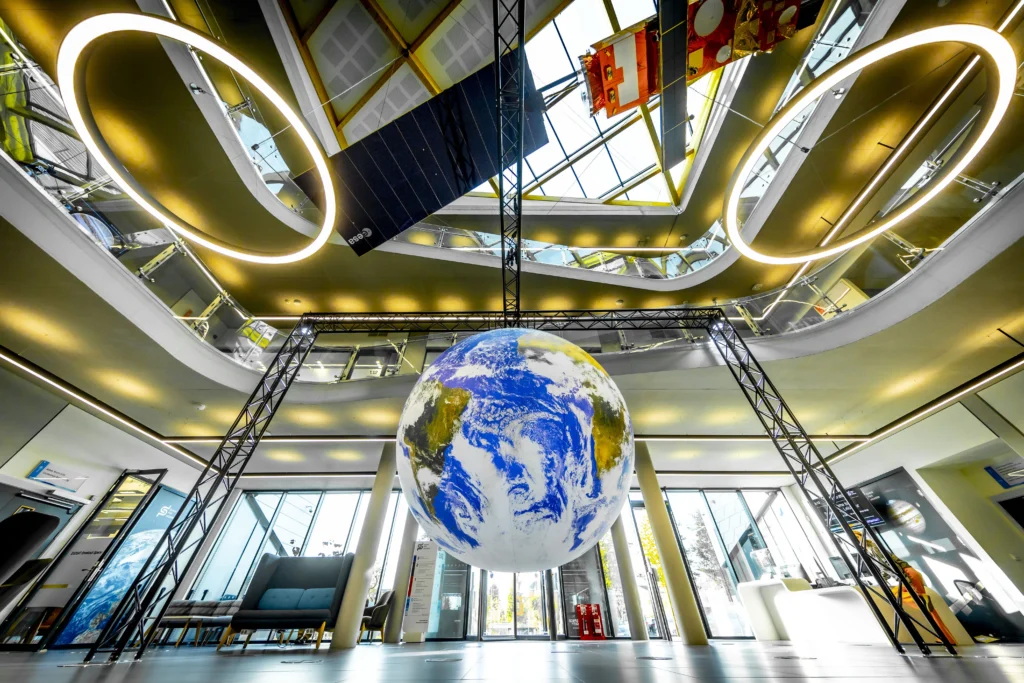
UK Space Science Sets Course for 2035: Leicester Event to Shape the Future
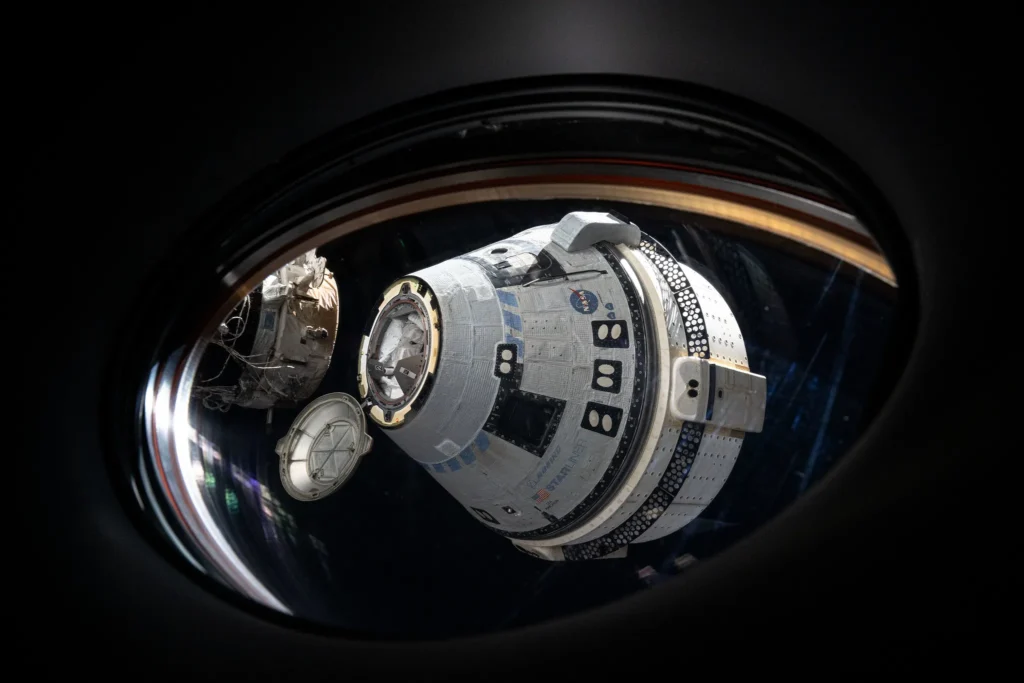
Boeing Starliner – Key Anomalies Analysis
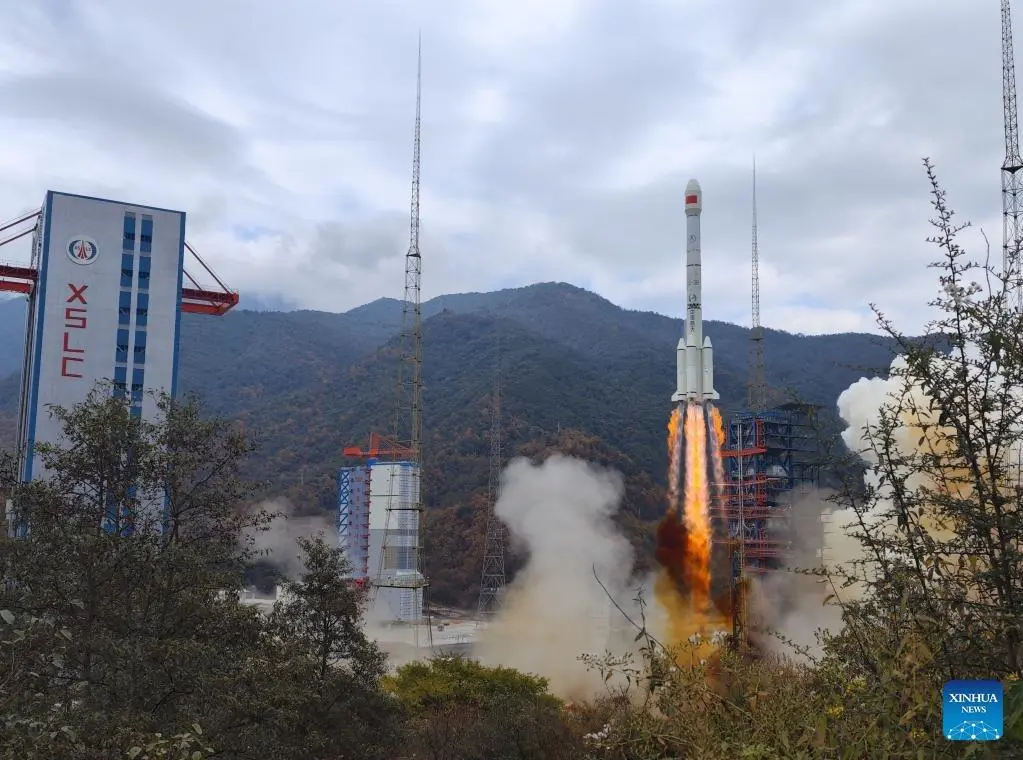
Long March-10: The Rocket That Could Take China to the Moon
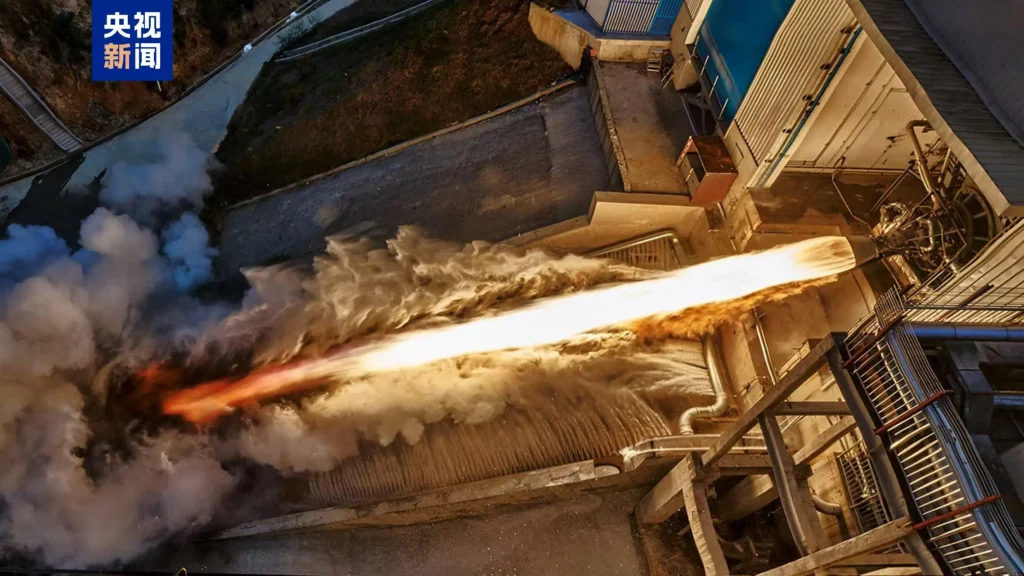
The Liqing-2 Engine: Powering China’s Commercial Reusable Rockets
A Second Appointment, and a Signal of Direction
Jared Isaacman’s return as NASA Administrator followed months of leadership uncertainty, during which the agency operated under acting leadership amid contentious budget negotiations. His re-appointment signals continuity with an exploration-forward, commercially oriented vision for NASA.
Isaacman, an entrepreneur and veteran private astronaut, has consistently emphasized:
- Greater reliance on commercial partnerships
- Sustained focus on human exploration of the Moon and Mars
- A desire to maintain major science programs, but within tighter fiscal constraints
Supporters see his leadership as aligned with a more agile, innovation-driven NASA. Critics, however, worry that increased emphasis on commercial solutions and crewed exploration could place long-term pressure on science programs that depend on stable, multi-decade planning.
Regardless of perspective, the months-long confirmation process itself had consequences. Major strategic decisions were deferred, long-term planning slowed, and uncertainty filtered down to NASA centers, contractors, and research partners.
The November 2025 Shutdown: Short, Sharp, and Disruptive
The federal government shutdown in November 2025 did not single out NASA, but the agency felt its effects acutely.
As in past shutdowns, NASA was forced to furlough a large portion of its civil-service workforce, while only mission-critical personnel remained on duty. Operations tied to crew safety, the International Space Station, and active spacecraft continued, but much of the agency’s broader work temporarily stopped.
The immediate impacts included:
- Suspension of non-essential research and administrative functions
- Delays to proposal reviews, grant timelines, and science solicitations
- Interruptions to coordination with universities and international partners
Although the shutdown was temporary, its effects extended beyond its official end. NASA programs operate on tightly coupled schedules, and even short disruptions can ripple through mission development, contracting, and scientific review cycles.
Artemis: Progress, but with Fragile Margins
NASA’s Artemis program remains the centerpiece of U.S. human spaceflight policy, and so far it has weathered recent turbulence better than many feared.
Near-term milestones, including preparations for the first crewed Artemis mission around the Moon, continued largely uninterrupted during the shutdown due to their essential status. In that sense, Artemis demonstrated institutional resilience.
However, the longer-term picture is more complex:
- Later Artemis missions remain vulnerable to budget instability and workforce strain
- Schedule pressure continues to build for lunar landing missions beyond the first crewed flight
- Ongoing debates about the cost and sustainability of existing launch architectures have not gone away
Under Isaacman’s leadership, Artemis is expected to remain central to NASA’s mission. At the same time, his openness to reassessing how government-owned systems and commercial launch capabilities coexist suggests that the program’s architecture may continue to evolve.
Planetary Science: Quiet Delays with Lasting Effects
Planetary science programs rarely generate the headlines of human spaceflight, but they are among the most sensitive to institutional disruption.
The shutdown and preceding budget uncertainty affected planetary science in subtle but important ways:
- Review panels and funding decisions were delayed
- Proposal deadlines were reset, compressing already competitive funding cycles
- Mission concept studies and early-phase development slowed
These disruptions may appear minor in isolation, but planetary missions depend on continuity. A few months of delay at the proposal or formulation stage can translate into years of schedule pressure later, particularly for missions with international partners or complex technology development.
Concerns also remain about workforce attrition in planetary science divisions, where experienced engineers and scientists are difficult to replace quickly.
Earth Science: Caught Between Politics and Performance
NASA’s Earth science portfolio has long been one of its most politically exposed areas, and 2025 was no exception.
While congressional action ultimately preserved much of the program, earlier budget proposals and shutdown disruptions heightened uncertainty around:
- Climate and Earth-observation missions
- Data continuity for long-running satellite records
- Research grants tied to environmental monitoring and modeling
Even when funding is restored, instability has costs. Delayed missions risk gaps in critical datasets, and uncertainty makes it harder to retain skilled researchers in a highly competitive job market.
The Workforce Factor: NASA’s Hidden Vulnerability
Perhaps the most consequential impact of the past year has been on people.
Leadership uncertainty, repeated budget threats, and the shutdown itself contributed to declining morale and a noticeable loss of experienced personnel. Some departures were driven by early retirement or voluntary exits, others by the perception that long-term stability at NASA could no longer be taken for granted.
This loss of institutional knowledge affects:
- Mission safety and oversight
- Schedule realism
- NASA’s ability to manage complex, multi-decade programs
Unlike hardware delays, workforce erosion is difficult to reverse quickly—and its effects may not become fully visible until years later.
The Big Picture: A Resilient Agency Under Strain
NASA enters the next phase of the decade neither in crisis nor at ease.
The Artemis program continues to advance. Flagship science missions remain alive. International and commercial partnerships are intact. Yet the combination of political volatility, leadership transitions, budget uncertainty, and workforce attrition has narrowed the agency’s margin for error.
Jared Isaacman’s second tenure begins with high expectations and real constraints. Whether NASA can maintain its leadership in exploration while protecting the scientific foundation that has defined the agency for generations will depend less on any single mission—and more on whether stability can replace uncertainty in the years ahead.
For NASA, the challenge is clear: bold goals still inspire, but they must be matched with steady governance, sustained investment, and a workforce confident that the institution behind them is as durable as the ambitions it pursues.
Celeste Takes Flight: Europe’s Next Step in Satellite Navigation Innovation
Dallas Campbell to Bring the Story of Space Exploration to Life at Space Park Leicester
UK Space Science Sets Course for 2035: Leicester Event to Shape the Future
Boeing Starliner – Key Anomalies Analysis
Long March-10: The Rocket That Could Take China to the Moon