
Join the mailing list Free weekly briefing, no spam.
Argotec and Rheinmetall Put an Air Defence Satellite in Orbit
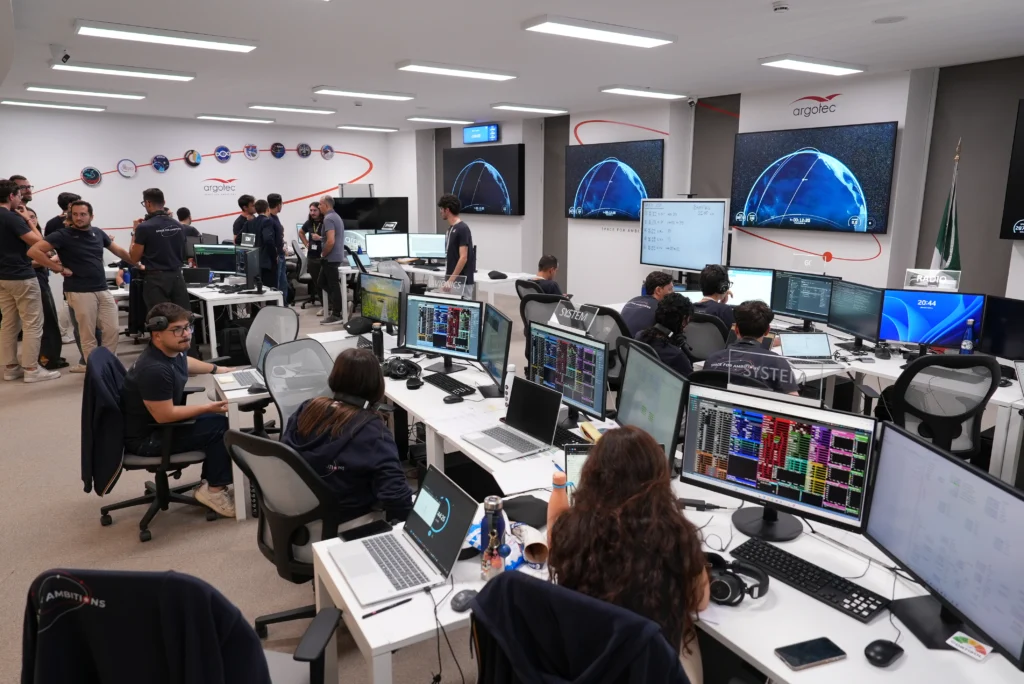
Image Credits: ARGOTEC
A sensor for air defence, launched on a rideshare
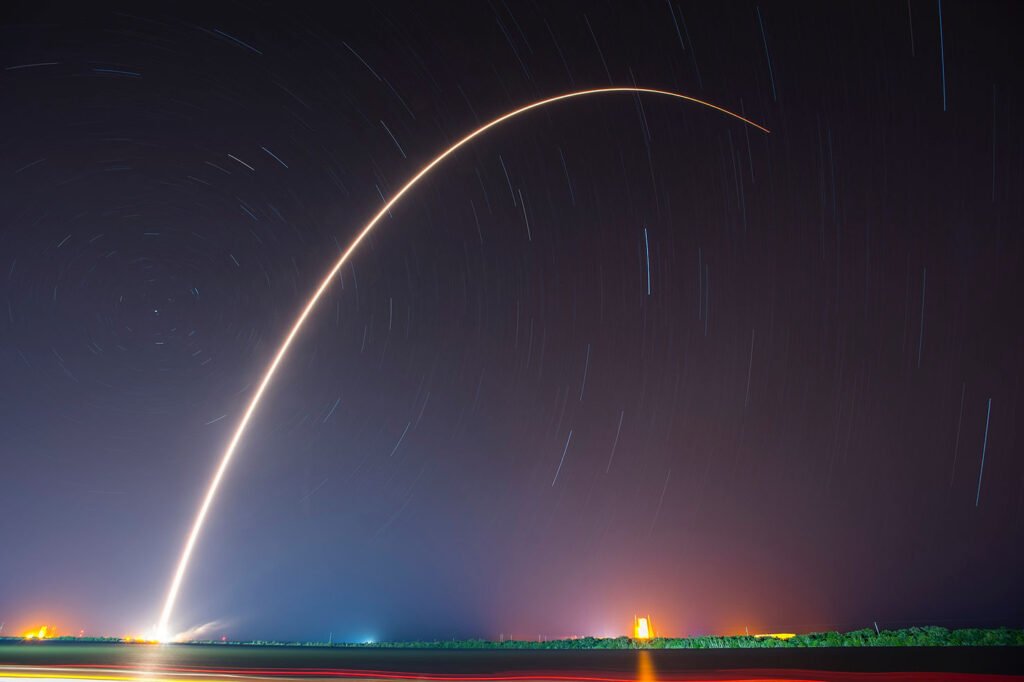
On 1 October 2026 a Falcon 9 lifted off from Vandenberg Space Force Base in California carrying the first satellite developed jointly by Argotec, the Turin-based small-satellite manufacturer, and Rheinmetall Italia S.p.A., the Italian subsidiary of the Düsseldorf defence group. The companies announced the successful launch on 2 October.
It doesn’t often occur that we talk so vertically about military launches, or specifically about events like this, but this time is different.
A satellite built to gather intelligence rather than to map the ground in the traditional sense. Its sensors are meant to detect ground-level indicators of emerging airborne threats and to give air defence operators early warning. Can you already spot a topic of today’s article? The data, processed with artificial intelligence, is to flow into national air defence systems.
What we know, and what we don’t
| Item | What we know | Status |
|---|---|---|
| Launch | 1 October 2026, Falcon 9, Vandenberg Space Force Base | Stated; consistent with public launch records |
| Rideshare mission | Not named | Not stated |
| Satellite name, mass, bus, orbit | Not given | Not stated |
| Sensor type | Sensors detect ground-level indicators of emerging airborne threats | Function stated, technology not |
| Data chain | Space asset, ground stations and tactical networks, joined by a Command and Control node, with AI processing | Stated as architecture |
| Customer and contract | Work is coordinated with unnamed institutional stakeholders; no value or contract is quoted | Not stated |
| Funding | The launch lays the basis for consolidating later funding phases | Stated |
| Next step | A further launch is on the programme roadmap for 2028 | Stated |
The launch vehicle can be narrowed down from public sources, with a caveat. The Falcon 9 flight we could match to that date and site is the Transporter-18 rideshare, lifting off at 18:32 UTC from Space Launch Complex 4E into a sun-synchronous orbit. The NASASpaceflight report counts 130 payloads and a booster, B1082, flying for the 25th time and landing at Landing Zone 4. Neither source names an Argotec or Rheinmetall payload. Our reading that the satellite flew on Transporter-18 is therefore an inference from date and site, not a confirmed fact.
But now an interesting part.
This is a demonstrator whose success is meant to unlock further money, not a fully funded operational system. The text speaks of a modular programme and of a collaboration that is becoming progressively more structured.
Architecture: from sensor to decision
The release gives more space to the system than to the spacecraft. It names three domains, the space assets, the ground stations and the tactical networks, and says they are managed at once through an advanced Command and Control node.
The dashed links are stated in the release: the node manages the three domains together. The solid chain is our reading of how data would travel, since the release does not give the order or say where the AI runs.
Why this matters: in defence space systems the hard part is rarely the sensor. It is the loop between observation, analysis, tasking and delivery to an operator who can act. Inference: a node that manages space and tactical assets together could re-task the satellite from ground cues and push alerts to air defence units without a manual hand-off. That would be the real capability on offer. The release claims it, but nothing public yet shows it working.
A technical reading, with our thinking behind
While we only have access to public information, and no access to involved Companies personnel, information or data, we tried to note down some considerations.
What kind of sensor is there? It has been said that the satellite detects ground-level indicators of emerging airborne threats, and the data and images are processed with AI. This is a watch for precursors, such as launchers moving out of garrison, aircraft dispersing from airbases or radar sites switching on, and not a tracker of aircraft in flight. Defence analysts call this indications and warning. Candidate technologies are radar imaging, optical or infrared imaging, or radio-frequency geolocation. The word images in the release rules out a purely passive radio payload, but it does not choose between the first two.
Do we know the orbit for certain? It’s a military satellite! You can guess: no. The satellite flew on Transporter-18, it was released into a sun-synchronous orbit, usually at 500 to 600 km altitude. Such an orbit passes over a given mid-latitude site at roughly the same local solar time on each pass, a few times per day at best and often much less for a narrow-swath sensor.
A single satellite in low Earth orbit cannot provide persistent warning, because it is over the area of interest for only minutes at a time. The first spacecraft is best read as a demonstrator of the sensor, the downlink and the processing chain. The release supports this reading when it says the launch validates functions in orbit and that a constellation follows. Even with a second satellite in 2028, revisit would still be counted in hours, not minutes.
One focus: AI; what about this? Processing is AI supported, with results made available to users quickly. Not stated: whether it happens on board or on the ground. Verified: Argotec’s IRIDE HEO satellites carry an on-board computer able to process images in orbit, and the company’s own profile lists edge computing among its activities. What we think is that some on-board triage is plausible, since it shortens the time between observation and alert and reduces what must be downlinked.
Argotec: from deep-space CubeSats to a defence supplier
Argotec has been moving toward this launch for years, and its track record is the main technical argument behind the partnership. The company was founded in Turin in 2008 by David Avino. Its public profile was built on small spacecraft that worked beyond Earth orbit.
- LICIACube and ArgoMoon (2022). LICIACube imaged the impact of NASA’s DART spacecraft on the asteroid Dimorphos in September 2022, and ArgoMoon flew as the only European CubeSat on Artemis I. Argotec states that this made it the only company with two microsatellites operating in deep space at once.
- IRIDE HEO. Argotec is prime contractor for 25 Earth observation satellites of about 70 kg each in the Italian IRIDE programme, ordered in two contracts in December 2022 and October 2024.
- HENON. The company leads ESA’s HENON CubeSat, a 12U XL spacecraft planned for a distant retrograde orbit to give three to six hours of warning of solar storms.
- SpacePark. The automated satellite factory at San Mauro Torinese near Turin was inaugurated on 18 October 2024. It is rated for more than 50 satellites a year and represents an investment of 25 million euros.
In 2026 Argotec opened a United States office in Melbourne, Florida, and a telecommunications technology hub in California. Taken together, these steps describe a firm that has industrialised small-satellite production and is now seeking government customers beyond science and Earth observation.
SpaceInfo Club has followed this build-up before. Our earlier pieces cover the CURIE propulsion system, the partnership with UniBap on payload data processors and an interview with Argotec’s head of electronics. The data processing theme returns here: an AI-supported defence chain is likely to lean on exactly that kind of onboard computing.
Let’s talk strategic: Rheinmetall wants its own space data
Rheinmetall presents this launch as part of a comprehensive space strategy. According to trade reporting from March 2026, the group created space as a strategic business field about two and a half years earlier, with the aim of producing and processing space data itself instead of buying it for its battle-management systems.
The larger and better documented part of that strategy is German. In December 2025 Rheinmetall and ICEYE announced a contract worth about 1.7 billion euros for a sovereign synthetic aperture radar constellation, running from the end of 2025 to the end of 2030. Series production of the satellites is scheduled to begin in the third quarter of 2026 in Neuss, through a joint venture in which Rheinmetall holds a 60 per cent share. That programme has a named end user and a stated purpose: protecting the German brigade in Lithuania.
The Argotec satellite sits on a different footing. Stated: it comes from Rheinmetall’s Italian subsidiary, it targets national security, and it is coordinated with institutional stakeholders. Not stated: who the customer is, what the programme is worth, or whether any contract exists. Inference: the Italian programme is at an earlier demonstrator stage, which would explain why the release speaks of consolidating later funding phases. We found no public document that links it technically to the German radar programme.
Two features of the announcement stand out.
- Sovereignty is claimed for the data chain, not for launch. Both chief executives stress national autonomy and resilience. The satellite itself, however, left on an American vehicle from a Californian spaceport, and the release does not say which vehicle will carry the 2028 satellite. Autonomy here means owning the spacecraft, the processing and the command node.
- Industrial roles are complementary. Rheinmetall brings systems integration and a defence customer base. Argotec brings a flight-proven small-satellite line and a factory built for series production. This is the same logic as the ICEYE partnership: a land systems house buys its way into the space segment through a specialist.
Open questions and what to watch
The launch answers whether the hardware reached orbit. It does not yet answer whether the concept works. Five questions will decide how much weight the programme deserves.
- Does the satellite work as described? The release promises validation of operational functions in orbit. Independent confirmation, such as a commissioning announcement or a first demonstrated detection, has not appeared.
- Who pays, and how much? The wording on consolidating later funding phases suggests that the next stage is not yet fully financed. A named customer or a contract value would change the reading of the whole programme.
- What is the sensor? Radar, optical, infrared or radio-frequency sensing lead to very different revisit rates, weather limits and ground processing loads.
- How many satellites make a warning service? A single low-orbit satellite gives an episodic view. The size of the constellation behind the 2028 launch will show how persistent the service is meant to be.
- How does it connect to existing air defence networks? The Command and Control node is described only in outline. Standards, accreditation and the handling of classified data will govern how fast the information can be used.
For a reader following the sector, the most useful signals over the next two years are Argotec’s output at SpacePark, any ground segment announcements, and whether the Italian and German strands of Rheinmetall’s space activity begin to share infrastructure.
Sources and verification notes
Primary documents: the Argotec and Rheinmetall press release of 2 October 2026 in its Italian version, supplied by the Argotec press office, and the English version on Rheinmetall’s site.
Pages opened for verification:
- Launch: NASASpaceflight, Transporter-18; Space Launch Schedule, Transporter 18.
- Press coverage of the announcement: Defence Industry Europe; Militarnyi. Both repeat the release and add no technical detail.
- Argotec: Argotec, Wikipedia; HEO contract, SmallSat News; HENON, ESA; SpacePark, Astrospace.
- Rheinmetall space strategy: Rheinmetall and ICEYE contract, December 2025; ESUT, March 2026; FW-Mag, ILA 2026.
Verification notes. The satellite’s name, mass, orbit and sensor could not be confirmed in any public source. Neither launch tracker names an Argotec or Rheinmetall payload on Transporter-18, so the link to that flight is an inference. The claims about Argotec’s heritage, the figures for IRIDE HEO, SpacePark and HENON, and the Rheinmetall and ICEYE contract terms were each checked against the pages above. Statements by the chief executives are quoted from press release and have not been independently tested. The technical reading and the architecture diagram are our analysis, not reporting.