
Join the mailing list Free weekly briefing, no spam.
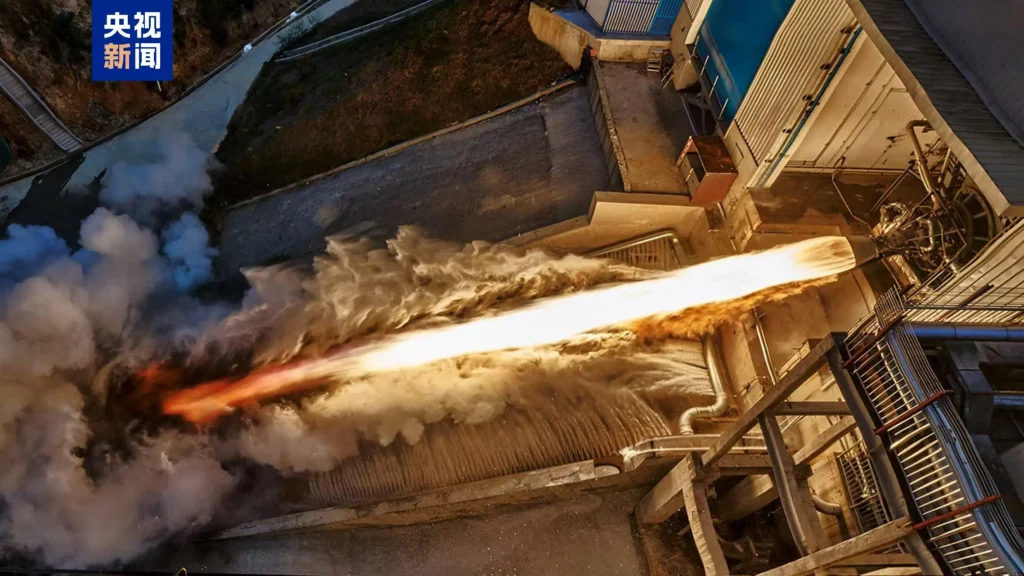
Liqing-2 liquid oxygen kerosene engine – Credit CMG
China’s commercial space sector achieved another propulsion milestone with the long-range test of the Liqing-2 rocket engine, developed by the company CAS Space.
The Liqing-2 is a 110-ton-thrust liquid oxygen–kerosene engine designed specifically for reusable launch vehicles. It is expected to power rockets in the company’s Lijian launch family, which are being developed for commercial satellite missions.
Liquid oxygen and kerosene — commonly referred to as LOX/RP-1 propulsion — is one of the most widely used rocket propellant combinations in modern launch systems. The propellants provide high thrust and relatively efficient performance, making them ideal for the first stages of rockets that must lift heavy payloads from Earth’s surface.
According to CAS Space, the Liqing-2 engine uses a pin-injection combustion system in both the gas generator and thrust chamber. This design improves fuel mixing and combustion stability, two factors that are critical for engines that must operate repeatedly in reusable launch systems.
Another important feature of the engine is its throttle capability, allowing it to operate between roughly 50% and 100% thrust. This flexibility is especially valuable during landing maneuvers or controlled descents, where engines must precisely adjust their power output.
Development of the Liqing-2 engine began in 2023, and the project moved quickly through testing phases. By early 2025 the engine had completed liquid-flow tests and assembly reviews, and the recent long-range test demonstrates continued progress toward operational use.
For China’s commercial launch sector, engines like Liqing-2 are essential. The country has seen rapid growth in private launch companies over the past few years, all aiming to capture a share of the expanding satellite market.
Reusable propulsion systems could be a key differentiator in that market. If engines like Liqing-2 prove reliable in flight, they may help Chinese launch providers offer lower-cost and more frequent launch services.
In the broader context of the global space race, China’s progress shows that reusable propulsion is no longer limited to a handful of Western companies — it is becoming a worldwide standard.
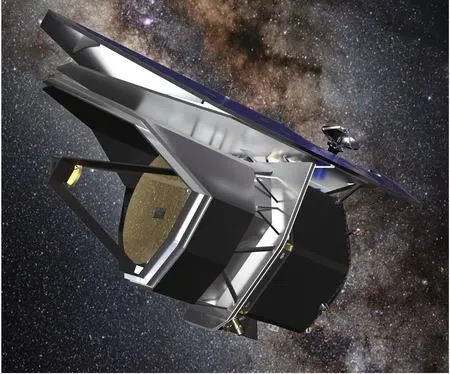
PRIMA Far-Infrared Telescope: NASA’s First Probe Explorer and What It Means for Astrophysics
Image Credits: NASA On September 23, 2026, NASA announced that PRIMA (PRobe far-Infrared Mission for…

HMS Daring Representative Visit Space Park Leicester as Royal Navy and Space Sector Strengthen Ties
tag: Space Park Leicester Cover image credits: SPL Representatives of HMS Daring have visited Space…

Starship Goes Orbital – How Flight 14 is going
Starship Flight 14 has put the world’s largest rocket into orbit for the first time….
BepiColombo Separates From Its Transfer Module Today
BepiColombo separates from its Mercury Transfer Module today, 3 September 2026, at 14:00 CEST (12:00…
BepiColombo Sheds Its Transfer Module as the Mercury Arrival Begins
After eight years and nine planetary flybys, ESA–JAXA’s BepiColombo mission is about to reach a…
A SpaceX Rocket Stage Is About to Crash into the Moon. Here’s Why Scientists Are Excited

Juno Peers Beneath Io’s Surface and Finds Heat Rising From Within

NASA Reveals “Asteroid” Is Actually an Active Comet, Highlighting the Importance of Precision Planetary Defense

Psyche’s Close Encounter with Mars Gives NASA a Crucial Dress Rehearsal