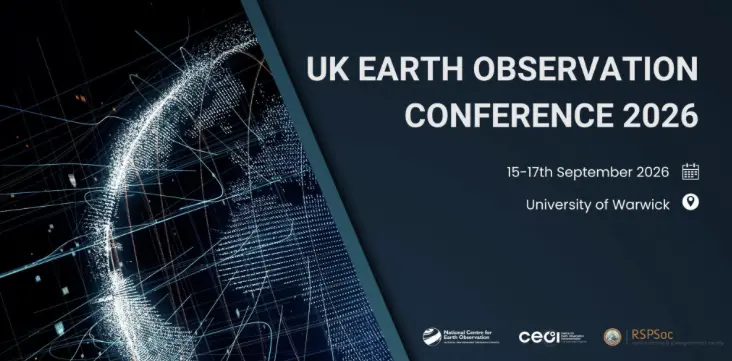
Image: UK National Earth Observation Conference 2026
Organisers of the UK National Earth Observation Conference 2026 have officially opened a Call for Themes and Workshop Ideas, inviting researchers, industry professionals, policymakers and cross-sector partners to contribute to the design of the upcoming event.
The three-day conference will take place at the University of Warwick from Tuesday 15 September to Thursday 17 September 2026. Held every two years, the conference serves as a key meeting point for the UK’s Earth observation ecosystem — from upstream instrument developers to downstream data users and decision-makers.
Strengthening the UK’s Position in Earth Observation
The 2026 edition is being organised by:
- National Centre for Earth Observation (NCEO)
- Centre for Earth Observation Instrumentation (CEOI)
- Remote Sensing and Photogrammetry Society (RSPSoc)
Together, these organisations represent the scientific, technological and applied dimensions of UK Earth observation.
The conference aims to bring together stakeholders working across the full EO value chain to:
- Strengthen cross-disciplinary and cross-sector exchange
- Foster new collaborations
- Address key national and global challenges
- Showcase advances in technology and data exploitation
In a field evolving as rapidly as Earth observation — particularly with advances in AI-driven analytics, satellite miniaturisation and climate modelling — organisers are keen to ensure that the programme reflects the latest scientific priorities and emerging challenges.
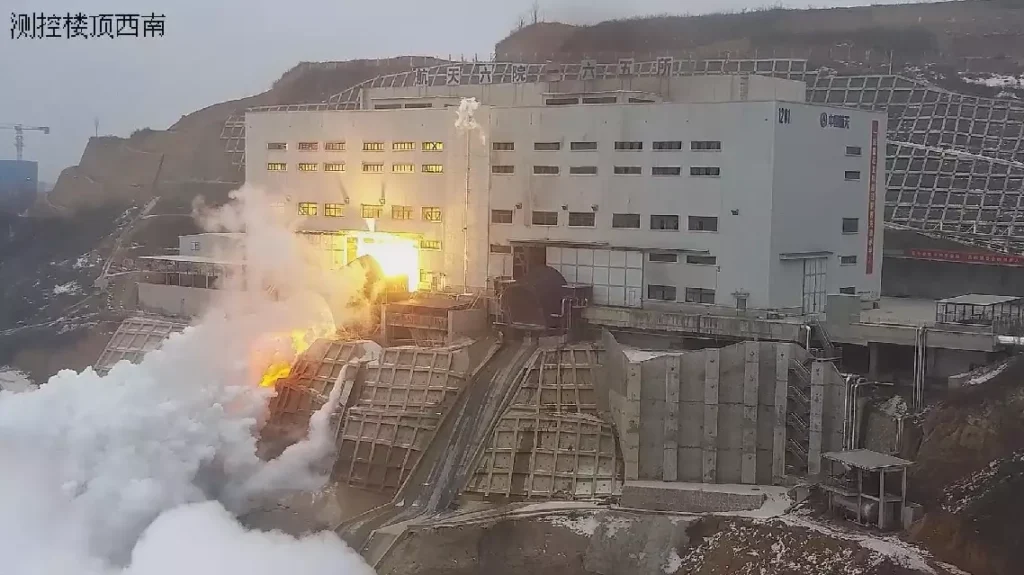
China Tests a 240-Ton Reusable Rocket Engine
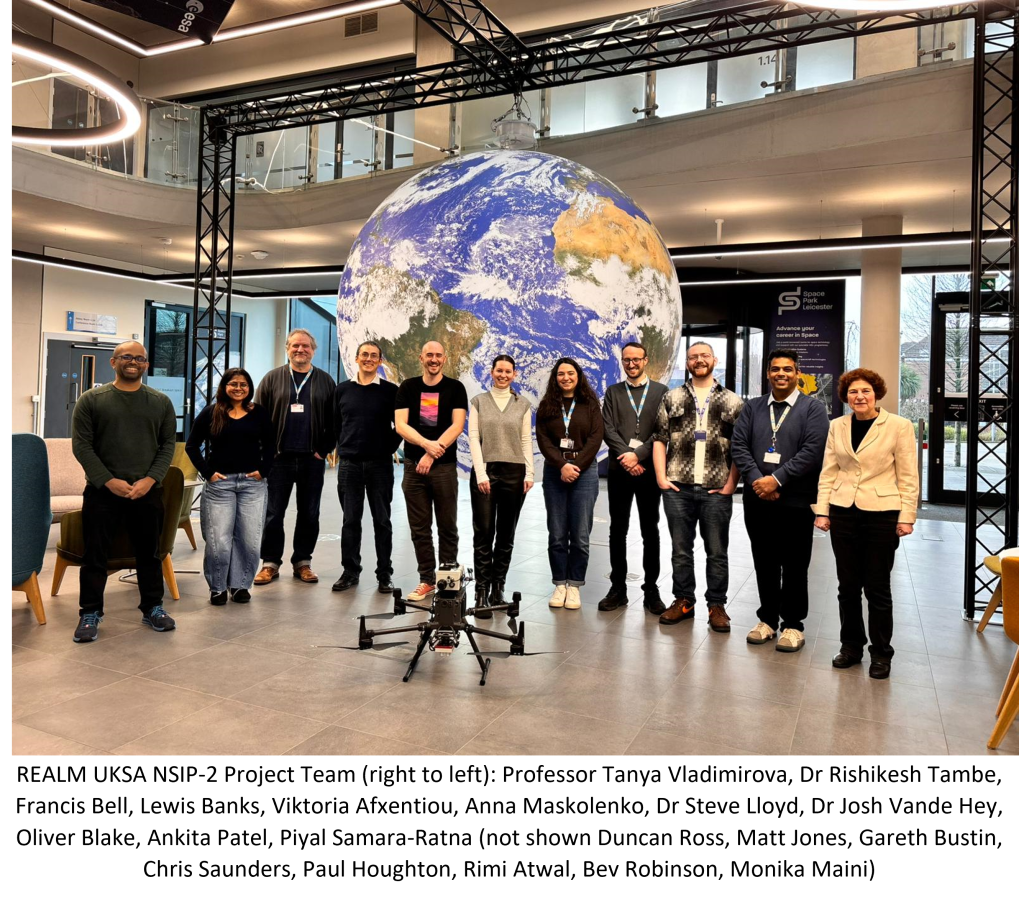
Taking AI to a New REALM: Space-Optimised Machine Learning Comes of Age at Space Park Leicester

Government Minister Visits Space Park Leicester, Highlighting the UK’s Growing Space Ecosystem
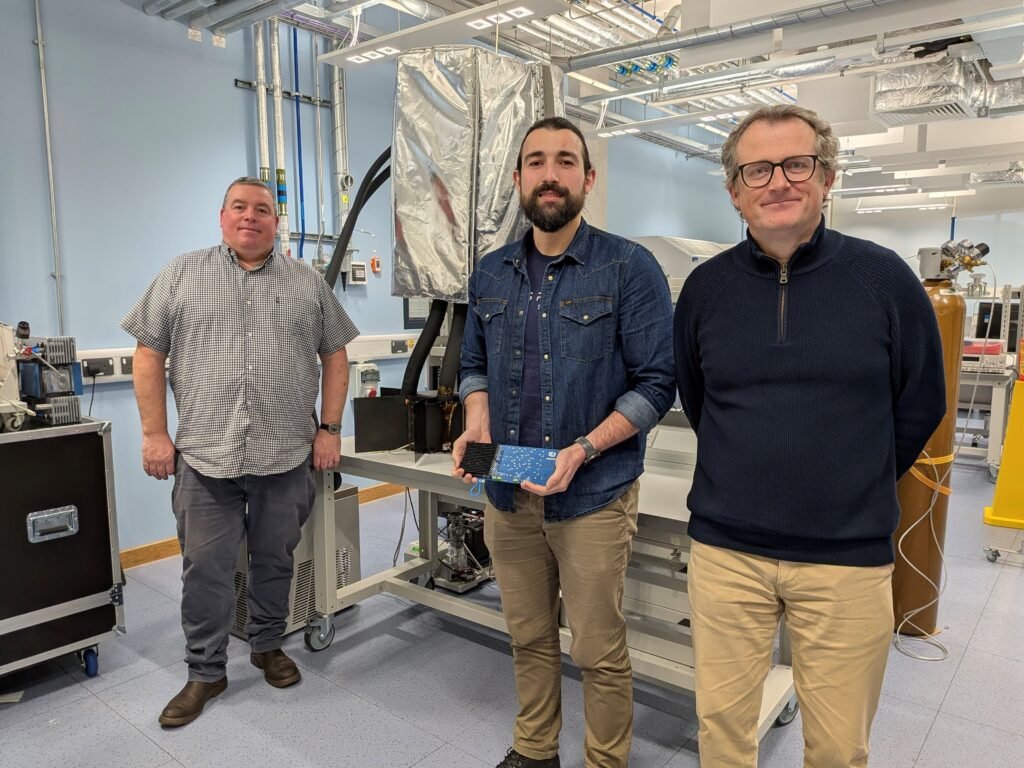
A New Power Strategy for Deep Space: Hybrid Nuclear–Solar Systems Take a Step Forward
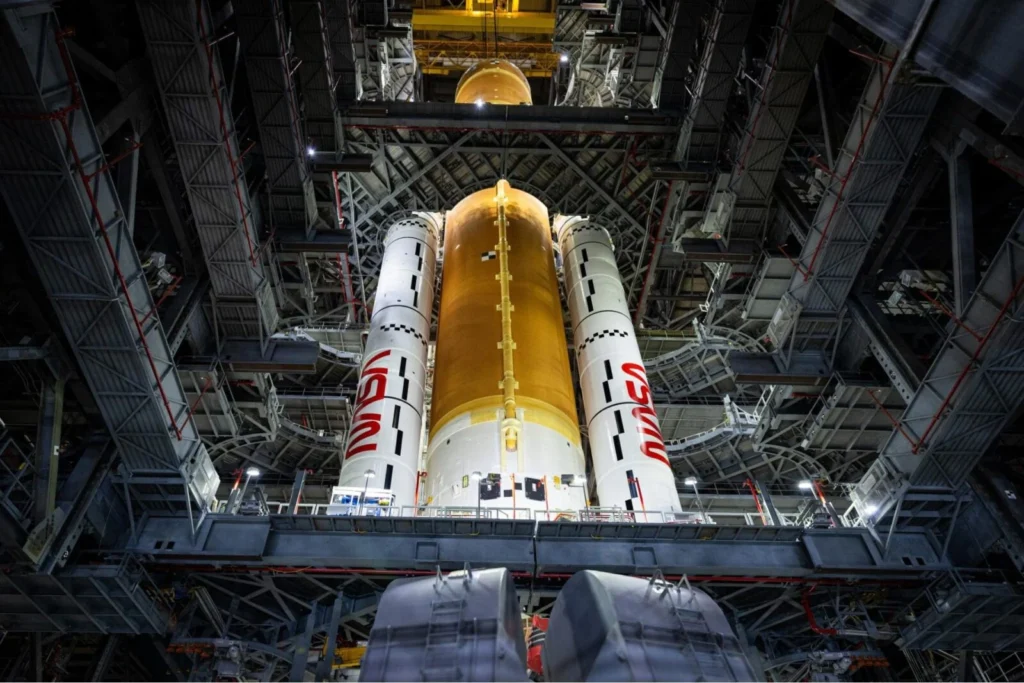
Artemis II is ready: NASA Prepares for the First Crewed Lunar Mission in Over 50 Years
Boeing Starliner Under Scrutiny: NASA Report Reveals Major Issues but Program Continues
Starlink Gen2: Engineering Evolution of SpaceX’s Next-Generation Broadband Constellation
A Community-Driven Vision for the UK National Earth Observation Conference 2026

Dark Matter’s Hidden Web: Webb Reveals the Invisible Architecture of the Universe
Breaking: NASA Troubleshoots Artemis II Upper Stage Issue — Preparing to Roll Back
Why the Call for Themes Matters
According to Dr Nicolas Lévêque, Director of CEOI, the conference programme should be shaped by those working at the forefront of the discipline — those with direct insight into how priorities have evolved since the 2024 edition.
The Call for Themes and Workshop Ideas is designed to surface:
- Emerging scientific priorities
- Evolving technical challenges
- Interdisciplinary opportunities
- Areas where collaboration can accelerate impact
Workshops in particular are seen as a powerful format for active cooperation — enabling participants to move beyond presentations and engage in structured problem-solving across disciplines.
From Instruments to Policy: The Full EO Spectrum
The UK National Earth Observation Conference traditionally spans the complete lifecycle of Earth observation:
- Instrument and platform technology development
- Calibration and validation
- Data processing and knowledge extraction
- Applications for climate, environment and resilience
- Policy engagement and societal impact
This breadth reflects the maturity and strategic importance of the UK EO sector — a domain where research excellence, industrial capability and government priorities increasingly intersect.
The Role of CEOI in UK EO Leadership
A central player in this ecosystem is the Centre for Earth Observation Instrumentation (CEOI), established in 2007 and funded by the UK Space Agency since 2011.
CEOI’s mission is to develop innovative UK technologies to observe Earth from space by fostering collaboration between scientists and industrial partners. Since 2017 alone, it has distributed £26 million in grants across more than 65 EO technology projects, strengthening national capabilities in instrumentation and mission development.
Its consortium currently includes:
- Airbus Defence and Space
- University of Leicester
- Rutherford Appleton Laboratory (part of STFC)
Through technology calls and co-investment with industry, CEOI plays a strategic role in positioning the UK for leadership in future international programmes while supporting domestic business growth.
A Strategic Moment for UK Earth Observation
At a time when climate adaptation, environmental monitoring and resilient infrastructure are rising on national and global agendas, Earth observation has never been more central to decision-making.
Conferences like the 2026 edition at Warwick are not just networking events — they are strategic platforms where scientific priorities are aligned, partnerships are formed and future missions are shaped.