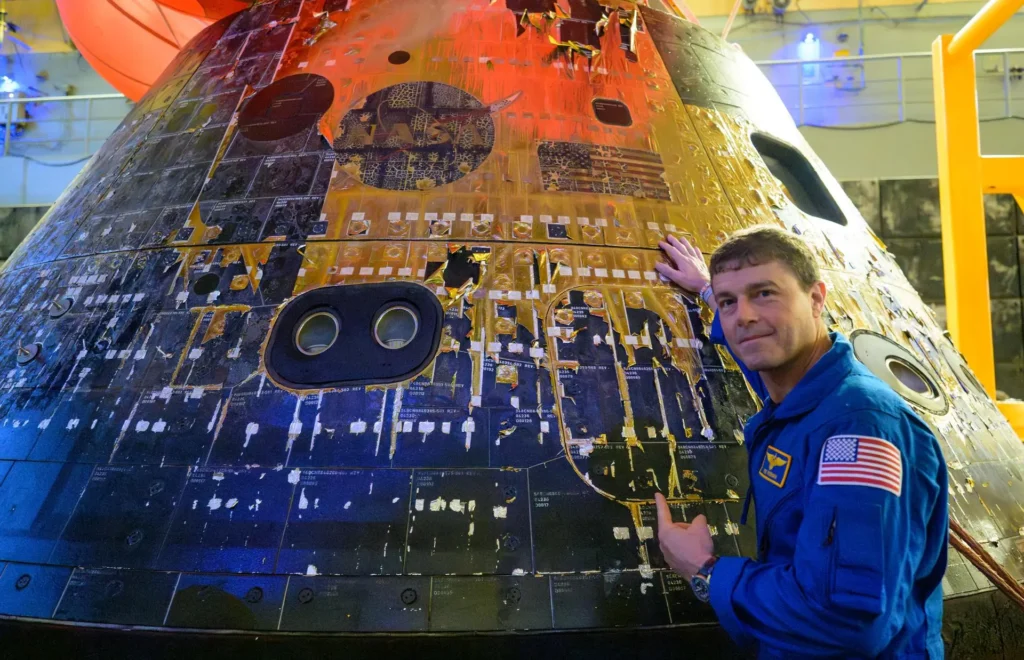
Cover Image: Reid Wiseman and the Capsule – Credit- NASA/Bill Ingalls
When NASA launched Artemis I in November 2022, it marked the beginning of humanity’s most ambitious deep-space exploration program since Apollo. The mission successfully sent the Orion spacecraft around the Moon and back to Earth without a crew, proving that the Space Launch System (SLS), Orion capsule, and associated ground systems were capable of supporting future human missions beyond low Earth orbit.
Less than four years later, Artemis has already completed its second major milestone and entered a new phase that could redefine how humans explore the Moon.
The announcement of the Artemis III crew in June 2026 has arrived at a pivotal moment. NASA is no longer simply preparing for a return to the lunar surface; it is reshaping the entire architecture of its Moon program in response to technical realities, budget pressures, and the rapid maturation of commercial spaceflight systems.
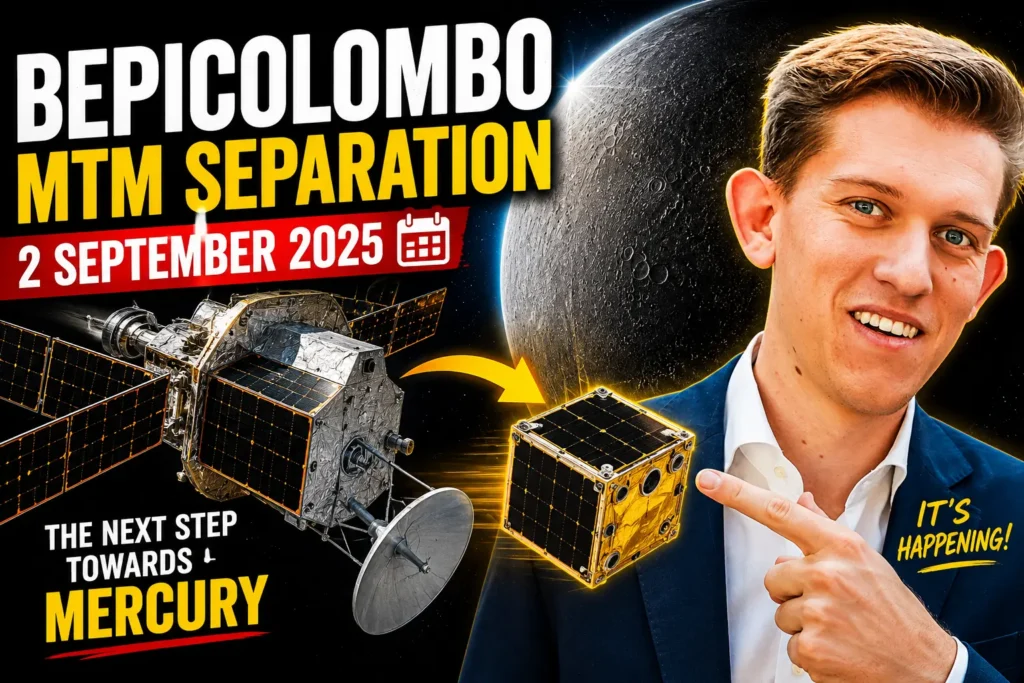
BepiColombo Separates From Its Transfer Module Today
BepiColombo separates from its Mercury Transfer Module today, 3 September 2026, at 14:00 CEST (12:00…
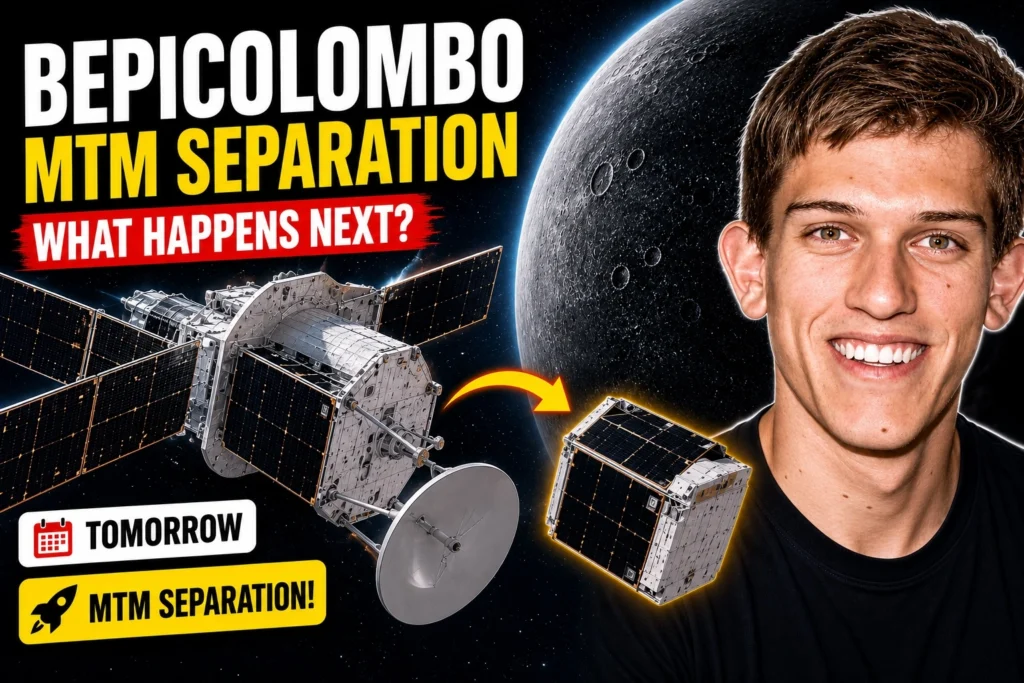
BepiColombo Sheds Its Transfer Module as the Mercury Arrival Begins
After eight years and nine planetary flybys, ESA–JAXA’s BepiColombo mission is about to reach a…
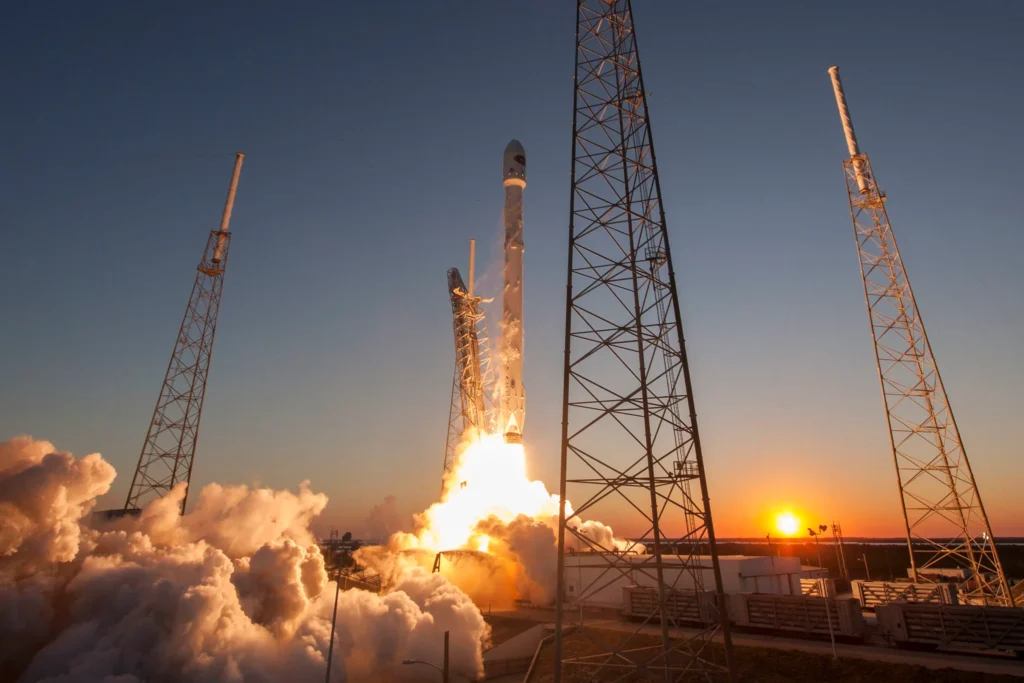
A SpaceX Rocket Stage Is About to Crash into the Moon. Here’s Why Scientists Are Excited
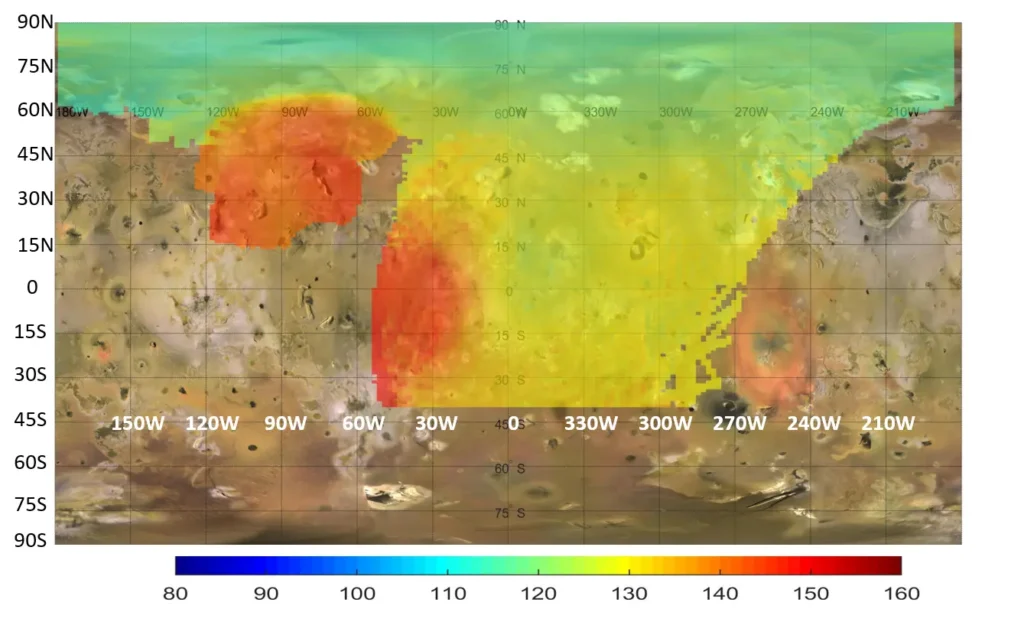
Juno Peers Beneath Io’s Surface and Finds Heat Rising From Within
NASA Reveals “Asteroid” Is Actually an Active Comet, Highlighting the Importance of Precision Planetary Defense
Psyche’s Close Encounter with Mars Gives NASA a Crucial Dress Rehearsal
Artemis I: The Mission That Proved the Hardware
Artemis I was designed as a test flight, but its significance went far beyond engineering validation.
During its 25-day mission, Orion traveled farther from Earth than any spacecraft built for humans had ever flown and demonstrated critical systems including deep-space navigation, communications, propulsion, and high-speed reentry. The mission provided NASA with invaluable data about the spacecraft’s performance in the harsh environment beyond Earth’s protective magnetosphere.
The successful completion of Artemis I gave NASA confidence that Orion and SLS could support astronauts on future lunar missions, laying the foundation for the next step in the campaign.
Artemis II: Humans Return to Deep Space
In April 2026, Artemis II carried astronauts around the Moon for the first time since Apollo 17 in 1972. The mission represented humanity’s return to deep space and validated Orion’s life-support systems, crew operations, navigation capabilities, and long-duration performance with astronauts onboard.
Although Artemis II did not land on the Moon, it achieved its primary objective: proving that humans could safely travel aboard Orion through cislunar space and return to Earth.
The mission effectively served as the modern equivalent of Apollo 8, demonstrating that NASA’s lunar transportation system was ready for increasingly complex operations.
The Major Shift: Artemis III Reimagined
Originally, Artemis III was expected to become the mission that returned astronauts to the lunar surface.
However, NASA announced a major revision to the mission profile in early 2026. Instead of attempting a lunar landing, Artemis III will now conduct a series of highly complex orbital demonstrations involving Orion and commercial lunar landers developed by SpaceX and Blue Origin.
The decision reflects the reality that lunar lander systems remain under development and require additional testing before carrying astronauts to the Moon.
Under the revised plan, Artemis III will launch in 2027 and perform rendezvous and docking operations in Earth orbit, validating technologies that will eventually support lunar landing missions. NASA describes the mission as one of the most complex spacecraft integration efforts ever attempted, involving multiple vehicles operating together in space.
Rather than representing a delay in ambition, Artemis III has become a crucial bridge between traditional government-led exploration and a new era of commercial lunar transportation.
Meet the Artemis III Crew
NASA recently revealed the four astronauts who will fly Artemis III:
- Commander Randy Bresnik
- Pilot Luca Parmitano of the European Space Agency
- Mission Specialist Frank Rubio
- Mission Specialist Andre Douglas
The crew reflects the increasingly international nature of Artemis. Parmitano’s assignment is particularly historic, making him the first European astronaut selected for an Artemis mission crew and highlighting the deep partnership between NASA and ESA.
Together, the crew combines extensive operational experience with fresh perspectives. Bresnik brings veteran leadership, Rubio holds the record for the longest single NASA spaceflight, Parmitano contributes both military and international mission expertise, and Douglas represents the next generation of exploration astronauts.
Artemis IV: The New Lunar Landing Mission
With Artemis III now serving as a technology demonstration mission, Artemis IV has effectively become NASA’s next attempt to land astronauts on the Moon.
Current plans point toward a 2028 mission that would finally place humans near the lunar south pole, a region believed to contain significant deposits of water ice. These resources are considered essential for future long-term exploration and eventual lunar habitation.
The mission will rely heavily on the technologies validated during Artemis III, particularly docking operations between Orion and commercial landing systems.
If successful, Artemis IV will represent the first human lunar landing since Apollo 17 and the first step toward establishing a permanent human presence beyond Earth.
Artemis V and Beyond: Building a Lunar Economy
NASA’s vision extends far beyond planting flags.
Artemis V is expected to continue surface operations and begin deploying the infrastructure needed for sustained lunar exploration. Future missions are envisioned to support scientific research, resource utilization, advanced mobility systems, and eventually the construction of a permanent lunar outpost.
The long-term goal is to create a sustainable exploration framework that can support repeated missions rather than isolated expeditions.
This philosophy differs fundamentally from Apollo. Instead of brief visits, Artemis seeks to establish an enduring human presence that will serve as a proving ground for future journeys to Mars.
The Future of Artemis in a Changing Landscape
Perhaps the most significant development affecting Artemis is not technological but strategic.
Recent budget proposals and policy discussions have suggested retiring the SLS rocket and Orion spacecraft after Artemis III while shifting future lunar transportation toward commercially operated systems. The Lunar Gateway station has also faced cancellation proposals as NASA evaluates more cost-effective approaches to lunar exploration.
While many details remain subject to congressional decisions and future budget negotiations, the direction is clear: Artemis is becoming increasingly dependent on commercial partnerships.
SpaceX, Blue Origin, and other industry partners are no longer supporting actors. They are becoming central elements of the architecture that will carry humanity deeper into the Solar System.
A Program in Transition
The Artemis program entering 2027 looks very different from the one envisioned when Artemis I launched.
Yet the ultimate objective remains unchanged.
NASA is still pursuing a return to the Moon, a permanent human presence on its surface, and the technologies needed for eventual missions to Mars. What has changed is the path toward those goals.
Artemis III will no longer be remembered as the mission that landed astronauts on the Moon. Instead, it may become known as the mission that validated the commercial ecosystem that makes sustained lunar exploration possible.
If Artemis succeeds, future historians may view these years not as a delay in humanity’s return to the Moon, but as the moment when lunar exploration evolved from a government project into a true international and commercial endeavor.
The road back to the Moon has changed—but it is moving forward faster than ever.
Designing for Space by Kamakhya Arora
by Kamakhya AroraSpace exploration is one of humanity’s boldest endeavours—driven by our relentless curiosity, imagination,…

Astronomy Basics
🌠 Explore the Universe Like Never Before!🔭 Discover the secrets of stars, planets, and galaxies…

[Preview] Orbital Mechanics – An Introduction
Discover the fundamentals of orbital mechanics in this beginner-friendly course—no prior experience needed! Explore how…

Human Factors and Performances
Human factors and human performance in space are critical areas of study in spaceflight operations,…
Space Physics – Basics
Explore the dynamic forces that shape our space environment in this exciting journey beyond Earth’s…