
Join the mailing list Free weekly briefing, no spam.
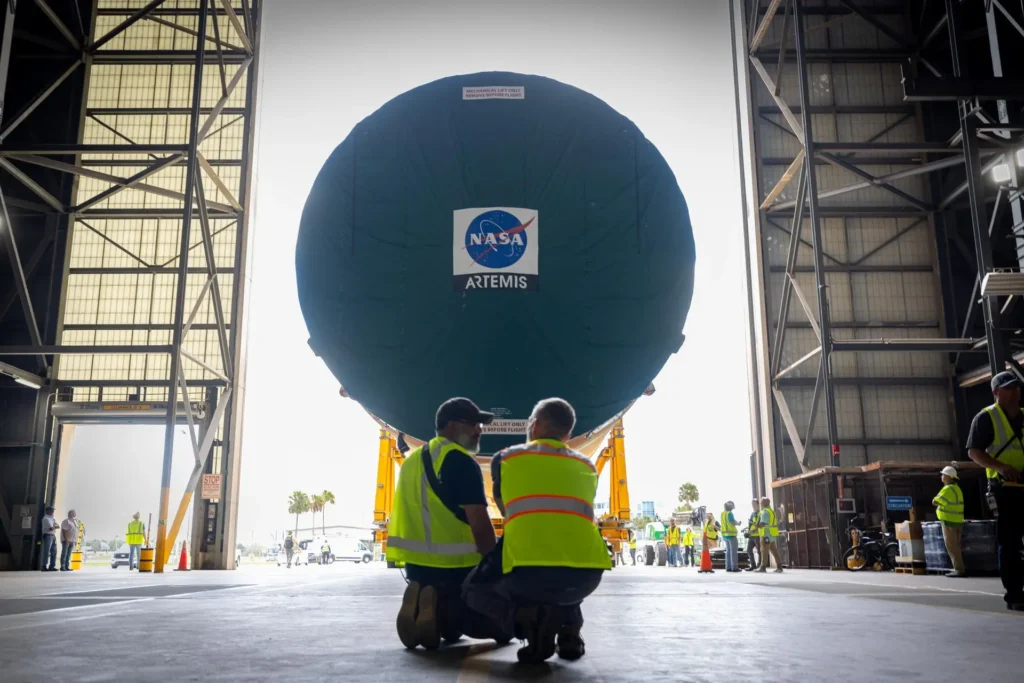
Cover Image: Artemis 3 – Credit NASA
More than half a century after the final Apollo astronauts left the lunar surface, humanity is preparing for its next giant leap. Artemis III stands as one of the most ambitious and consequential space missions ever conceived, representing far more than a return to the Moon. It is the mission that will transform the Artemis program from a series of demonstrations into a sustainable exploration architecture capable of supporting long-term human presence on the Moon and, eventually, journeys to Mars.
Following the successful uncrewed flight of Artemis I in 2022 and the crewed lunar flyby of Artemis II in 2026, Artemis III occupies a pivotal position within NASA’s long-term Moon-to-Mars strategy. While recent program revisions have adjusted the mission architecture, Artemis III remains the essential bridge between testing exploration systems and conducting routine deep-space operations. NASA now describes it as a critical risk-reduction mission designed to validate the technologies and procedures that will enable future lunar landings.
Beyond the Rocket Revolution: Connecting Space Innovation with Society

ESA and Vast: the new MoU and Europe’s future after the ISS
Image Credits: jonasphotto The European Space Agency has signed a new Memorandum of Understanding with…
Photonic Quantum Processor in Orbit: What the First Test Proved, and What It Didn’t
Illustrative image: CubeSats deployed into Earth orbit from the International Space Station’s Kibo module. Not…
Argotec and Rheinmetall Put an Air Defence Satellite in Orbit Argotec and Rheinmetall Put an…
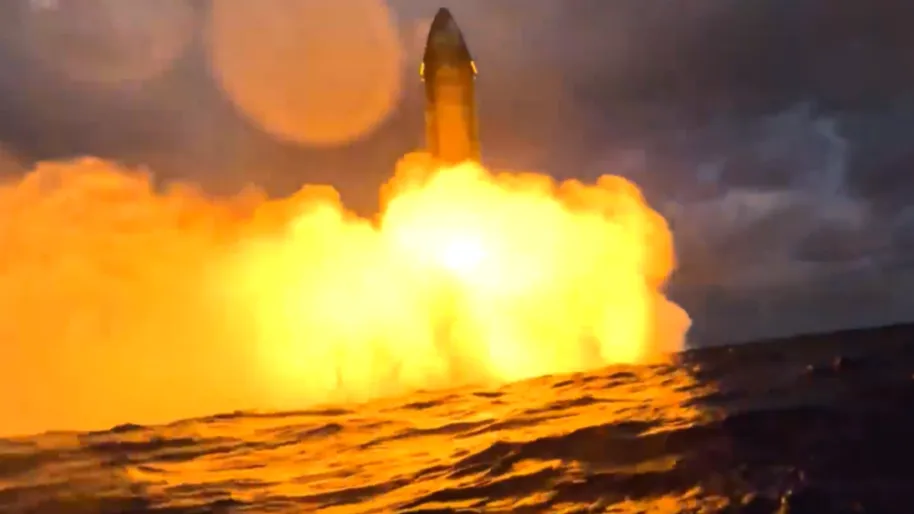
Starship Flight 14 Recap: It Reached Orbit, Delivered 26 Satellites — and Came Home the Hard Way

Aurora and Saturn at Opposition: The Sky on October 2–4, 2026
Image Credits: NASA, Neil Zeller A weekend with two stars of the show Between October…
A Mission Unlike Any Before
What makes Artemis III remarkable is not simply its destination but its unprecedented complexity.
Unlike Apollo missions, which relied on a single launch vehicle and a relatively straightforward mission sequence, Artemis III integrates multiple spacecraft, multiple launch providers, and commercial partners into a single operational campaign. NASA’s Orion spacecraft, launched aboard the Space Launch System (SLS), will rendezvous and dock with commercial lunar landing systems developed by both SpaceX and Blue Origin. These demonstrations will occur in Earth orbit before astronauts attempt future lunar surface operations.
NASA officials have described Artemis III as one of the most complex human spaceflight missions ever attempted because it requires the coordination of several independent spacecraft and launch campaigns while validating entirely new operational concepts.
The mission is expected to carry four astronauts aboard Orion, where they will spend approximately two weeks performing rendezvous, docking, habitation, and systems-validation activities. During the mission, Orion will test its docking system for the first time in space and further evaluate its life-support capabilities during a longer-duration crewed flight than Artemis II.
Why Artemis III Matters
The importance of Artemis III extends well beyond the mission itself.
Historically, Apollo demonstrated that humans could reach the Moon. Artemis seeks to demonstrate that humans can remain there.
To accomplish this goal, NASA must prove that a network of independently developed systems can function together safely and reliably. Artemis III is the first opportunity to test these integrated operations with astronauts on board. Every docking maneuver, communication link, software interface, and crew procedure verified during the mission will reduce risk for future lunar expeditions.
The mission also represents a fundamental shift in the way space exploration is conducted. Rather than relying solely on government-owned hardware, NASA is building a collaborative ecosystem involving commercial partners. SpaceX’s Starship-derived Human Landing System and Blue Origin’s Blue Moon architecture are central elements of future lunar operations. Artemis III will provide the first crewed opportunity to evaluate how these systems interact with Orion and NASA’s exploration infrastructure.
In many respects, Artemis III is not merely a mission—it is a systems integration exercise on a planetary scale.
The Lunar South Pole: The Ultimate Destination
Although current plans focus on validating operational capabilities in Earth orbit before lunar landing missions begin, Artemis III remains directly connected to one of the most scientifically compelling regions in the Solar System: the lunar South Pole. Future Artemis crews are expected to target this region because of its unique combination of resources and scientific value.
Unlike the equatorial landing sites visited during Apollo, the South Pole contains permanently shadowed craters that may preserve water ice deposited over billions of years. These deposits could provide drinking water, breathable oxygen, and rocket propellant for future explorers. The region also experiences near-continuous sunlight on elevated ridges, making it an ideal location for solar-powered infrastructure.
The scientific opportunities are equally compelling. Ancient ice deposits may preserve a record of the Solar System’s history, while the unique environment offers insights into planetary evolution, geology, and the processes that shaped the Earth-Moon system.
Preparing for Mars
Perhaps the most important reason Artemis III matters is that it serves as a rehearsal for Mars.
Every challenge that future Mars crews will face—deep-space operations, autonomous decision-making, life-support reliability, spacecraft integration, and long-duration habitation—must first be mastered closer to Earth. The Moon provides the ideal proving ground.
NASA’s Moon-to-Mars architecture views lunar exploration not as an end goal but as a stepping stone. By validating spacecraft systems, operational procedures, and commercial partnerships through Artemis III, the agency lays the foundation for increasingly ambitious missions deeper into the Solar System.
The lessons learned during Artemis III will influence not only Artemis IV and future lunar surface missions but also the design of spacecraft and operational concepts that could eventually carry astronauts to Mars.
A Turning Point in Human Spaceflight
Every great exploration era has a defining transition. For Apollo, it was the leap from Earth orbit to the Moon. For Artemis, that transition is embodied by Artemis III.
This mission marks the moment when exploration evolves from isolated demonstrations into an integrated architecture capable of supporting sustained human activity beyond Earth. It combines government expertise, commercial innovation, international cooperation, and next-generation technology into a single mission profile.
If Artemis I proved the hardware and Artemis II proved the crew, Artemis III will prove the system.
Its success will determine how quickly humanity returns to the Moon, establishes a permanent presence there, and ultimately begins the journey toward Mars. In that sense, Artemis III may be remembered not simply as another mission in the Artemis program, but as the mission that transformed humanity from occasional visitors to permanent explorers of deep space.

Astronomy Basics
🌠 Explore the Universe Like Never Before!🔭 Discover the secrets of stars, planets, and galaxies…

[Preview] Orbital Mechanics – An Introduction
Discover the fundamentals of orbital mechanics in this beginner-friendly course—no prior experience needed! Explore how…

Human Factors and Performances
Human factors and human performance in space are critical areas of study in spaceflight operations,…
Space Physics – Basics
Explore the dynamic forces that shape our space environment in this exciting journey beyond Earth’s…