
Join the mailing list Free weekly briefing, no spam.
On September 28, 2026, Starship achieved something it had failed to do on its first thirteen flights: it reached orbit. The vehicle also deployed 26 operational Starlink V3 satellites, captured images of its heat shield while in space, and carried out its first deorbit burn. Yet the mission lasted only about three hours, far short of its planned duration of nearly ten hours, before Starship made an early return and ended the flight with a hard splashdown.
There is no contradiction between those two outcomes. Starship reached several major milestones while also encountering problems that forced the mission to end early. The real story of the flight lies in how those successes and failures unfolded together.
Cover Image Credits: SpaceX
What happened, in order
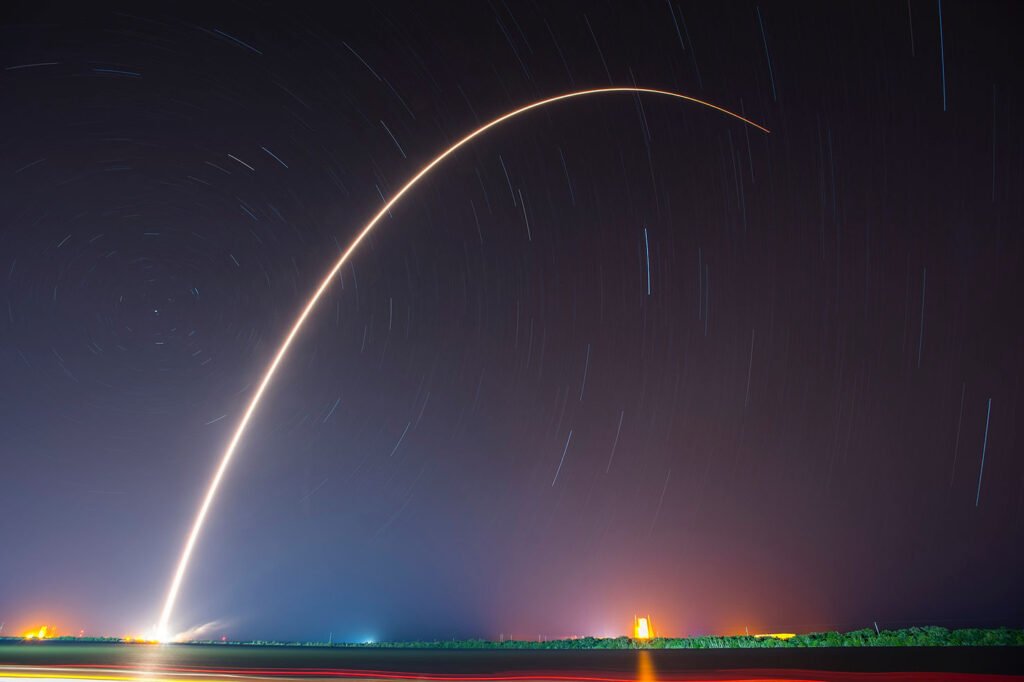
Flight 14 lifted off from Starbase, Texas, at 7:48 a.m. CT (12:48 UTC) on September 28. Super Heavy Booster 21 lit all 33 of its Raptor 3 engines and climbed out over the Gulf. During ascent, SpaceX reported that a single Raptor engine shut down early, an anomaly that shaped the decisions made later in the flight. The booster then came down in a controlled splashdown off the Texas coast after a simulated landing burn, with no tower catch attempted on this mission.
Ship 41 reached orbit roughly 26 minutes after liftoff. That is the headline: every earlier Starship flight followed a deliberately suborbital trajectory, so this was the first time the vehicle completed the job of getting to space and staying there.
The payload: 26 Starlink V3 satellites, all operational
Ship 41 successfully deployed all 26 Starlink V3 satellites during the mission, with SpaceX later confirming that the spacecraft were operational. Each V3 satellite is designed to provide roughly 1 Tbps of downlink capacity, meaning the flight added around 26 Tbps of potential downlink capacity to the Starlink constellation.
Three of the satellites also carried cameras with a specific secondary role: after deployment, they photographed the exterior tile surface of Ship 41. The images gave SpaceX an independent view of the vehicle’s heat shield before reentry, providing additional data on how the tiles were performing in flight. We covered the importance of this capability in our heat shield deep dive.
Why the mission was cut short
The plan was six orbits over nearly ten hours. Instead, flight controllers shortened the time in orbit out of caution after the engine problem, and began the deorbit sequence early. Reports differ on exactly which engine was affected and where in the flight it happened, with one account describing a booster Raptor shutting down on ascent and another describing a Ship Raptor Vacuum engine shutting down prematurely a few minutes into the climb. We will update this section as SpaceX publishes its own post-flight summary. What is consistent across reports is the decision: with an engine anomaly on the books and the first in-space deorbit burn still ahead, SpaceX chose the conservative option.
That choice is worth understanding as an engineering call, not a failure. An orbital vehicle that has lost margin on propulsion should return while it still has full authority over its deorbit burn. Nobody wants to discover an engine problem for the first time during the one burn that decides where the vehicle comes down.
The deorbit burn and the splashdown
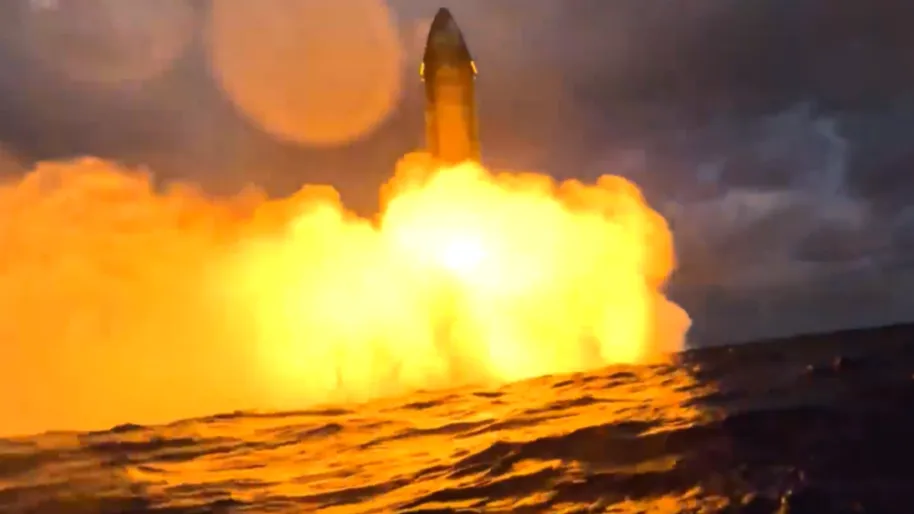
Ship 41 completed its first deorbit burn before beginning reentry over the Pacific Ocean. During the final phase of the flight, the vehicle relit its engines and successfully flipped upright after reaching the water, continuing to transmit video as the sequence unfolded.
The vehicle then tipped over and caught fire, bringing the mission to an abrupt end roughly three hours after liftoff. The outcome was considerably rougher than Flight 13, when Ship survived the splashdown intact in July. It also highlighted how much development work remains in the final landing sequence, particularly the transition from splashdown to a stable upright position.
What worked, and what did not
What worked: reaching orbit, deploying a full operational payload, surviving reentry well enough to attempt the landing flip, and the first deorbit burn. What did not: the early engine shutdown, the shortened mission, and the splashdown itself. Taken together, Flight 14 is a mission that proved the hard milestone and exposed the next set of problems to fix, which is what a test flight is for.
What comes next
SpaceX has outlined plans to use Starship for orbital computing missions in 2027, while NASA is also developing a version of the vehicle as the crewed lunar lander for the Artemis programme. Both ambitions depend on Starship demonstrating reliable, repeatable orbital operations, dependable in-space engine performance and, ultimately, the ability to fly again with rapid turnaround.
The next flights will therefore be important not just for individual milestones, but for showing how consistently Starship can perform the full mission profile. We will continue following the programme, including the next flight and any regulatory reviews that affect its schedule.
Want to know more? Watch my latest video about this:
Frequently asked questions
Did Starship Flight 14 reach orbit? Yes. Ship 41 reached orbit about 26 minutes after liftoff on September 28, 2026, the first time any Starship has done so.
Were the Starlink satellites deployed successfully? Yes. All 26 Starlink V3 satellites were deployed and later confirmed operational, adding roughly 26 Tbps of capacity.
Why did Flight 14 end after about three hours instead of ten? SpaceX cut the mission short out of caution after a Raptor engine shut down prematurely during the climb.
Did Ship 41 survive splashdown? It relit its engines and flipped upright before touching the Pacific, then tipped over and burst into flames. It was a rougher ending than Flight 13.
Did SpaceX try to catch the booster or the ship? No. Both were planned as ocean splashdowns on this flight.
What was special about the three camera satellites? They photographed Ship 41’s heat shield tiles from orbit, giving SpaceX independent data on tile condition.
Related reading: Flight 14 launch-day mission breakdown · The heat shield debate
Watch the recap → SpaceInfo Club on YouTube
Sources
- GCN: Starship reaches orbit for the first time, deploying 26 Starlink V3 satellites on Flight 14 (https://gcn.com/starship-orbit-starlink-v3-flight-14/22081/)
- Satellite Today: SpaceX’s Starship Reaches Orbit, Cuts 10-Hour Mission Short After Engine Issue (https://www.satellitetoday.com/launch/2026/09/28/spacexs-starship-reaches-orbit-cuts-10-hour-mission-short-after-engine-issue/)
- ZME Science: Starship Finally Takes a Lap Around Earth. Then a Balky Engine Sends It Home Early (https://www.zmescience.com/science/news-science/starship-reaches-orbit-then-fails/)
- Gulf News: Starship spacecraft splashes down in Pacific (https://gulfnews.com/world/starship-spacecraft-splashes-down-in-pacific-livestream-1.500691159)
- CNN live coverage (https://www.cnn.com/2026/09/28/science/live-news/spacex-starship-flight-14-launch)
- SpaceX mission page (https://www.spacex.com/launches/starship-flight-14)