Join the mailing list Free weekly briefing, no spam.
The rapid expansion of satellite constellations is transforming access to global communications, navigation and Earth observation. At the same time, it is creating new challenges for one of humanity’s oldest scientific pursuits: observing the night sky.
This growing tension between technological progress and astronomical observation will be the focus of an upcoming public lecture at Space Park Leicester, where researchers will examine how the increasing number of satellites is affecting amateur astronomers and astrophotographers.
The event, titled Satellites, Astro-Photography and Observational Amateur Astronomy, will explore how the industrialisation of Earth’s orbit is reshaping the experience of the night sky, while also raising broader questions about sustainability and the future management of space.
Looking Beyond the Science
The lecture will be delivered by Dr Jack Lampkin, Senior Lecturer in Criminology at York St John University. Although his academic background may seem unconventional for a discussion about astronomy, his research focuses on the social dimensions of outer space, including governance, environmental impacts and the ways people experience an increasingly crowded orbital environment.
According to Dr Lampkin, the dramatic increase in satellites over recent years has fundamentally changed the space above our heads. With thousands of additional spacecraft planned as communications networks continue to expand, these changes are expected to accelerate throughout the coming decades.
While much public debate has centred on issues such as orbital congestion and collision risks, Dr Lampkin argues that far less attention has been paid to the practical consequences for amateur astronomers. Unlike professional observatories, which can often rely on sophisticated scheduling software and advanced image processing, hobbyists frequently experience satellite streaks crossing their observations and photographs, sometimes rendering hours of work unusable.
Beyond the Rocket Revolution: Connecting Space Innovation with Society
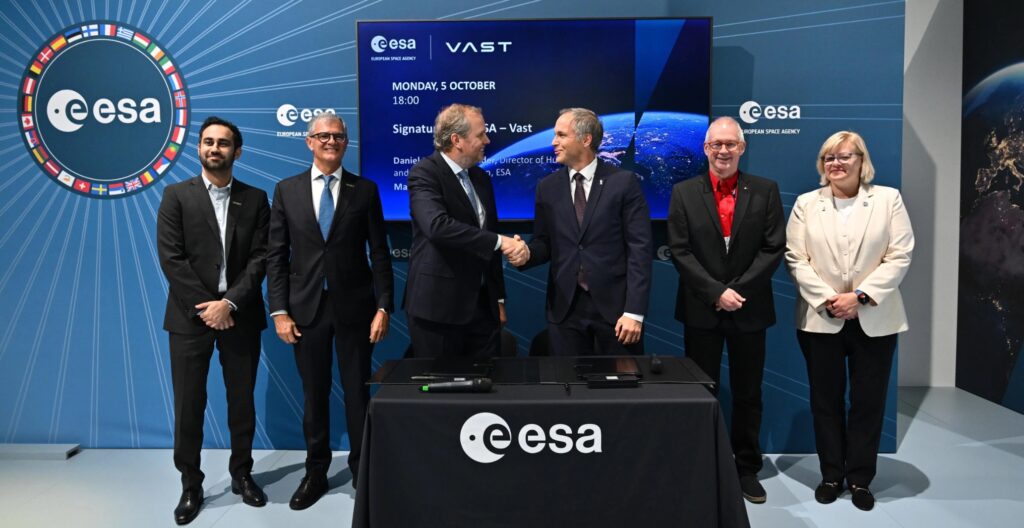
ESA and Vast: the new MoU and Europe’s future after the ISS
Image Credits: jonasphotto The European Space Agency has signed a new Memorandum of Understanding with…
Photonic Quantum Processor in Orbit: What the First Test Proved, and What It Didn’t
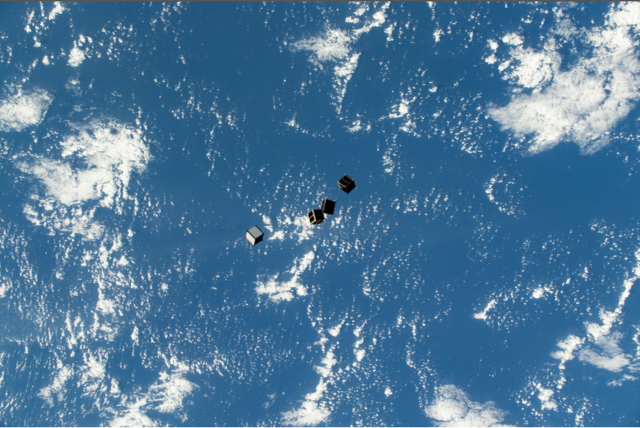
Illustrative image: CubeSats deployed into Earth orbit from the International Space Station’s Kibo module. Not…
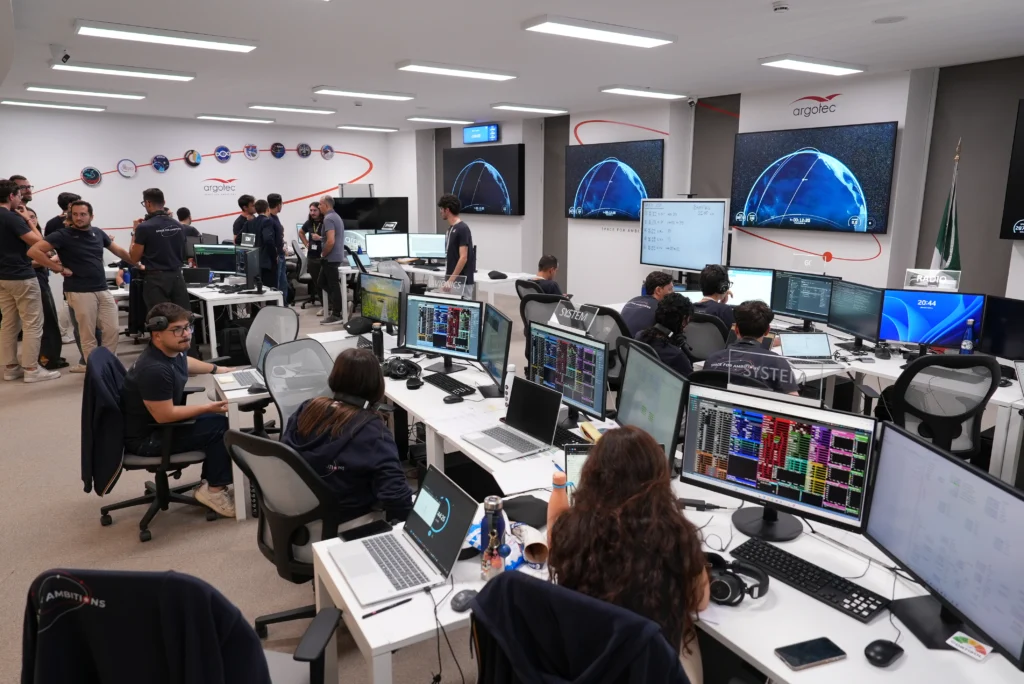
Argotec and Rheinmetall Put an Air Defence Satellite in Orbit Argotec and Rheinmetall Put an…
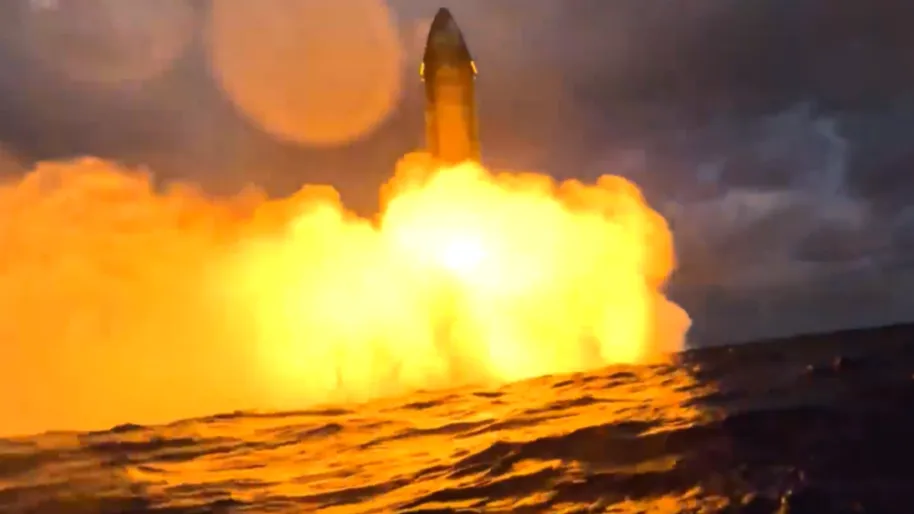
Starship Flight 14 Recap: It Reached Orbit, Delivered 26 Satellites — and Came Home the Hard Way
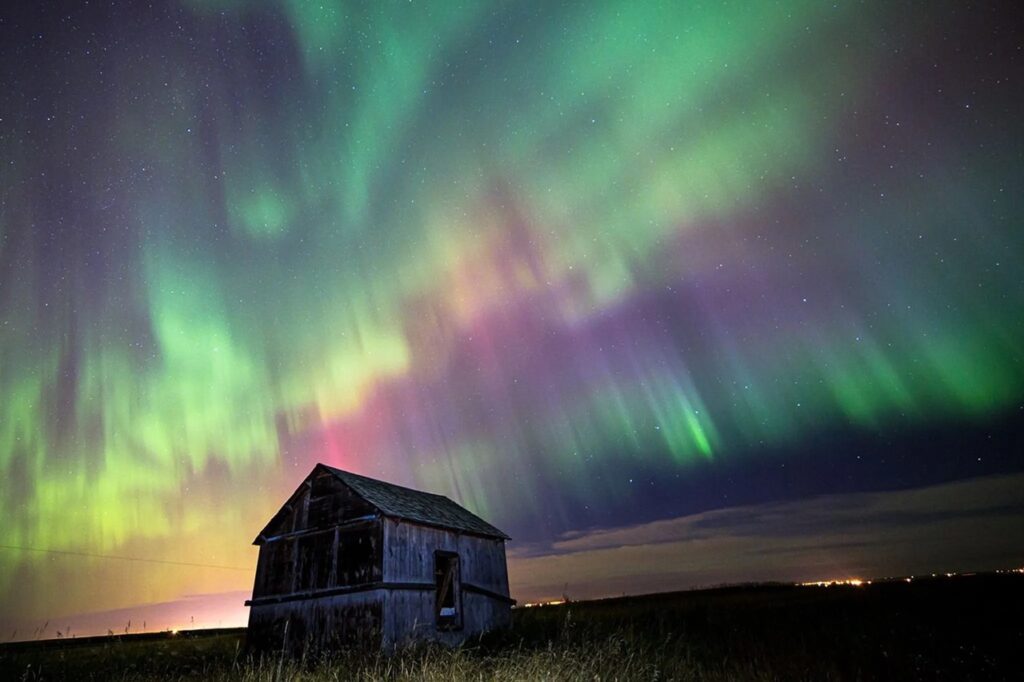
Aurora and Saturn at Opposition: The Sky on October 2–4, 2026
Image Credits: NASA, Neil Zeller A weekend with two stars of the show Between October…
Evidence from the UK’s Dark Sky Parks
The presentation will draw upon research conducted with amateur astronomers working in two of England’s internationally recognised Dark Sky areas: the Yorkshire Dales and the North York Moors National Park.
These locations provide some of the country’s best conditions for observing the cosmos thanks to their exceptionally low levels of light pollution. Even in these protected environments, however, the growing presence of satellites has become increasingly noticeable.
The study examines not only the technical difficulties introduced by satellite trails, but also the emotional and cultural impact of witnessing a night sky that is steadily becoming more crowded. For many observers, astronomy represents a direct connection with nature and the wider universe. The increasing visibility of human-made objects has therefore become part of a broader discussion about humanity’s expanding footprint beyond Earth.
Sustainability in Orbit
The lecture also addresses another pressing issue facing the global space sector: orbital debris.
As more satellites are launched into low Earth orbit, concerns continue to grow over the long-term sustainability of the orbital environment. Defunct spacecraft, fragments created by collisions and other debris all contribute to an increasingly complex operating environment for future missions.
These concerns have become central to international discussions on space sustainability. Governments, commercial operators and scientific organisations are working to develop guidelines aimed at reducing debris generation and ensuring that future satellite deployments remain compatible with scientific research and long-term access to space.
Dr Scott Davidson, who leads the Development, Sustainability and Fairness strand at the Leverhulme Centre for Humanity and Space, believes the discussion extends well beyond astronomy. He notes that the lecture offers an opportunity to examine how space technologies are influencing environmental change, scientific practice and society’s relationship with space itself.
A Hub for Space Innovation
The event forms part of the free Space Park Conversations lecture series, organised by Space Park Leicester in collaboration with the Leverhulme Centre for Humanity and Space.
Opened in 2022 by European Space Agency astronaut Tim Peake, Space Park Leicester has quickly established itself as one of the United Kingdom’s leading centres for space research, education and industrial collaboration. The £100 million facility brings together universities, industry and government partners to support activities ranging from satellite design and manufacturing to Earth observation and downstream applications.
As part of Leicester’s growing Space City cluster, the centre plays an important role in strengthening the UK’s expanding space economy while encouraging public engagement with the opportunities and challenges that accompany rapid developments in space technology.
A Timely Discussion
As satellite megaconstellations continue to expand across low Earth orbit, balancing technological innovation with the preservation of the night sky is becoming an increasingly important conversation.
For professional astronomers, amateur observers and anyone interested in the future of space, the upcoming lecture promises valuable insight into a topic that affects not only scientific research, but also our shared view of the universe.