Join the mailing list Free weekly briefing, no spam.
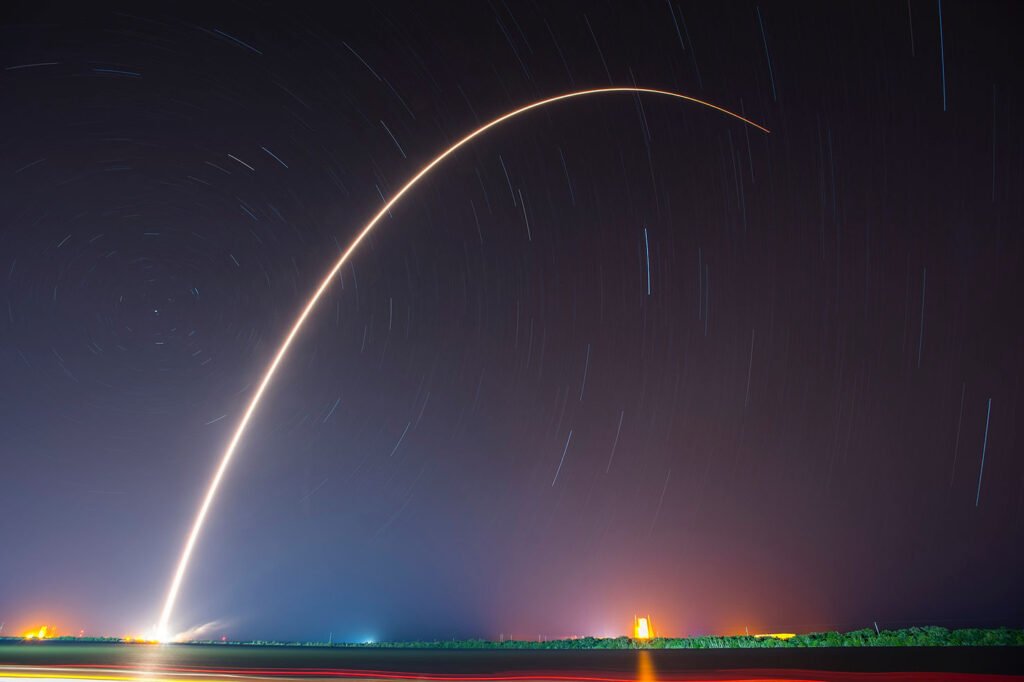
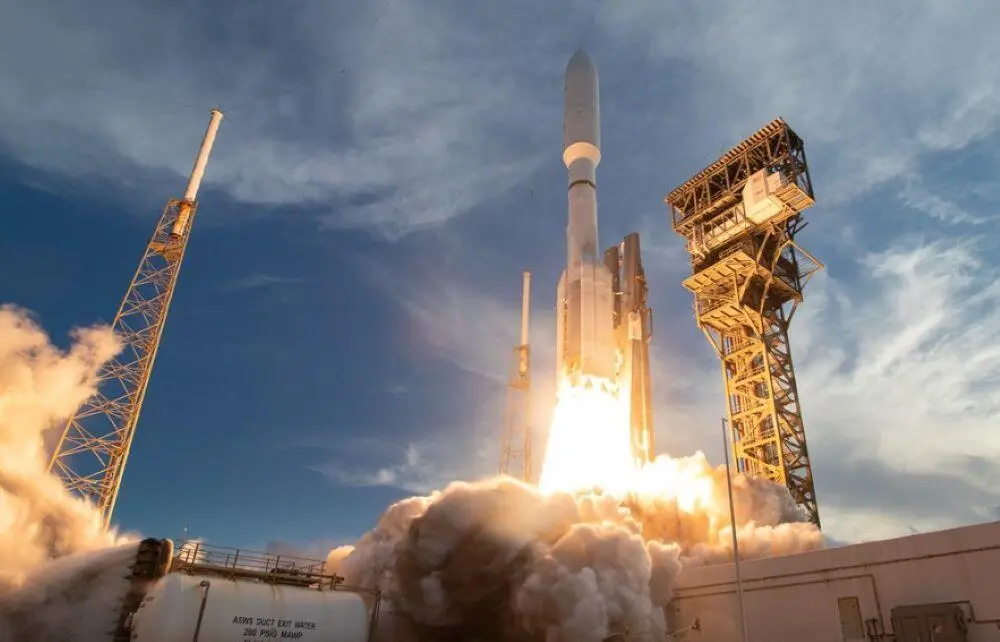
Cover Image: Launch of an Atlas V on April 2 – Credits ULA
United Launch Alliance (ULA) has continued its pivotal role in the deployment of Amazon’s ambitious low Earth orbit (LEO) broadband constellation, achieving two successful launches in just over a month. The back-to-back missions represent another significant step toward building a global satellite network designed to deliver high-speed internet access to underserved communities around the world.
On April 27, ULA’s reliable Atlas V rocket lifted off from Space Launch Complex 41 at Cape Canaveral Space Force Station in Florida, carrying the Amazon Leo 6 mission into orbit. The success was quickly followed by the Amazon Leo 7 mission on May 29, launched from the same pad and further expanding the constellation.
Together, these launches underscore the growing momentum behind Amazon’s satellite internet initiative, one of the largest commercial space infrastructure projects currently underway.
Building a Constellation at Scale
The recent missions add to an increasingly impressive deployment record. To date, ULA has successfully delivered 197 Amazon satellites into low Earth orbit, laying the foundation for a future network expected to consist of more than 3,000 spacecraft.
The constellation is being designed to provide fast, reliable broadband connectivity across the globe, particularly in regions where traditional terrestrial infrastructure remains limited or unavailable. By operating in low Earth orbit, the satellites can offer lower latency communications compared to conventional geostationary systems, improving the user experience for applications ranging from video conferencing to online education and remote business operations.
The pace of deployment is set to continue. ULA’s next mission, Amazon Leo 8, is scheduled for July and will carry an additional 29 satellites into orbit. Each successful launch brings Amazon closer to achieving operational coverage and meeting regulatory deployment milestones.

Astronomy Basics
🌠 Explore the Universe Like Never Before!🔭 Discover the secrets of stars, planets, and galaxies…
[Preview] Orbital Mechanics – An Introduction
Discover the fundamentals of orbital mechanics in this beginner-friendly course—no prior experience needed! Explore how…
Human Factors and Performances
Human factors and human performance in space are critical areas of study in spaceflight operations,…
Space Physics – Basics
Explore the dynamic forces that shape our space environment in this exciting journey beyond Earth’s…
Preparing for the Vulcan Era
While Atlas V continues to perform flawlessly, the future of Amazon’s launch campaign increasingly points toward ULA’s next-generation Vulcan rocket.
A major milestone was recently reached at Cape Canaveral with the activation of a dedicated processing lane specifically designed to support Amazon constellation missions. The facility will streamline launch preparations and increase cadence as satellite deployment requirements intensify over the coming years.
In a significant first, ULA successfully moved and erected a Vulcan booster inside its newly constructed Vertical Integration Facility Annex (VIF-A). The booster represents the first operational hardware to be stacked within the facility, allowing engineers and technicians to begin validating systems, hardware interfaces, and operational procedures.
This testing campaign will culminate in a wet dress rehearsal, a critical milestone that simulates launch-day operations and verifies the readiness of both vehicle and ground systems.
One of the Largest Commercial Launch Agreements in History
The partnership between ULA and Amazon extends far beyond a handful of launches. Under what is widely regarded as the largest commercial launch agreement ever signed, ULA is responsible for deploying more than half of Amazon’s initial satellite constellation.
The company currently has multiple Amazon missions remaining on its Atlas V manifest, followed by an estimated 38 launches aboard Vulcan rockets. The agreement not only demonstrates confidence in ULA’s launch capabilities but also highlights the growing importance of commercial launch providers in enabling large-scale space infrastructure projects.
As global demand for connectivity continues to rise, the success of Amazon’s constellation will depend heavily on maintaining a rapid and reliable launch cadence. With Atlas V continuing to deliver and Vulcan preparing to take on a central role, ULA is positioning itself as a key enabler of the next generation of space-based communications.
Looking Ahead
The successful Amazon Leo 6 and Leo 7 missions illustrate how rapidly the commercial space sector is evolving. What once would have been considered an extraordinary deployment effort has become part of a routine cadence of launches aimed at constructing massive orbital networks.
With nearly 200 satellites already in orbit, dozens of launches still ahead, and Vulcan infrastructure now coming online, the pace is only expected to accelerate. The coming months will be crucial as ULA transitions from Atlas V operations to a future dominated by Vulcan, helping Amazon transform its vision of global broadband connectivity into a functioning reality.
For both companies, the objective is clear: build one of the world’s largest satellite constellations and bring reliable internet access to millions of people across the planet.