Join the mailing list Free weekly briefing, no spam.
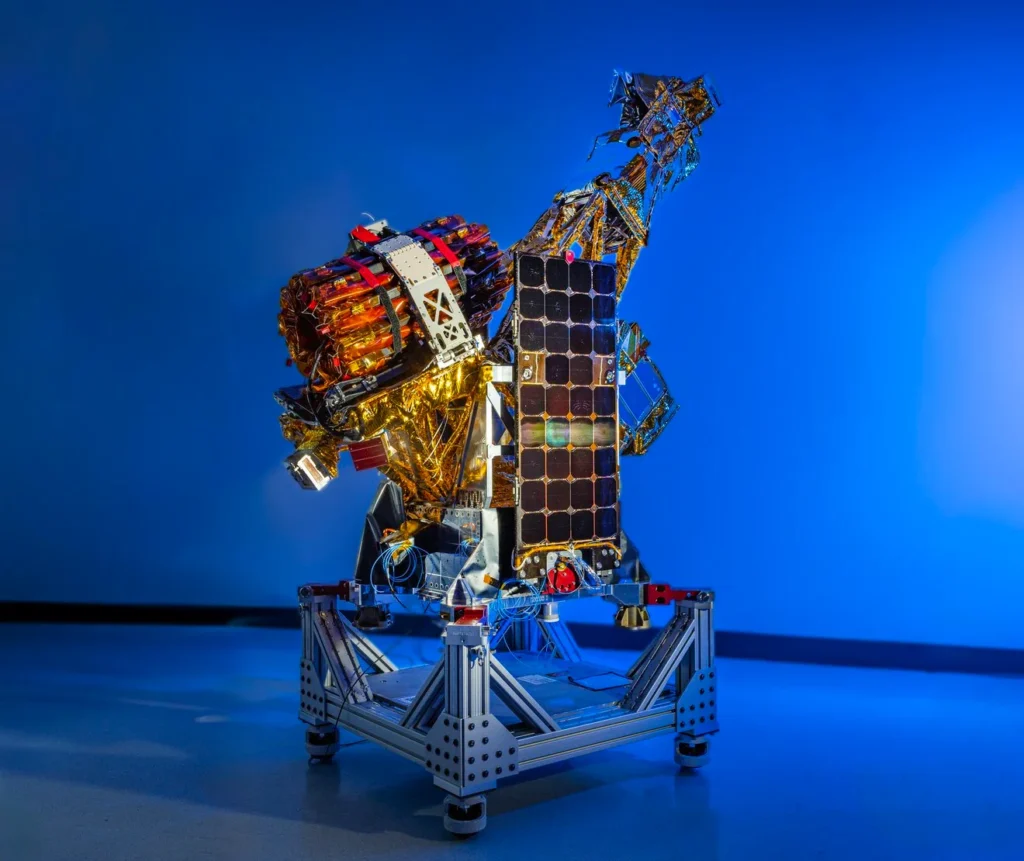
Cover Image: NASA’s INCUS mission – Credits Blue Canyon Technology
Three Small Satellites Set to Transform Our Understanding of Severe Weather from Space
NASA’s upcoming Investigation of Convective Updrafts (INCUS) mission has reached a major development milestone as engineers complete assembly and testing of two of the mission’s three spacecraft. Designed to provide the first dedicated space-based survey of tropical convective storm dynamics, INCUS promises to deliver unprecedented insights into some of Earth’s most powerful weather systems.
With launch currently targeted for 2027, the mission represents a significant step forward in NASA’s efforts to better understand the atmospheric processes that drive severe weather and influence the global water cycle.
Understanding the Engines of Earth’s Weather
Tropical convective storms are among the most influential meteorological phenomena on our planet. These systems are characterized by intense upward movements of warm, moist air that rapidly transport water and energy through the atmosphere. While they are responsible for more than half of the world’s precipitation—making them essential contributors to freshwater supplies—they can also generate dangerous weather conditions, including heavy rainfall, flooding, and severe storms that threaten lives and infrastructure.
Despite their importance, many questions remain about how these storms form, intensify, and evolve. INCUS aims to fill these knowledge gaps by providing detailed measurements of the processes occurring inside developing storm systems.
A Constellation Designed for Precision
Unlike traditional Earth-observing missions that rely on a single spacecraft, INCUS will employ a coordinated fleet of three SmallSats flying in formation. This unique architecture will allow scientists to observe rapidly changing storm structures with a level of detail that has previously been impossible from orbit.
Beyond the Rocket Revolution: Connecting Space Innovation with Society
ESA and Vast: the new MoU and Europe’s future after the ISS
Image Credits: jonasphotto The European Space Agency has signed a new Memorandum of Understanding with…
Photonic Quantum Processor in Orbit: What the First Test Proved, and What It Didn’t
Illustrative image: CubeSats deployed into Earth orbit from the International Space Station’s Kibo module. Not…
Argotec and Rheinmetall Put an Air Defence Satellite in Orbit Argotec and Rheinmetall Put an…
Starship Flight 14 Recap: It Reached Orbit, Delivered 26 Satellites — and Came Home the Hard Way

Aurora and Saturn at Opposition: The Sky on October 2–4, 2026
Image Credits: NASA, Neil Zeller A weekend with two stars of the show Between October…
The mission is led by atmospheric scientist Sue van den Heever of Colorado State University and will focus on measuring convective mass flux—the vertical transport of air and water within storm systems. This parameter is one of the key drivers of storm development and intensity, yet remains difficult to observe directly on a global scale.
Each satellite carries a sophisticated radar instrument developed by NASA’s Jet Propulsion Laboratory (JPL), capable of probing storm interiors and tracking the movement of precipitation and air currents. The central spacecraft will also host a microwave radiometer that provides additional context, helping scientists connect radar observations with broader atmospheric conditions.
Together, these instruments will reveal how factors such as temperature, humidity, atmospheric pressure, wind speed, and wind direction influence storm behavior.
Passing Critical Testing Milestones
The mission’s hardware has recently demonstrated significant progress toward flight readiness.
After the radar payloads were integrated with deployable mesh reflectors manufactured by Colorado-based aerospace company Tendeg, the spacecraft components were delivered to Blue Canyon Technologies for integration with their satellite platforms.
The first two observatories have successfully completed rigorous environmental testing, including vibration tests that simulate the intense forces experienced during launch and thermal-vacuum testing that replicates the harsh temperature extremes of space.
Engineers also successfully conducted deployment tests of the satellites’ large mesh radar reflectors, validating a critical component of the mission’s observation capability. Following these evaluations, the spacecraft returned for additional verification procedures and will remain in storage until preparations begin for launch operations at NASA’s Wallops Flight Facility in Virginia.
Testing of the third satellite continues and is expected to conclude no earlier than September, keeping the mission on track for its planned launch schedule.
Improving Forecasts and Protecting Communities
Beyond its scientific objectives, INCUS carries important practical implications.
By improving our understanding of how convective storms develop and evolve, the mission’s observations could significantly enhance weather forecasting models. More accurate forecasts would provide emergency managers, policymakers, and local communities with better information to prepare for severe weather events, potentially reducing loss of life and limiting property damage.
The data may also improve freshwater resource management by offering new insights into precipitation patterns and the mechanisms that control rainfall distribution across the globe.
As climate variability continues to influence weather extremes, missions like INCUS become increasingly valuable tools for understanding and adapting to changing environmental conditions.
Part of a Larger Earth Science Vision
INCUS is funded through NASA’s Earth System Science Pathfinder Program under the Earth Venture Mission-3 initiative. The mission also contributes to the agency’s broader Earth System Observatory, a collection of interconnected missions designed to study the complex interactions between Earth’s atmosphere, oceans, land, ice, and ecosystems.
In addition, INCUS will become part of FALCON (Fleet for the Atmosphere Linking Commercial Observations with NASA), an innovative network of atmosphere-monitoring satellites that combines expertise and hardware contributions from NASA centers, universities, and commercial aerospace partners.
Together, these efforts reflect a growing trend toward distributed satellite architectures capable of delivering richer scientific datasets at lower cost and greater flexibility than traditional large spacecraft missions.
Looking Ahead
As the three-spacecraft constellation moves closer to launch, INCUS stands poised to open a new window into the inner workings of tropical storms. By observing the vertical motions that fuel some of Earth’s most powerful weather systems, the mission will provide scientists with critical information needed to improve forecasting, safeguard communities, and deepen our understanding of the planet’s atmosphere.
When the SmallSats begin their journey in 2027, they will carry with them the potential to transform how humanity observes—and ultimately predicts—the storms that shape life on Earth.