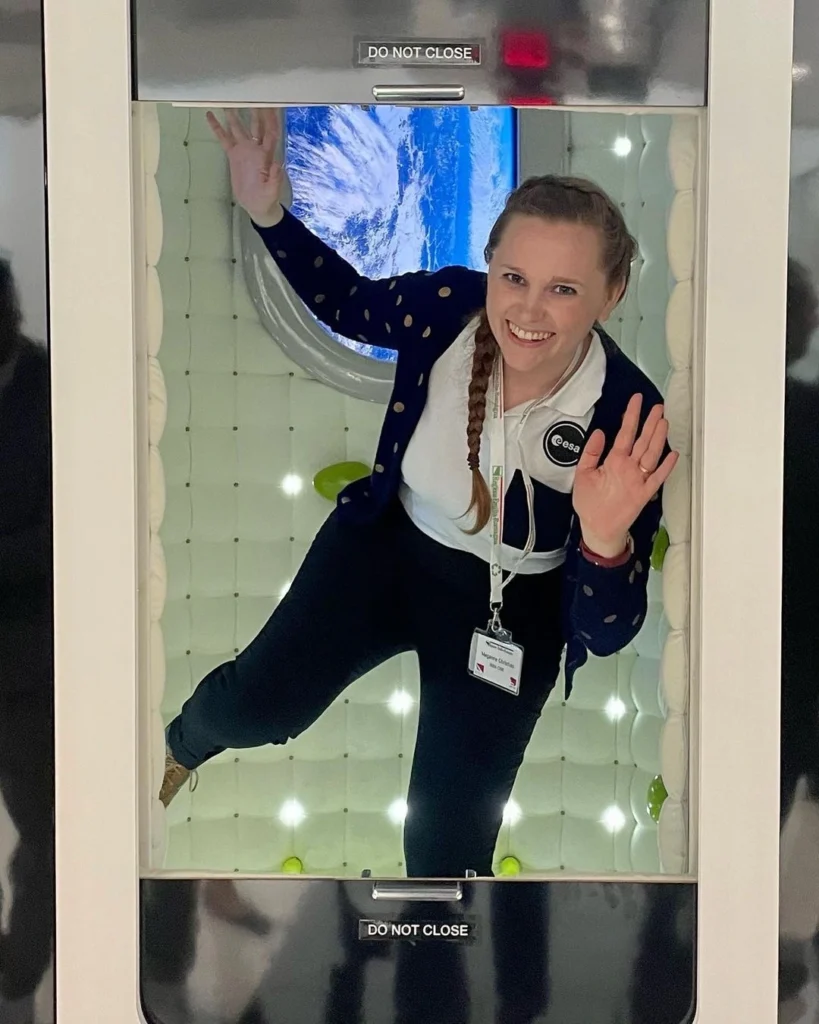
Meganne Christian is a member of the European Space Agency’s Astronaut Reserve (Class of 2022) and Exploration Commercialisation Lead at the UK Space Agency. Before joining the astronaut corps she was a materials scientist studying hydrogen storage and, for two seasons, an atmospheric physicist at Concordia Station in Antarctica. In this interview with SpaceInfo Club, she talks about the path from an Antarctic research base to ESA’s astronaut reserve, the training still ahead of her, and what she’d bring with her into orbit.
At a Glance
- Role
- ESA Astronaut Reserve, Class of 2022
- Also at
- Exploration Commercialisation Lead, UK Space Agency
- Born
- Kent, England · raised in Wollongong, Australia
- Education
- BEng & PhD, Industrial Chemistry — University of New South Wales
- Before ESA
- Materials scientist, CNR Bologna (2014–2023) · Atmospheric physicist, Concordia Station, Antarctica (2018–19, 2020–21)
- Recognition
- Fellow of the Royal Aeronautical Society (2024)
From Wollongong to Concordia Station
Born in Kent, England, to New Zealand parents, Christian moved at the age of five to Wollongong, Australia. She showed an early talent for scientific subjects, taking part in her school’s 2002 international championship team for the Future Problem Solving Program International.
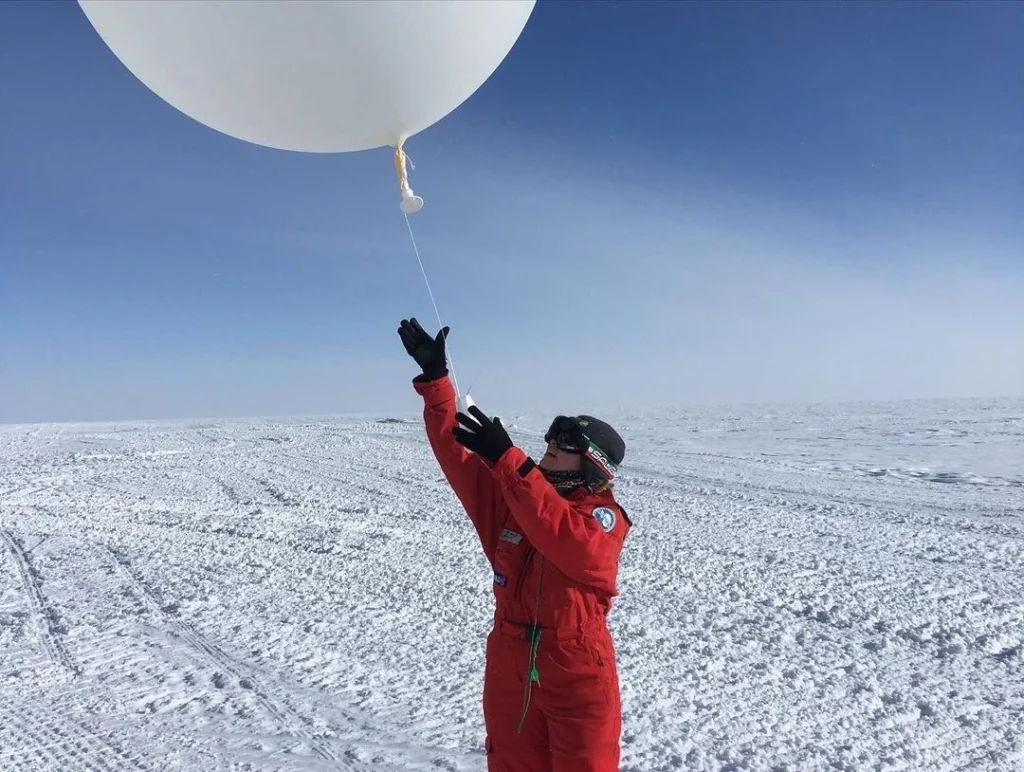
In 2009 she earned a Bachelor of Engineering and the university medal in industrial chemistry at the University of New South Wales. She went on to receive the Heinz Harant award in 2011 and completed her doctorate in 2014, researching hydrogen storage with borohydrides. She later received Italian citizenship while based in Bologna, working at the Institute of Microelectronics and Microsystems (IMM) of Italy’s National Research Council (CNR). In 2019, she took on the role of atmospheric physicist and meteorologist at Concordia Station in Antarctica — an assignment that, as she explains below, put the idea of becoming an astronaut back on the table.
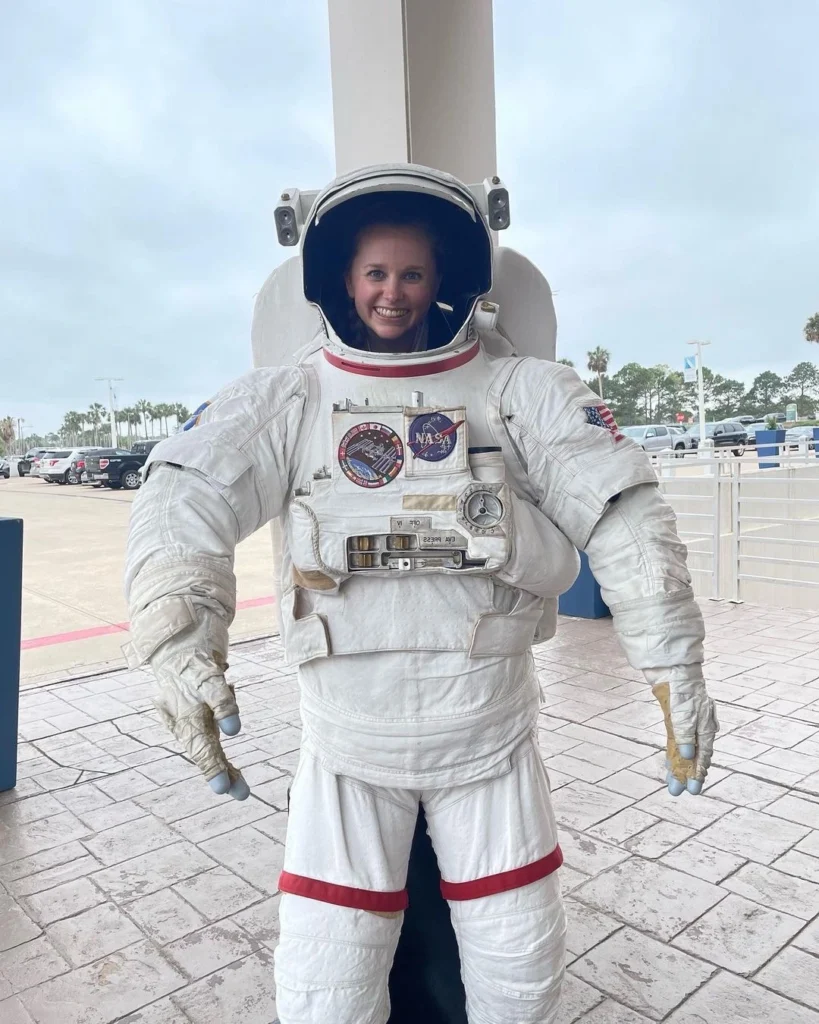
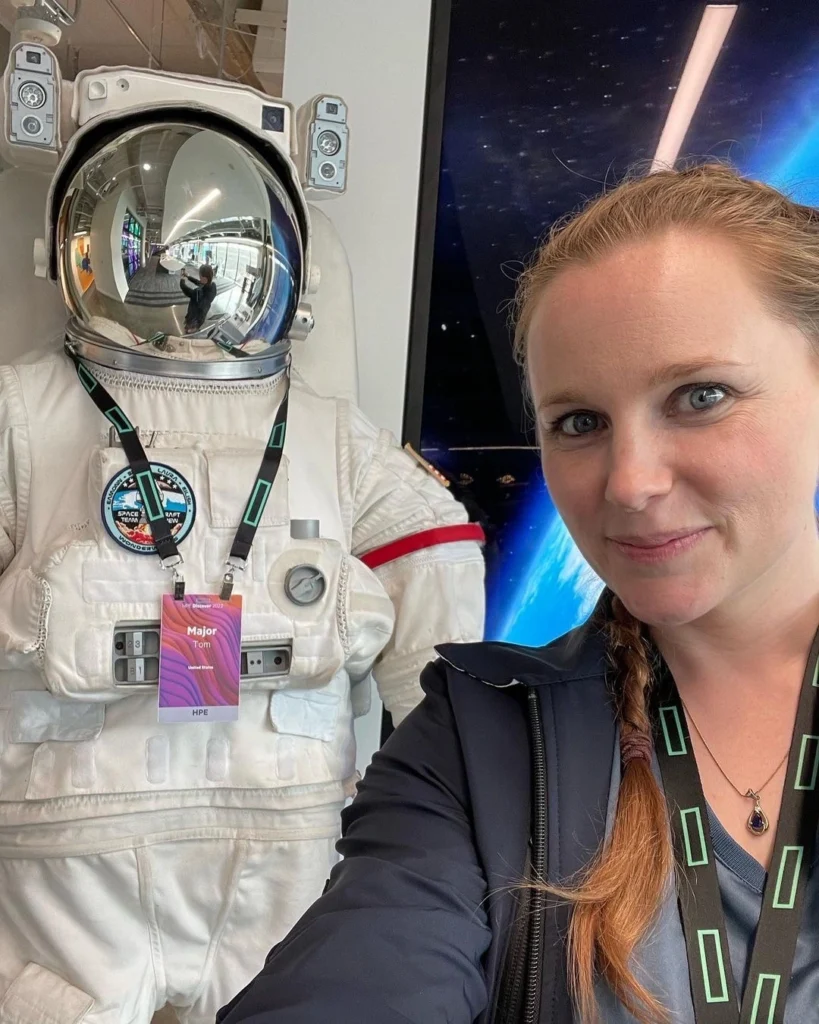
We had the honor of putting some questions to her — including a few from our own followers. Here’s our interview with Astronaut Meganne Christian.
The Interview
When did you decide you wanted to be an astronaut, and what was the event or person that made you think about it?
I’ve always been fascinated by space, and as a child I was always enthralled by lessons about the stars and black holes, and by my visits to the Smithsonian Air and Space Museum and the Kennedy Space Center. However, there was never a space agency in Australia until recently so I didn’t think it would be possible for me to become an astronaut and I put it to the back of my mind. Later in life, I moved to Europe and learnt about the European Space Agency, particularly when I spent a year in Antarctica and ESA did tests on all of the winter-over crew (including myself) because our 9-month isolation in such an extreme location was a lot like a long duration space mission. That’s when the idea came back to me.
When did you decide to turn your dream into a real goal?
When I was in Antarctica, I heard the first rumors that ESA would be recruiting new astronauts soon. Before my experience there, I didn’t think that I had the skills to do everything that an astronaut needs to do, so I probably wouldn’t have applied. But in Antarctica I took on a completely new challenge with tasks and subjects that were nothing like anything I had done before so I had to learn a lot very quickly. It went well and I loved it, so that gave me the confidence to realize that I could do almost anything that I put my mind to, and that’s when my dream of becoming an astronaut became a concrete goal.
Among your adventures, you’ve been in Antarctica as a researcher — was it your biggest adventure so far, or is there another one?
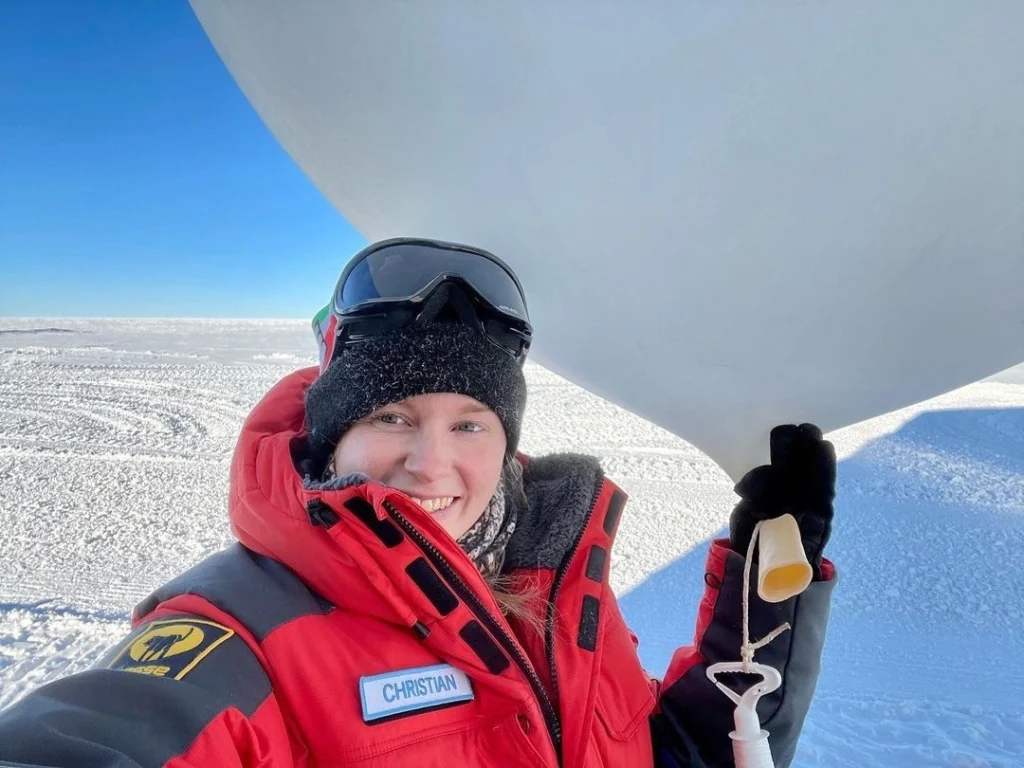
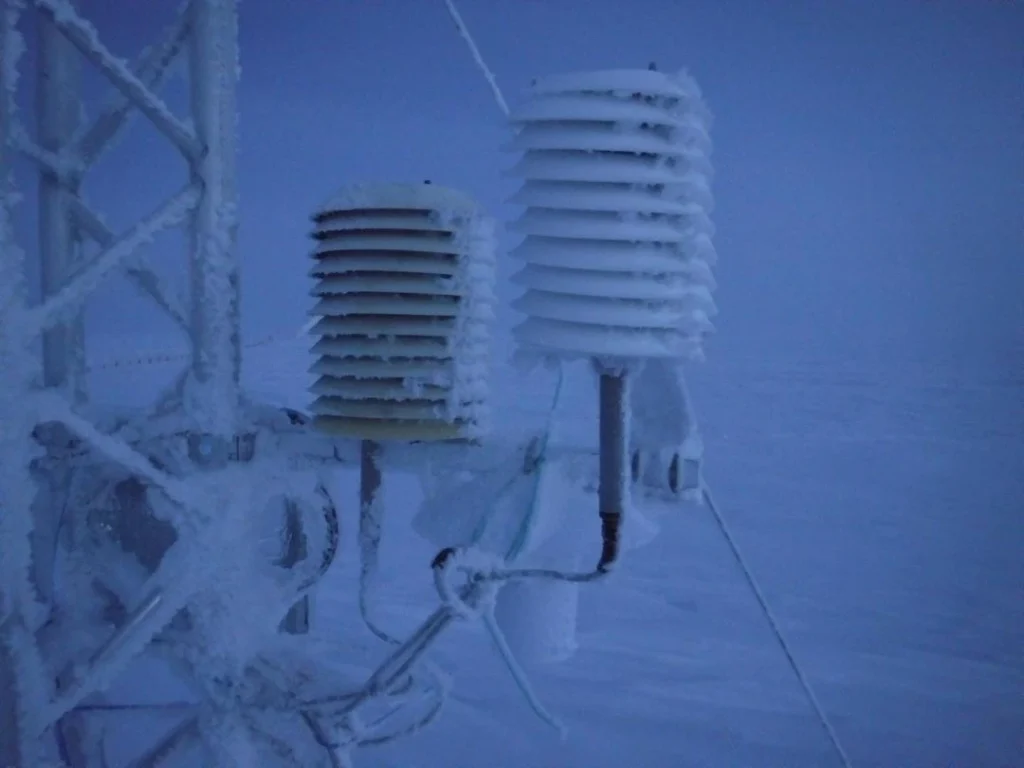
Antarctica was definitely my biggest adventure so far and I loved it so much that I actually went back again for a summer season a year later. It was an amazing experience for so many reasons…because of the isolation of our 13-person crew for such a long time; the 100 days of complete darkness and temperatures down to lower than -100 °C with windchill; the responsibility of looking after important climate change observatories; the physical hardship of living and working at high altitude, outside every day; and the spectacular polar night sky. A second place would be my participation in parabolic flights to test some of my materials for satellite cooling devices: the feeling of weightlessness is incredible!
You are a scuba diver and a very adventurous person, while also being a prepared and skilled researcher — which of these complementary aspects do you think will help you the most in your career as an astronaut?
It is important for an astronaut to be a well-rounded person, so I think both aspects will help a lot. Being adventurous and having experienced some extreme environments in the past helps you to understand what you are in for, both risks and rewards. It is also important to be a quick learner, and be able to pick up scientific concepts reasonably easily because you need to act as the hands of researchers who have dedicated their lives to planning these important experiments but can’t be there to run them themselves. Above all, having both an adventurous and scientific background helps me to solve problems quickly and efficiently, and be adaptable as situations change.
Almost all the first astronauts were pilots — among everyone who walked on the Moon, only one was a scientist. How do you think that background weighs on today’s needed characteristics for astronauts?
Early on in human space exploration, the goal was simply to get there, so we needed pilots that could do that. Once we achieved that, and especially with the establishment of a permanent human presence in low earth orbit, the goal shifted towards doing good science in space so we needed people who could carry out experiments proficiently. With the increasing automation of space vehicles, pilots are becoming less necessary, but I don’t think they will ever be redundant, and their skills continue to match strongly with the desirable characteristics of an astronaut. In the future the range of backgrounds required for astronauts will become even broader: think about all the different profiles we will need to design, build, maintain, and document a permanent presence on the moon and maybe one day further afield.
From our followers: what’s your favorite movie?
I’ve always been a bit of a fantasy nerd and I love the Lord of the Rings trilogy…I think Peter Jackson did a wonderful job in doing justice to the books.
Which object would you like to fly with you in space, and why?
I would like to take my knitted penguin, Pengaroo. I knitted her for my husband many years ago and she has been on all our travels and adventures since then, including in zero gravity and Antarctica!
If you could only choose one, would you rather fly tomorrow to the ISS or wait some time and be the first woman on the Moon?
My first priority is to undertake basic training so that I can truly be qualified as an astronaut. After that, I do dream of going to the moon but I think I would choose to go to the ISS as soon as possible because I am so fascinated by the research that is done there. Also, ESA’s plan is for their astronauts to visit the ISS before they can be assigned to a Moon mission.
Do you think the next decades will see a new Space Race like the one between the USA and USSR for the Moon, or will this time be different — maybe thanks to commercial flights?
I think that we will see the most competition in the commercial sector, which is great because it will give people more access to space, but we really do need to create some regulatory framework around it to make sure it happens in a sustainable way. As for geopolitics, a new space race does seem quite possible, but I hope that cooperation will win out and we can push further into Space in a united way.
What is your message to people who are passionate about space?
I hope you are as excited as I am about the way the Space sector is growing at the moment! How cool is it to be part of the Artemis Generation and the generation that will see the first commercial space stations in low Earth orbit?! I can only imagine what else is just over the horizon.