
Join the mailing list Free weekly briefing, no spam.
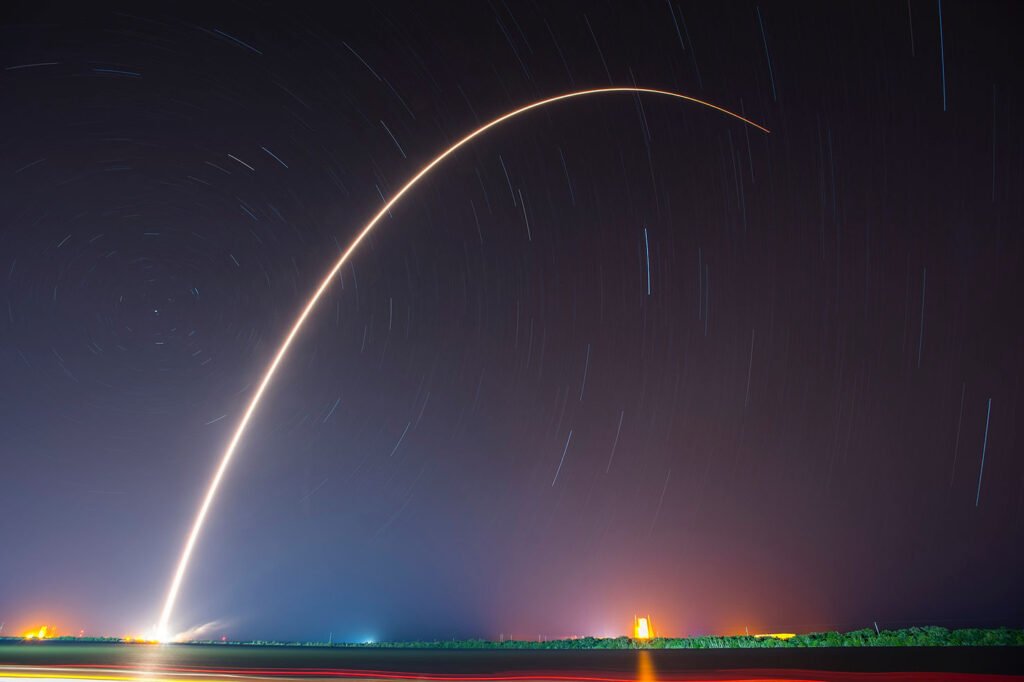
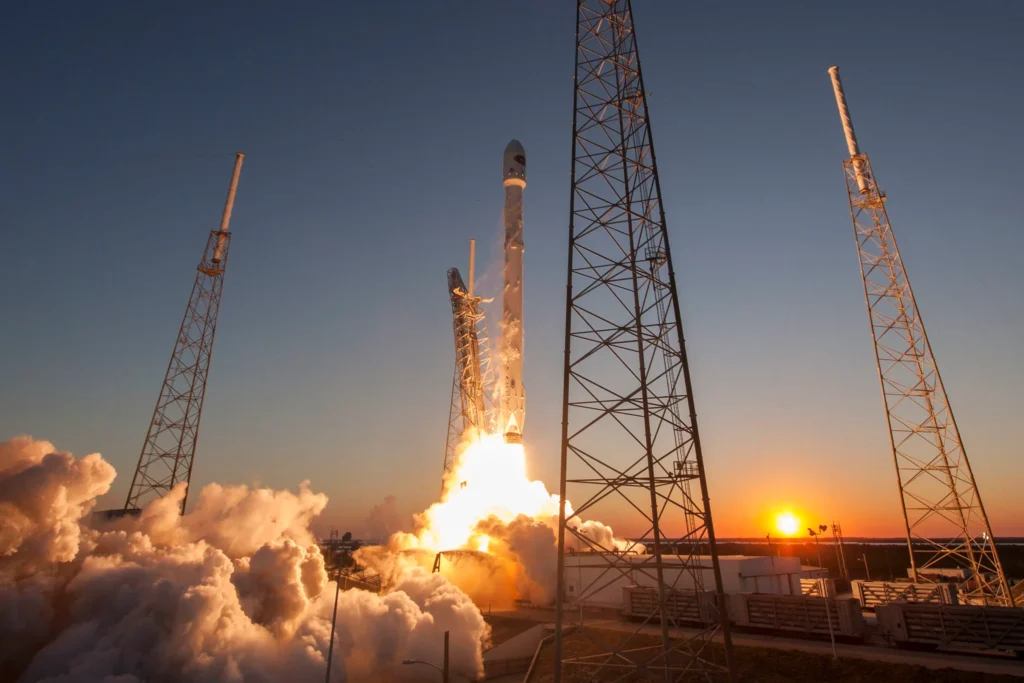
Cover Image: Falcon 9 lifted off from SpaceX’s Launch Complex 40 at Cape Canaveral Air Force Station
On August 5, a long-anticipated event will unfold nearly 385,000 kilometers from Earth. A discarded upper stage from a SpaceX Falcon 9 rocket is expected to slam into the lunar surface after spending more than a year drifting through cislunar space. While the word “crash” may sound alarming, researchers around the world are preparing for the event with excitement rather than concern.
This is not a failed mission or a deliberate impact. Instead, it is the result of orbital mechanics doing exactly what physics predicts.
How did the rocket end up on a collision course?
The object involved is the Falcon 9 upper stage that launched two commercial lunar missions in January 2025: Firefly Aerospace’s Blue Ghost lunar lander and ispace’s RESILIENCE lander. After successfully completing its primary job, the stage was left in a high-energy trajectory beyond Earth orbit.
Unlike missions that carry enough propellant to safely dispose of their upper stages, this one remained in space. Over time, the combined gravitational influence of Earth, the Moon, and the Sun slowly altered its orbit until an impact with the Moon became inevitable.
A high-speed collision
Current predictions indicate that the rocket stage will strike the Moon at roughly 2.4 kilometers per second, or about 8,700 kilometers per hour. The impact is expected to occur near the Einstein crater, close to the Moon’s western limb as seen from Earth.
Although those numbers sound dramatic, the Moon experiences impacts from natural objects all the time. Meteoroids have been shaping its surface for billions of years.
What makes this event different is that scientists know almost exactly what is going to hit the Moon, when it will happen, and where to point their telescopes.
Starship Flight 14 Recap: It Reached Orbit, Delivered 26 Satellites — and Came Home the Hard Way

Aurora and Saturn at Opposition: The Sky on October 2–4, 2026
SpaceX Crew-13 Launches to the ISS: What the Mission Will Do and Why It Slipped
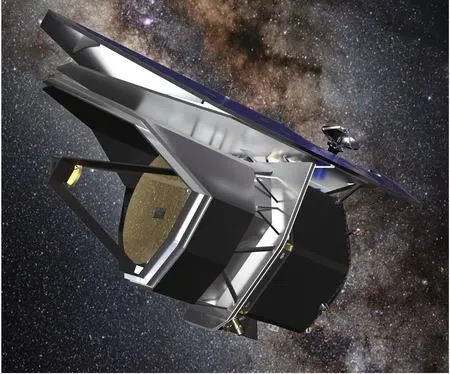
PRIMA Far-Infrared Telescope: NASA’s First Probe Explorer and What It Means for Astrophysics

HMS Daring Representative Visit Space Park Leicester as Royal Navy and Space Sector Strengthen Ties

Starship Goes Orbital – How Flight 14 is going
A rare scientific opportunity
Artificial impacts on the Moon are extremely uncommon. Because the incoming object is well characterized, researchers can compare computer models with real observations to better understand how impacts generate craters and eject lunar material.
Computer simulations suggest the collision could excavate a crater several tens of meters across while throwing a plume of dust high above the lunar surface. Depending on lighting conditions and the actual impact geometry, some of that ejecta may even be detectable from Earth using sufficiently powerful telescopes.
NASA’s Lunar Reconnaissance Orbiter is expected to image the impact site before and after the collision, allowing scientists to compare the surface and measure the newly formed crater. Ground-based observatories and amateur astronomers will also participate in the observation campaign.
Does this mean space debris is becoming a problem?
The event also highlights an important challenge for the future of deep-space exploration.
Space debris is usually associated with crowded Earth orbits, but as more missions travel to the Moon, Mars, and beyond, responsible disposal of spacecraft will become increasingly important. Not every mission has enough fuel to place upper stages into stable disposal orbits or send them safely toward Earth for atmospheric re-entry.
Today’s accidental lunar impact poses no threat to people or operational spacecraft. However, it serves as a reminder that future lunar traffic management will need to become more sophisticated as governments and private companies dramatically increase the number of missions beyond Earth orbit.
Engineering lessons beyond the impact
From an engineering perspective, this event is more than an unusual headline.
It offers a chance to validate impact models, improve our understanding of lunar regolith behavior, refine orbital prediction techniques, and test observation strategies that could be useful for future planetary defense efforts or lunar infrastructure.
Every unexpected event in space is an opportunity to learn. In this case, an abandoned rocket stage has become an unplanned scientific experiment.
Watch our latest YouTube video
If you’re interested in SpaceX and the future of the commercial space industry, don’t miss our latest video on the SpaceInfo Club YouTube channel, where we explore one of the most anticipated topics in aerospace: Could SpaceX really go public?
In the video, we break down what a potential SpaceX IPO could mean for investors, the space industry, and Elon Musk’s long-term vision. If you enjoy deep dives into the business side of space exploration, be sure to check it out and subscribe for more weekly content.