
Join the mailing list Free weekly briefing, no spam.
<p class=”sic-updated”>Updated October 2, 2026</p>
<p> Image Credits: NASA, Neil Zeller </p>
<h2>A weekend with two stars of the show</h2>
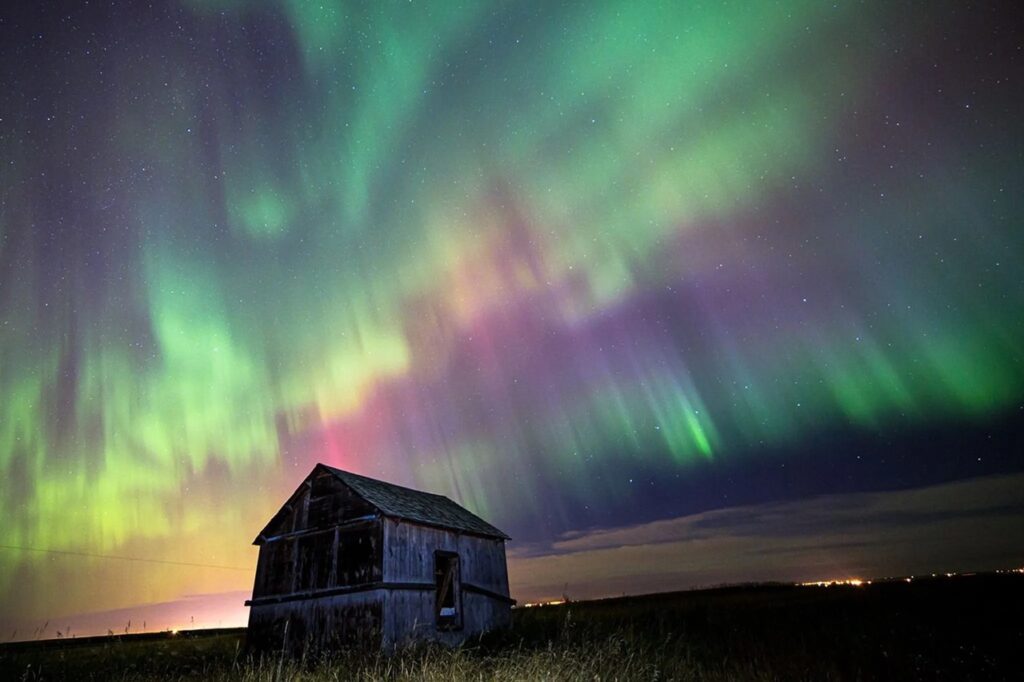
<p>Between October 2 and 4, 2026, the night sky offers two very different sights. A possible minor G1 geomagnetic storm could bring auroras to high latitudes, while Saturn reaches opposition on October 4, making it the best time of the year to observe the planet. Two separate events, but the same advice applies: find dark skies, give your eyes time to adjust and be patient.</p>
<h2>Aurora: what is happening on the Sun</h2>
<p>On October 2, a coronal mass ejection (CME) is expected to arrive, a burst of plasma launched on September 28 by a filament eruption. NOAA has issued a geomagnetic storm watch up to level G1, the lowest on the scale. Two more episodes follow over the weekend (<a href=”https://earthsky.org/sun/sun-news-activity-solar-flare-cme-aurora-updates/ ” target=”_blank” rel=”noopener”>source: EarthSky</a>).</p>
<div class=”sic-table-wrap”>
<table>
<thead>
<tr><th>Date</th><th>Cause</th><th>Expected effect</th></tr>
</thead>
<tbody>
<tr><td>October 2</td><td>CME from the September 28 filament eruption</td><td>Unsettled to active, G1 peaks possible</td></tr>
<tr><td>October 3</td><td>Fast solar wind from a large coronal hole</td><td>Active conditions, G1 possible</td></tr>
<tr><td>October 4</td><td>CME from the C8.6 flare of region AR4535 (September 30)</td><td>Weak glancing blow, unsettled to active</td></tr>
</tbody>
</table>
</div>
<p>The coronal hole is the one near the center of the solar disk that looks a bit like a heart. It is a region of the corona where the magnetic field opens up and lets fast solar wind escape.</p>
<p class=”sic-note”>At G1 level, auroras generally stay confined to high latitudes, and the sources talk about displays for northern regions. From Italy, don’t expect anything visible to the naked eye.</p>
<h2>How to follow it (and photograph it)</h2>
<p>Autumn and the equinox are among the best periods of the year for auroras: EarthSky openly talks about an “aurora season” that has already begun (<a href=”https://earthsky.org/sun/aurora-season-auroras-equinox-connection/ ” target=”_blank” rel=”noopener”>article of September 18</a>). A few practical rules:</p>
<ul>
<li><strong>Check real-time data.</strong> Alerts and the Kp index are on the <a href=”https://www.swpc.noaa.gov/ ” target=”_blank” rel=”noopener”>NOAA Space Weather Prediction Center</a> site. A rising Kp is your cue to head out.</li>
<li><strong>Find true darkness.</strong> Clear northern horizon, away from city lights, and at least 20 minutes to adapt your eyes.</li>
<li><strong>Shoot with a tripod.</strong> Fast wide-angle lens, ISO 1600–3200, exposures of 5–15 seconds: the camera sees colors the eye often misses.</li>
<li><strong>Expect a faint aurora.</strong> In a G1 storm the green is dim, and at mid-latitudes it appears, when it appears at all, as a low arc on the horizon.</li>
</ul>
<h2>Saturn at opposition: the best moment of the year</h2>
<p>Saturn reaches opposition at 12:00 UTC on October 4, 2026, as Earth moves directly between the Sun and Saturn (<a href=”https://earthsky.org/astronomy-essentials/saturn-at-opposition-closest-brightest-best/ ” target=”_blank” rel=”noopener”>source: EarthSky</a>). At this point in its orbit, Saturn appears opposite the Sun in our sky, rising around sunset and remaining visible throughout the night.</p>
<p>Opposition also brings Saturn to its closest and brightest point of the year. In 2026, the planet will be about 1.26 billion kilometres from Earth, equivalent to roughly 70 light-minutes.</p>
<div class=”sic-table-wrap”>
<table>
<thead>
<tr><th>Data point</th><th>Value at opposition</th></tr>
</thead>
<tbody>
<tr><td>Date and time</td><td>October 4, 2026, 12:00 UTC</td></tr>
<tr><td>Magnitude</td><td>0.3 (as bright as the brightest stars)</td></tr>
<tr><td>Distance</td><td>about 1.26 billion km (8.43 AU)</td></tr>
<tr><td>Constellation</td><td>Cetus (the Whale)</td></tr>
<tr><td>Apparent disk diameter</td><td>19.7 arcseconds</td></tr>
<tr><td>Ring tilt</td><td>−7.5° relative to us</td></tr>
</tbody>
</table>
</div>
<p>The rings are opening again after Earth crossed their plane in March 2025, an event that repeats every 13–15 years. Saturn takes about 29.4 Earth years to orbit the Sun, so opposition falls roughly two weeks later each year: the last one was September 21, 2025, and the next will be October 18, 2027.</p>
<h2>How to observe Saturn</h2>
<p>You don’t need to wait for the exact day: Saturn stays in an excellent position until mid-October and, after opposition, will be easy to find in the evening sky for the rest of 2026. It will vanish into the sunset glow in March 2027 (<a href=”https://earthsky.org/astronomy-essentials/saturn-at-opposition-closest-brightest-best/ ” target=”_blank” rel=”noopener”>EarthSky</a>).</p>
<ul>
<li><strong>Naked eye.</strong> Look for a yellowish, steady “star” as bright as the brightest stars, in a region poor in bright stars, in Cetus, lower left of the Great Square of Pegasus.</li>
<li><strong>Binoculars.</strong> With good binoculars, held steady or on a tripod, Saturn appears as an oval disk. The rings are not resolved.</li>
<li><strong>Telescope.</strong> Any backyard telescope shows the rings. At moderate magnification (about 50–100x) the planet holds up well even when the air isn’t perfect.</li>
<li><strong>When.</strong> The planet rises in the evening and culminates around midnight, due south: the best views come when Saturn is high above the horizon, where the atmosphere disturbs it least.</li>
</ul>
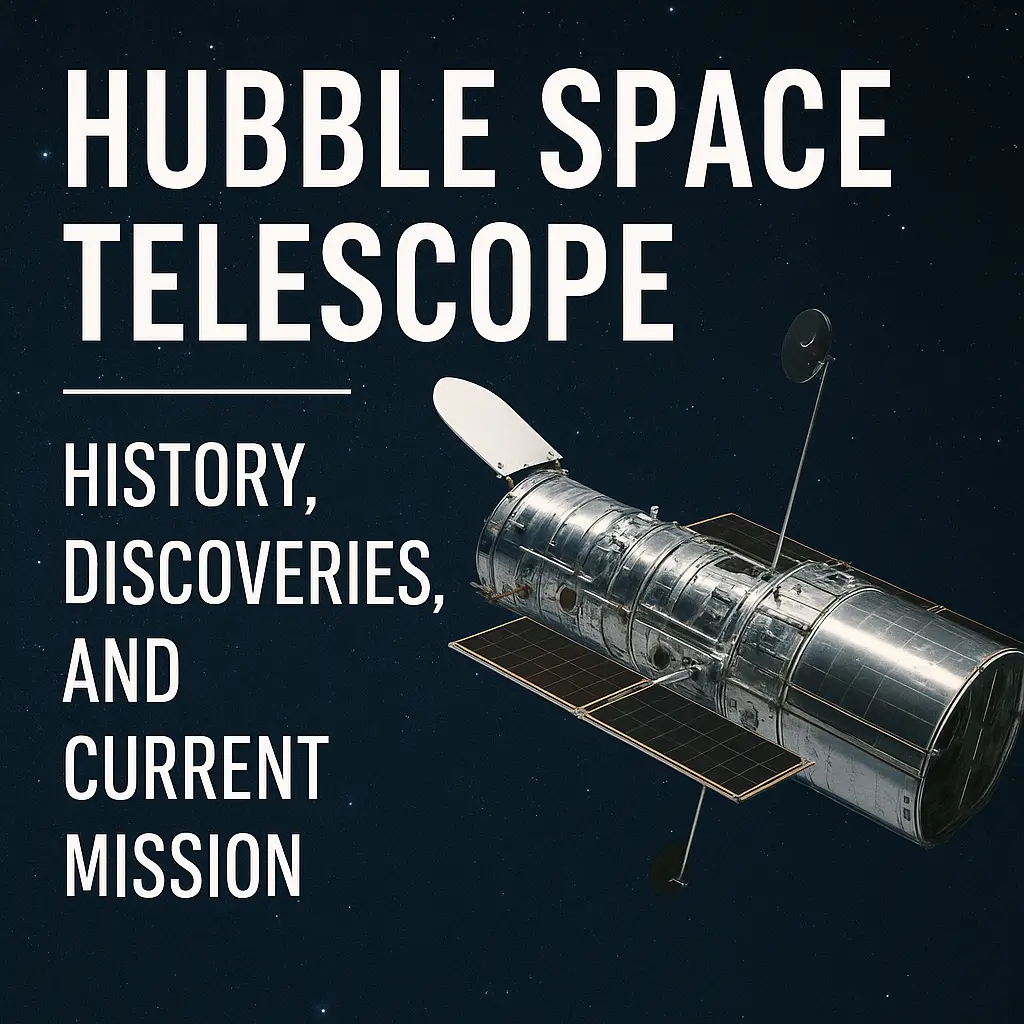
<p>A fun fact to share at the eyepiece: in September, Hubble Space Telescope observations revealed a ten-sided atmospheric wave around Saturn’s south pole that appears to be strengthening (<a href=”https://science.nasa.gov/solar-system/skywatching/whats-up-october-2026-skywatching-tips-from-nasa/ ” target=”_blank” rel=”noopener”>NASA</a>). At the north pole, the well-known hexagon has been there for a long time.</p>
<h2>The October calendar</h2>
<p>After Saturn, the next appointment comes at dawn on October 6, when the waning crescent Moon covers Jupiter. Here are the events to mark (<a href=”https://science.nasa.gov/solar-system/skywatching/whats-up-october-2026-skywatching-tips-from-nasa/ ” target=”_blank” rel=”noopener”>NASA</a>, <a href=”https://www.space.com/stargazing/jupiter-disappears-behind-the-moon-saturn-shines-at-its-best-and-mars-meets-the-beehive-october-2026-planet-guide ” target=”_blank” rel=”noopener”>Space.com</a>):</p>
<div class=”sic-table-wrap”>
<table>
<thead>
<tr><th>Date</th><th>Event</th><th>Notes</th></tr>
</thead>
<tbody>
<tr><td>October 2–4</td><td>Possible auroras (G1 storm)</td><td>Mostly at high latitudes</td></tr>
<tr><td>October 4</td><td>Saturn at opposition</td><td>Visible all night, culminates in the south around midnight</td></tr>
<tr><td>October 6</td><td>Moon occults Jupiter (20% illuminated)</td><td>Visible from eastern and central North America; elsewhere the Moon passes near Jupiter, check with a planetarium app</td></tr>
<tr><td>October 11</td><td>Mars passes through the Beehive Cluster (M44)</td><td>After midnight, east-northeast, best with binoculars</td></tr>
<tr><td>October 21–22</td><td>Orionid meteor shower peaks</td><td>Moonlight interferes: best in the few hours before dawn, after moonset</td></tr>
<tr><td>October 27–28</td><td>Moon passes near the Pleiades</td><td>Evening, eastern sky, visible to the naked eye</td></tr>
</tbody>
</table>
</div>
<h2>A weekend with two stars of the show</h2>
<p>Between October 2 and 4, 2026, the night sky offers two very different sights. A possible minor G1 geomagnetic storm could bring auroras to high latitudes, while Saturn reaches opposition on October 4, making it the best time of the year to observe the planet. Two separate events, but the same advice applies: find dark skies, give your eyes time to adjust and be patient.</p>
<h2>Aurora: what is happening on the Sun</h2>
<p>On October 2, a coronal mass ejection (CME) is expected to arrive, a burst of plasma launched on September 28 by a filament eruption. NOAA has issued a geomagnetic storm watch up to level G1, the lowest on the scale. Two more episodes follow over the weekend (<a href=”https://earthsky.org/sun
<div class=”sic-table-wrap”>
<table>
<thead>
<tr><th>Date</th><th>Cause</th
</thead>
<tbody>
<tr><td>October 2</td><td>CME from the September 28 filament eruption</td><td>Unsettled to active, G1 peaks possible</td></tr>
<tr><td>October 3</td><td>Fast solar wind from a large coronal hole</td><td>Active conditions, G1 possible</td></tr>
<tr><td>October 4</td><td>CME from the C8.6 flare of region AR4535 (September 30)</td><td>Weak glancing blow, unsettled to active</td></tr>
</tbody>
</table>
</div>
<p>The coronal hole is the one near the center of the solar disk that looks a bit like a heart. It is a region of the corona where the magnetic field opens up and lets fast solar wind escape.</p>
<p class=”sic-note”>At G1 level, auroras generally stay confined to high latitudes, and the sources talk about displays for northern regions. From Italy, don’t expect anything visible to the naked eye.</p>
<h2>How to follow it (and photograph it)</h2>
<p>Autumn and the equinox are among the best periods of the year for auroras: EarthSky openly talks about an “aurora season” that has already begun (<a href=”https://earthsky.org/sun
<ul>
<li><strong>Check real-time data.</strong> Alerts and the Kp index are on the <a href=”https://www.swpc.noaa.go
<li><strong>Find true darkness.</strong> Clear northern horizon, away from city lights, and at least 20 minutes to adapt your eyes.</li>
<li><strong>Shoot with a tripod.</strong> Fast wide-angle lens, ISO 1600–3200, exposures of 5–15 seconds: the camera sees colors the eye often misses.</li>
<li><strong>Expect a faint aurora.</strong> In a G1 storm the green is dim, and at mid-latitudes it appears, when it appears at all, as a low arc on the horizon.</li>
</ul>
<h2>Saturn at opposition: the best moment of the year</h2>
<p>Saturn reaches opposition at 12:00 UTC on October 4, 2026, as Earth moves directly between the Sun and Saturn (<a href=”https://earthsky.org/ast
<p>Opposition also brings Saturn to its closest and brightest point of the year. In 2026, the planet will be about 1.26 billion kilometres from Earth, equivalent to roughly 70 light-minutes.</p>
<div class=”sic-table-wrap”>
<table>
<thead>
<tr><th>Data point</th><th>Value at opposition</th></tr>
</thead>
<tbody>
<tr><td>Date and time</td><td>October 4, 2026, 12:00 UTC</td></tr>
<tr><td>Magnitude</td><td>0.3 (as bright as the brightest stars)</td></tr>
<tr><td>Distance</td><td>about 1.26 billion km (8.43 AU)</td></tr>
<tr><td>Constellation</td><td>
<tr><td>Apparent disk diameter</td><td>19.7 arcseconds</td></tr>
<tr><td>Ring tilt</td><td>−7.5° relative to us</td></tr>
</tbody>
</table>
</div>
<p>The rings are opening again after Earth crossed their plane in March 2025, an event that repeats every 13–15 years. Saturn takes about 29.4 Earth years to orbit the Sun, so opposition falls roughly two weeks later each year: the last one was September 21, 2025, and the next will be October 18, 2027.</p>
<h2>How to observe Saturn</h2>
<p>You don’t need to wait for the exact day: Saturn stays in an excellent position until mid-October and, after opposition, will be easy to find in the evening sky for the rest of 2026. It will vanish into the sunset glow in March 2027 (<a href=”https://earthsky.org/ast
<ul>
<li><strong>Naked eye.</strong> Look for a yellowish, steady “star” as bright as the brightest stars, in a region poor in bright stars, in Cetus, lower left of the Great Square of Pegasus.</li>
<li><strong>Binoculars.</stron
<li><strong>Telescope.</strong
<li><strong>When.</strong> The planet rises in the evening and culminates around midnight, due south: the best views come when Saturn is high above the horizon, where the atmosphere disturbs it least.</li>
</ul>
<p>A fun fact to share at the eyepiece: in September, Hubble Space Telescope observations revealed a ten-sided atmospheric wave around Saturn’s south pole that appears to be strengthening (<a href=”https://science.nasa.gov
<h2>The October calendar</h2>
<p>After Saturn, the next appointment comes at dawn on October 6, when the waning crescent Moon covers Jupiter. Here are the events to mark (<a href=”https://science.nasa.gov
<div class=”sic-table-wrap”>
<table>
<thead>
<tr><th>Date</th><th>Event</th
</thead>
<tbody>
<tr><td>October 2–4</td><td>Possible auroras (G1 storm)</td><td>Mostly at high latitudes</td></tr>
<tr><td>October 4</td><td>Saturn at opposition</td><td>Visible all night, culminates in the south around midnight</td></tr>
<tr><td>October 6</td><td>Moon occults Jupiter (20% illuminated)</td><td>Visible from eastern and central North America; elsewhere the Moon passes near Jupiter, check with a planetarium app</td></tr>
<tr><td>October 11</td><td>Mars passes through the Beehive Cluster (M44)</td><td>After midnight, east-northeast, best with binoculars</td></tr>
<tr><td>October 21–22</td><td>Orionid meteor shower peaks</td><td>Moonlight interferes: best in the few hours before dawn, after moonset</td></tr>
<tr><td>October 27–28</td><td>Moon passes near the Pleiades</td><td>Evening, eastern sky, visible to the naked eye</td></tr>
</tbody>
</table>
</div>