
Join the mailing list Free weekly briefing, no spam.
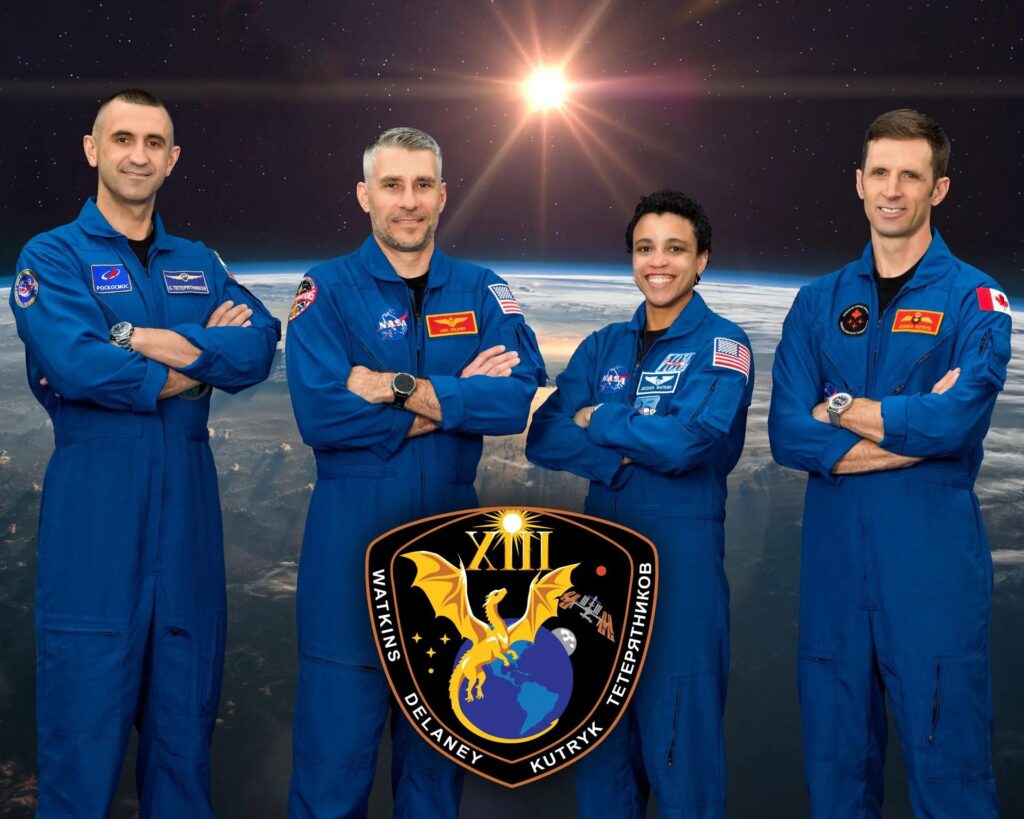
Image Credits: NASA
SpaceX’s Crew-13 mission is set to launch today, October 1, 2026, at 11:10 a.m. EDT (15:10 UTC) from Space Launch Complex 40 at Cape Canaveral Space Force Station, Florida. Four astronauts will fly aboard the Crew Dragon Grace on their way to the International Space Station, where they are scheduled to spend around six months. The launch comes roughly three weeks later than originally planned. Here’s what Crew-13 will accomplish, how the mission is expected to proceed, and what led to the delay.
Today’s timeline
Times shown in EDT and UTC.
- 9:20 a.m. EDT (13:20 UTC): NASA’s launch coverage begins
- 11:10 a.m. EDT (15:10 UTC): liftoff on a Falcon 9 from SLC-40
- 5:20 p.m. EDT (21:20 UTC): arrival coverage begins
- ~7:00 p.m. EDT (23:00 UTC): targeted docking at the forward port of the station’s Harmony module
NASA plans a trip of about 7 hours and 50 minutes from launch to docking, which would be the fastest ever flown by a U.S. spacecraft to the station. If the launch is called off, the next opportunity is Friday, 2 October. The Space Force’s 45th Weather Squadron put the odds of favourable weather at 60%, with cumulus clouds and flight through precipitation as the main concerns.
Crew-13 marks NASA’s 13th operational crew rotation mission under the Commercial Crew Program:
- Jessica Watkins (NASA): Commander. She previously flew on Crew-4 in 2022 and is set to become the first NASA astronaut to fly aboard a Crew Dragon twice.
- Luke Delaney (NASA): Pilot, making his first trip to space.
- Joshua Kutryk (CSA): Mission specialist and the first Canadian astronaut to launch as part of NASA’s Commercial Crew Program. He was initially assigned to Boeing’s Starliner-1 mission before joining Crew-13.
- Sergey Teteryatnikov (Roscosmos): Mission specialist, also making his spaceflight debut.
A separate article will take a closer look at each member of the Crew-13 team.
We will profile the crew in a separate article.
What Crew-13 is actually there to do
Crew rotation is the headline job: the crew relieves the Crew-12 astronauts, who have been on board since February, and keeps the station fully staffed. Crew-12 can only head home once Crew-13 has arrived and the two crews have completed their handover, which is why this launch date mattered beyond Crew-13 itself.
Beyond that, the six-month expedition is built around research and station upkeep:
- Human health for deep space. NASA has lined up Human Research Program studies tied to Artemis and future Mars missions, including a joint NASA–ESA study on blood flow and clotting (Venous Haemostasis), the Standard Measures programme of crew health and behaviour data, and exercise research.
- Biomedical and materials research. The ISS National Lab lists projects ranging from neural organoids for studying neuroinflammation and Parkinson’s-related conditions, to cardiac tissue models with blood vessels, to organoids made from colorectal cancer cells for testing chemotherapy drugs. Physical-science work includes how alloys melt and flow in microgravity, which matters for in-orbit repair and assembly, and how bacterial films form on droplets.
- Student experiments. The Genes in Space programme brings student-designed DNA experiments to orbit.
- Operations and maintenance. The crew will also handle cargo work and lab maintenance, and used the extra weeks on the ground to train further, including for possible spacewalks.
In all, NASA and its partners describe hundreds of investigations that the crew will support over the stay.
Why Crew-13 was delayed
Crew-13 was originally scheduled to launch on 12 September. However, on 29 August, NASA announced that the mission would be delayed after teams detected an oxidizer leak in the Dragon spacecraft’s propulsion system during routine prelaunch processing.
The propulsion system is critical to Dragon’s operation. Its Draco thrusters use a fuel and an oxidizer that ignite when they come into contact, providing the spacecraft with the thrust needed for orbital manoeuvres. Because the system plays an important role in crew safety, NASA and SpaceX carried out additional testing and corrective work on the hardware before proceeding with the crewed launch.
The sequence of events, as reported by NASA and others:
- 29 August: NASA announces the postponement. No new date is set while joint NASA–SpaceX teams run additional tests and data review.
- Mid-September: NASA reports that the team replaced an oxidizer valve in Dragon’s propulsion system and targets early October.
- 17 September: the crew enters final quarantine as the schedule settles on October.
- 22 September: NASA and SpaceX set 1 October as the earliest launch opportunity.
- 27–29 September: Falcon 9 and Dragon roll out to the pad; teams run an integrated static fire and a dry dress rehearsal.
Kutryk described the leak as a “very small, minor signature” and said SpaceX also swapped some components. Watkins told reporters the problem was found on the ground with time to fix it. No issue with the Falcon 9 itself was reported as part of the delay.
The slip also had a knock-on effect on the station. Because the outgoing Crew-12 cannot leave before the handover, their stay in orbit stretched to nearly eight months.
Why this launch matters
Crews launching to the International Space Station may seem routine by now, but Crew-13 is a reminder that every mission still depends on careful preparation. A small leak detected during ground processing pushed the launch back by three weeks, allowing NASA and SpaceX to identify the issue, carry out the necessary work and verify the spacecraft before the astronauts boarded.
Frequently asked questions
When does Crew-13 launch?
Thursday, 1 October 2026, at 11:10 a.m. EDT (15:10 UTC), with a backup opportunity on 2 October.
When does Crew-13 dock with the ISS?
About 7:00 p.m. EDT (23:00 UTC) on launch day, at the forward port of the Harmony module, after a planned flight of roughly 7 hours 50 minutes.
Why was Crew-13 delayed?
Engineers found an oxidizer leak in Dragon’s propulsion system during prelaunch processing. SpaceX replaced an oxidizer valve and NASA cleared the new schedule after further review.
How long will the crew stay on the ISS?
About six months.
Who is on Crew-13?
NASA astronauts Jessica Watkins and Luke Delaney, CSA astronaut Joshua Kutryk and Roscosmos cosmonaut Sergey Teteryatnikov.
Follow Crew-13 with SpaceInfo Club
Our Crew-13 coverage continues on the SpaceInfo Club YouTube channel, with a dedicated look at the four crew members to follow.
Watch it here → SpaceInfo Club on YouTube
More mission coverage is collected in our full article archive.
Sources
- NASA: Crew-13 mission blog
- NASA: NASA Sets Crew-13 Launch, Docking Coverage
- NASA: Weather 60% ‘Go’ for NASA’s SpaceX Crew-13 Launch
- NASA: NASA, SpaceX Adjust Crew-13 Launch Date
- Space.com: SpaceX, NASA delay next astronaut launch to ISS due to leak on Dragon spacecraft
- SpaceQ: Crew-13 launch rehearsal: Kutryk suits up two days before liftoff
- ISS National Lab: Astronauts launching on Crew-13 will support a variety of ISS National Lab-sponsored research
- Wikipedia: SpaceX Crew-13
Timings follow NASA’s published schedule and are subject to change; refer to NASA’s live coverage for the latest status.