
Join the mailing list Free weekly briefing, no spam.
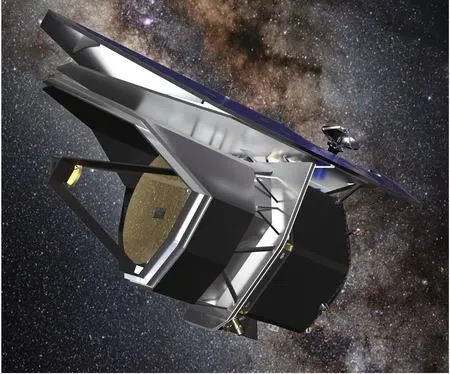
Image Credits: NASA
On September 23, 2026, NASA announced that PRIMA (PRobe far-Infrared Mission for Astrophysics) is advancing to Phase B of development. It is the first mission in a new class of NASA astrophysics missions called Probe Explorers, and it is the first major far-infrared space telescope since the European Space Agency’s Herschel Space Observatory ended operations in 2013.
If PRIMA passes its confirmation review, it will launch in 2033 for a planned five-year mission. Its project cost is capped at $1.2 billion, not including launch and other non-project costs.
What Is PRIMA?
PRIMA, short for PRobe far-Infrared Mission for Astrophysics, is a NASA space telescope designed to survey the universe in far-infrared wavelengths. The observatory will use a 5.9-foot (1.8-meter) primary mirror to carry out sensitive observations of some of the coldest and most heavily dust-obscured environments in the cosmos.
The mission is managed by NASA’s Jet Propulsion Laboratory (JPL), with the Goddard Space Flight Center and Marshall Space Flight Center contributing to the project. PRIMA is also an international effort, with contributions from seven partner space agencies:
- CNES (France)
- ASI (Italy)
- DLR (Germany)
- CSA (Canada)
- KASI/KASA (South Korea)
- JAXA (Japan)
- UKSA (United Kingdom)
A key scientific role for PRIMA is to explore a region of the electromagnetic spectrum that remains difficult to observe from space. Its far-infrared observations will complement those from facilities such as the James Webb Space Telescope (JWST) and radio observatories, providing astronomers with information about cold dust, gas and other material that can be difficult to study at shorter wavelengths.
Why Far-Infrared Astronomy Matters
Dust is one of the most important ingredients in the universe, and one of the hardest to see through. Newborn stars, growing black holes and planet-forming disks are often wrapped in dust grains that absorb ultraviolet and visible light and re-emit it as heat. That heat emerges mostly in the far-infrared, at wavelengths of tens to hundreds of microns.
Earth’s atmosphere blocks most of this radiation, so it must be observed from space or from very high altitude. Webb excels at near- and mid-infrared wavelengths but does not cover this band. Roughly half of all starlight ever emitted has been absorbed by dust and re-radiated at these wavelengths, which means a large share of cosmic history has been under-observed.
The Science Goals of PRIMA
NASA’s science case for PRIMA focuses on three major questions in astrophysics: how planets form, how galaxies and supermassive black holes evolve, and how dust and heavy elements accumulate throughout cosmic history.
1. How Planets Form
PRIMA will investigate the environments in which planets are born by observing the gas and dust surrounding young stars. These protoplanetary disks contain the material from which planetary systems develop, but much of that material is cold and best studied at infrared wavelengths.
Far-infrared observations can provide important information about the distribution and properties of cold dust and water in these planetary nurseries. By studying these materials across different systems, astronomers can improve their understanding of the processes that shaped planetary systems, including our own Solar System.
NASA has also identified the mission’s ability to study water as an important part of its broader scientific goals, including questions about how the ingredients necessary for Earth’s environment were distributed during planetary formation.
2. How Galaxies and Black Holes Grow
PRIMA will also examine the relationship between galaxy growth and the evolution of supermassive black holes. Across cosmic history, many galaxies experienced periods of intense star formation and black-hole activity inside regions heavily obscured by dust.
That dust absorbs shorter-wavelength radiation and re-emits the energy at infrared wavelengths. Far-infrared observations therefore provide another way to investigate energetic processes that may be difficult to study using visible or ultraviolet observations alone.
3. How Dust and Heavy Elements Build Up
Another major objective is to trace the production and accumulation of cosmic dust and heavy elements over the history of the universe.
Elements heavier than hydrogen and helium are produced through stellar processes and later become incorporated into interstellar material, including the dust and gas from which subsequent generations of stars and planets form. Understanding how this material accumulated over time can help astronomers reconstruct the evolution of galaxies and the origins of the raw materials found in planetary systems today.
Caveats and What Comes Next
Selection for Phase B is a major milestone, not a guarantee of flight. Phase B advances the preliminary design and technology development. PRIMA must then pass a confirmation review, based on technical, programmatic and cost performance, before it can begin Phase C implementation. The cost cap and the 2033 launch target are ambitious, and past missions show that schedules can shift.
Still, the outlook is encouraging. After more than a decade without a large far-infrared observatory in space, PRIMA would reopen a window on the dusty, hidden side of the cosmos.
Why the Probe Explorer Class Is a Big Deal
PRIMA is significant not only because of its far-infrared science, but also because it is the first mission selected for NASA’s new Probe Explorer class of astrophysics missions.
The 2020 Decadal Survey, Pathways to Discovery in Astronomy and Astrophysics for the 2020s, recommended creating a Probe-class mission category to occupy a middle ground between smaller Explorer missions and NASA’s large flagship observatories. The goal is to enable substantial scientific capabilities while maintaining a more defined cost and development framework than a flagship mission.
NASA selected PRIMA following an assessment of its:
- Scientific merit and alignment with the priorities identified by the Decadal Survey
- Technical and programmatic feasibility, including cost and schedule
- Potential to develop technologies that could benefit future astrophysics missions
NASA’s Astrophysics Division director, Shawn Domagal-Goldman, has described the agency’s broader objective as maintaining a pipeline of major astrophysics missions across successive decades. Within that strategy, PRIMA would become an important new observatory for the early 2030s, following major missions such as the James Webb Space Telescope and the Nancy Grace Roman Space Telescope.
PRIMA is part of NASA’s Explorers Program, the agency’s longest-running continuous space science program. The program dates back to Explorer 1, launched in 1958, and has supported more than 100 missions. Among its historically significant missions are Uhuru, which helped establish X-ray astronomy as a major field, and the Cosmic Background Explorer (COBE), whose observations provided foundational evidence about the early universe and contributed to Nobel Prize-winning research.
Frequently Asked Questions
What does PRIMA stand for?
PRobe far-Infrared Mission for Astrophysics.
When will PRIMA launch?
NASA is targeting 2033, pending a successful confirmation review.
How much will PRIMA cost?
If confirmed, the project cost is capped at $1.2 billion, not including launch and other non-project costs.
How is PRIMA different from the James Webb Space Telescope?
Webb observes mainly near- and mid-infrared light with a 6.5-meter mirror. PRIMA has a smaller 5.9-foot mirror but is designed for far-infrared surveys, extending the fleet’s coverage toward longer wavelengths.
What is a Probe Explorer?
A new class of cost-capped, competitively selected NASA astrophysics missions, recommended by the 2020 Decadal Survey. It sits between small Explorers and flagship observatories.
Sources
- NASA/JPL, “NASA Selects Far-Infrared Telescope as First in New Mission Class,” September 23, 2026 (updated September 24, 2026)
- National Academies of Sciences, Engineering, and Medicine, Pathways to Discovery in Astronomy and Astrophysics for the 2020s (2020 Decadal Survey)