
Join the mailing list Free weekly briefing, no spam.
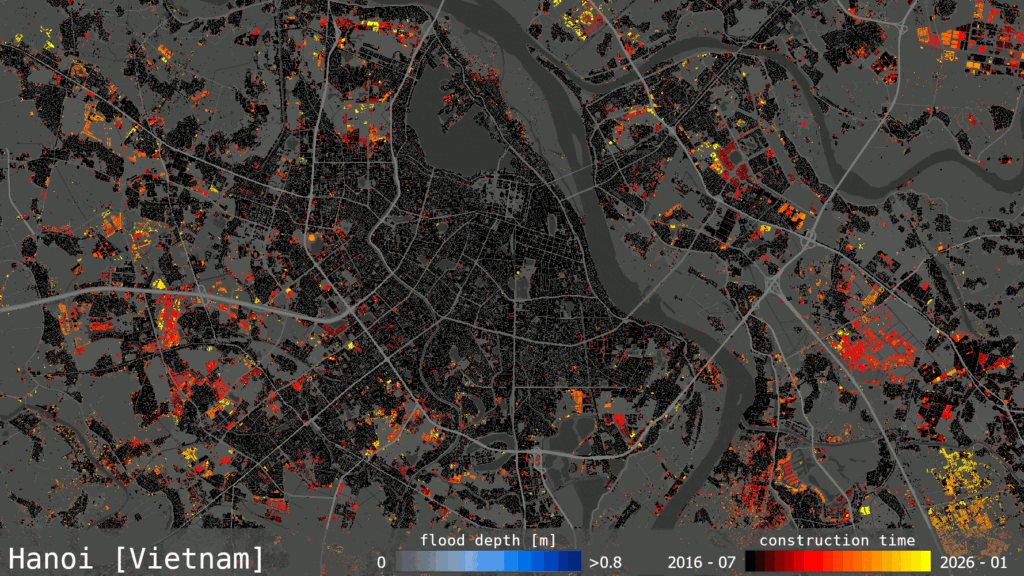
Cover Image: Urban expansion and flood risk in Hanoi from 2016 to 2026 – Credit: DLR/MindEarth/ESA
As the world’s cities continue to expand at an unprecedented pace, a critical question emerges: are we building the future in the right places? A new initiative supported by the European Space Agency (ESA) aims to provide the answer.
At an event hosted at the World Bank headquarters in Washington, D.C., ESA and its partners officially unveiled the World Settlement Footprint (WSF) Tracker, an advanced satellite-based platform designed to monitor urban expansion worldwide with remarkable precision. More than a mapping tool, the WSF Tracker represents a new generation of Earth observation services capable of revealing not only where cities are growing, but also how that growth intersects with some of the planet’s most significant natural hazards.
A Dynamic View of Urban Change
Urbanization is one of the defining trends of the 21st century. According to the latest WSF Tracker data, urban environments currently occupy just 0.6% of Earth’s land surface. Yet these areas are home to more than 57% of the global population—a figure expected to rise to nearly 68% by 2050.
Understanding how settlements evolve has traditionally relied on comparing static snapshots taken years apart. The WSF Tracker changes that paradigm.
Using satellite observations with a spatial resolution of 10 meters and updates every six months, the platform continuously monitors settlement growth from 2016 through 2026. This high-frequency approach allows researchers, policymakers, and urban planners to observe urban expansion almost in real time, identifying emerging development patterns long before they become apparent through conventional statistics.
The platform enables users to explore, analyze, and download global settlement data while offering tools to measure the timing, pace, and direction of urban growth at scales ranging from individual cities to entire countries and regions.
Beyond the Rocket Revolution: Connecting Space Innovation with Society

ESA and Vast: the new MoU and Europe’s future after the ISS
Image Credits: jonasphotto The European Space Agency has signed a new Memorandum of Understanding with…
Photonic Quantum Processor in Orbit: What the First Test Proved, and What It Didn’t
Illustrative image: CubeSats deployed into Earth orbit from the International Space Station’s Kibo module. Not…
Argotec and Rheinmetall Put an Air Defence Satellite in Orbit Argotec and Rheinmetall Put an…

Starship Flight 14 Recap: It Reached Orbit, Delivered 26 Satellites — and Came Home the Hard Way

Aurora and Saturn at Opposition: The Sky on October 2–4, 2026
Image Credits: NASA, Neil Zeller A weekend with two stars of the show Between October…
Where Growth Meets Risk
Perhaps the most significant contribution of the WSF Tracker lies in its ability to combine urban development data with environmental hazard information.
Across many parts of the world, expanding cities increasingly encroach upon areas vulnerable to flooding, extreme heat, earthquakes, land subsidence, and tropical cyclones. As populations and infrastructure become concentrated in these locations, the potential impacts of disasters grow significantly.
The WSF Tracker allows users to assess how exposure to these hazards evolves alongside urban growth. By integrating global hazard layers with settlement dynamics, decision-makers can identify regions where rapid development may be increasing vulnerability.
This capability provides valuable evidence for urban planning strategies, infrastructure investments, disaster risk reduction programs, and climate adaptation initiatives. Rather than reacting to future crises, authorities can use the platform to anticipate risks and guide development toward safer and more resilient locations.
A Partnership Built on Earth Observation Excellence
The WSF Tracker builds upon the World Settlement Footprint initiative developed by the German Aerospace Center (DLR), which has become one of the world’s leading efforts to map human settlements and characterize the built environment.
The new platform was jointly developed by DLR and MindEarth, with ESA and the World Bank playing key roles in its design and implementation. The collaboration reflects a growing trend in the space sector: transforming satellite data into operational tools that directly support societal and economic development.
Fabio Cian, ESA’s representative to the World Bank, emphasized that the project extends beyond technological innovation.
“The WSF Tracker demonstrates how ESA, industry and development partners can work together to co-design solutions that respond to operational needs, create public goods, and support long-term institutional capacity,” he explained during the launch event.
The platform’s rapid adoption by World Bank programs highlights the increasing importance of Earth observation data in development planning and public policy.
Satellites Supporting Sustainable Urban Futures
The release of the WSF Tracker illustrates the expanding role of space technologies in addressing challenges on the ground. While satellites are often associated with climate monitoring, navigation, or scientific discovery, their contribution to urban development is becoming equally significant.
By delivering detailed and frequently updated information about how cities evolve, the WSF Tracker provides governments, international organizations, and researchers with an unprecedented understanding of global urbanization patterns.
As climate change intensifies and urban populations continue to grow, the ability to monitor settlement expansion in near real time may become an essential component of sustainable development strategies. In this sense, the WSF Tracker is not simply mapping cities—it is helping societies build safer, smarter, and more resilient futures.
The initiative stands as another example of how data collected hundreds of kilometers above Earth can directly influence decisions that shape life on the ground, demonstrating once again the transformative power of modern space-based observation systems.
Beyond the Rocket Revolution: Connecting Space Innovation with Society
ESA and Vast: the new MoU and Europe’s future after the ISS
Image Credits: jonasphotto The European Space Agency has signed a new Memorandum of Understanding with…
Photonic Quantum Processor in Orbit: What the First Test Proved, and What It Didn’t
Illustrative image: CubeSats deployed into Earth orbit from the International Space Station’s Kibo module. Not…
Argotec and Rheinmetall Put an Air Defence Satellite in Orbit Argotec and Rheinmetall Put an…
Starship Flight 14 Recap: It Reached Orbit, Delivered 26 Satellites — and Came Home the Hard Way
Aurora and Saturn at Opposition: The Sky on October 2–4, 2026
Image Credits: NASA, Neil Zeller A weekend with two stars of the show Between October…

SpaceX Crew-13 Launches to the ISS: What the Mission Will Do and Why It Slipped
Image Credits: NASA SpaceX’s Crew-13 mission is set to launch today, October 1, 2026, at…

PRIMA Far-Infrared Telescope: NASA’s First Probe Explorer and What It Means for Astrophysics
Image Credits: NASA On September 23, 2026, NASA announced that PRIMA (PRobe far-Infrared Mission for…
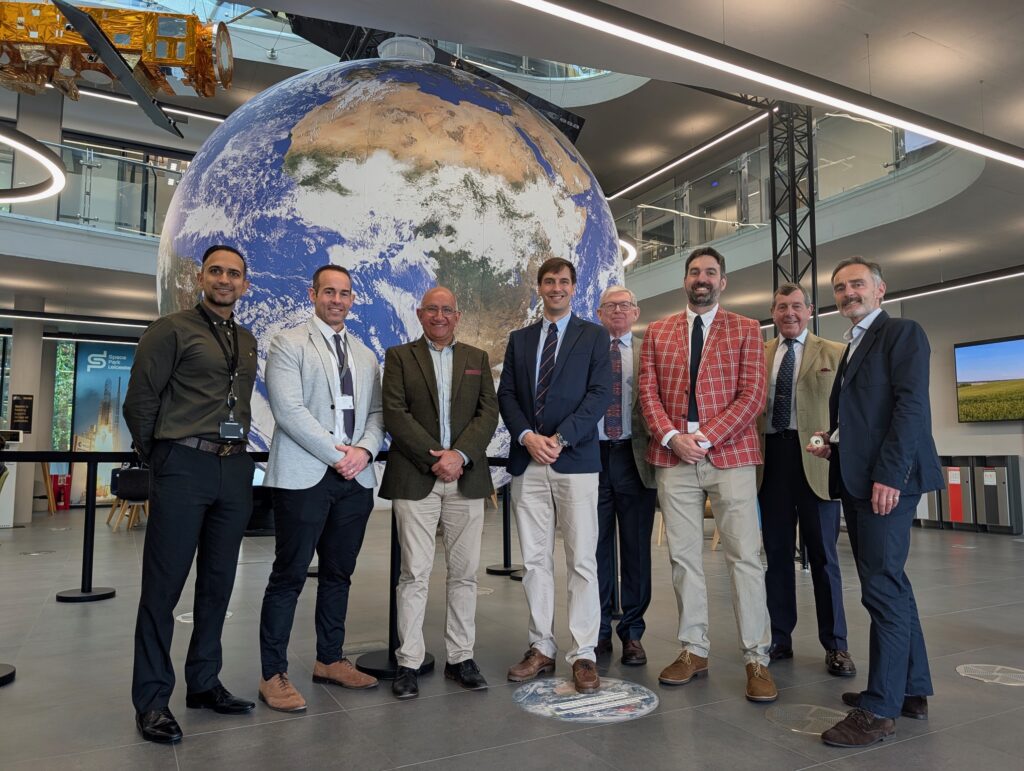
HMS Daring Representative Visit Space Park Leicester as Royal Navy and Space Sector Strengthen Ties
tag: Space Park Leicester Cover image credits: SPL Representatives of HMS Daring have visited Space…

Starship Goes Orbital – How Flight 14 is going
Starship Flight 14 has put the world’s largest rocket into orbit for the first time….

BepiColombo Separates From Its Transfer Module Today
BepiColombo separates from its Mercury Transfer Module today, 3 September 2026, at 14:00 CEST (12:00…

BepiColombo Sheds Its Transfer Module as the Mercury Arrival Begins
After eight years and nine planetary flybys, ESA–JAXA’s BepiColombo mission is about to reach a…