Join the mailing list Free weekly briefing, no spam.
Cover Image Credits: Universe Today
The International Space Station is now set to operate through 2030 under a July 2026 agreement between NASA and Roscosmos, and no successor is in orbit yet. Four separate efforts are racing to fill the gap: Russia’s planned ROS station, China’s Tiangong, India’s Bharatiya Antariksh Station and a set of US commercial stations whose plans have shifted twice this year. This companion to our article on the Baikonur Site 31 collapse looks at why the ISS is so hard to take apart, and where each successor stands.
Key facts
- The ISS has two operational halves that depend on each other: the Russian segment provides most reboost and part of attitude control, and the US segment supplies electrical power to both.
- Russia’s ROS first module is now planned for 2028, after earlier targets of 2027. Early ROS launches are planned from Baikonur.
- China’s Tiangong is preparing to host its first foreign astronaut, from Pakistan, on Shenzhou-24, scheduled no earlier than late November 2026 according to launch trackers.
- India’s Cabinet approved the first module of its station, BAS-1, in September 2024, with launch planned for 2028 and a full five-module station by 2035.
- NASA expects to award commercial station contracts on April 15, 2027, according to a report on its final solicitation. Commercial launch targets: Vast Haven-1 in early 2027, Axiom’s first module in 2028, Starlab in 2029.
Why the ISS cannot be split in two
The ISS was built as one system, and its two halves were designed to lean on each other. NASA has stated that attempts to separate the US and Russian segments would face major logistical and safety challenges because of the many external and internal connections, the need to control the station’s attitude and altitude, and software interdependence.
The interdependence is easy to describe. The station loses altitude to atmospheric drag and must be raised periodically. That reboost, along with debris avoidance maneuvers, has historically been done by engines on the Russian Zvezda module and by Progress cargo ships docked to it. The US segment provides electrical power for both halves. For day-to-day pointing, the US segment uses control moment gyroscopes, and NASA says Russian thrusters take over during dynamic events such as dockings and when the gyroscopes reach their limit.
The US has been adding alternatives. A Cygnus cargo ship carried out the first ISS reboost by a US vehicle in June 2022, and a SpaceX Cargo Dragon with a boost trunk has since been planned for the same job. Reboost, however, remains primarily a Russian function today, according to SpacePolicyOnline.
The same dependence shows up at the end of the station’s life. NASA’s plan is to bring the roughly 420-ton station down with a SpaceX-built deorbit vehicle for thrust, while engines on the Russian segment handle attitude control. NASA’s ISS program manager has described it as an integrated plan.
This is the engineering reason why the July 2026 agreement matters. It keeps both halves running until the planned end of operations instead of forcing an early, unplanned separation.
Russia: the Russian Orbital Station (ROS)
Russia plans a national station that it calls ROS, or ROSS. In July 2024, Roscosmos leadership signed a schedule for deployment between 2027 and 2033. The early concept placed ROS in a near-polar orbit so it could observe all of Russian territory, with launches from Vostochny in Russia’s Far East.
The plan has changed repeatedly. In December 2024 Russian outlet 1RU reported that the first ten Progress-ROS cargo launches would take place from Baikonur, with a move to Vostochny by the end of 2029. In April 2026 Roscosmos chief Dmitry Bakanov confirmed the first module is now scheduled for 2028, after earlier assumptions of late 2027. Reports since 2025 also describe a plan that builds the first stage of ROS in the same orbit as the ISS, using parts of the Russian segment, though details have shifted and readers should check the latest Roscosmos statements.
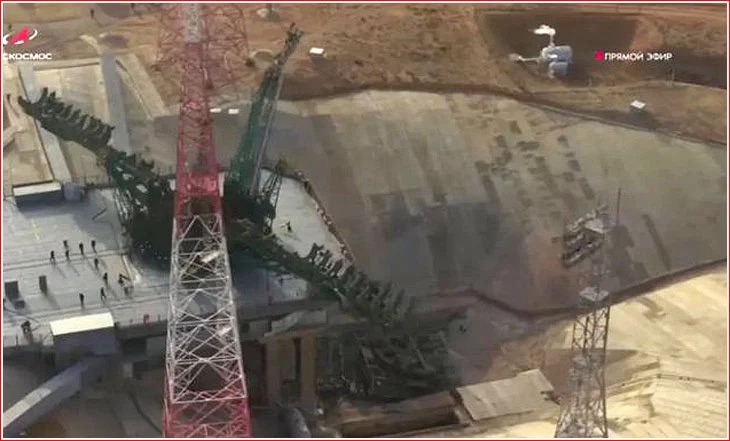
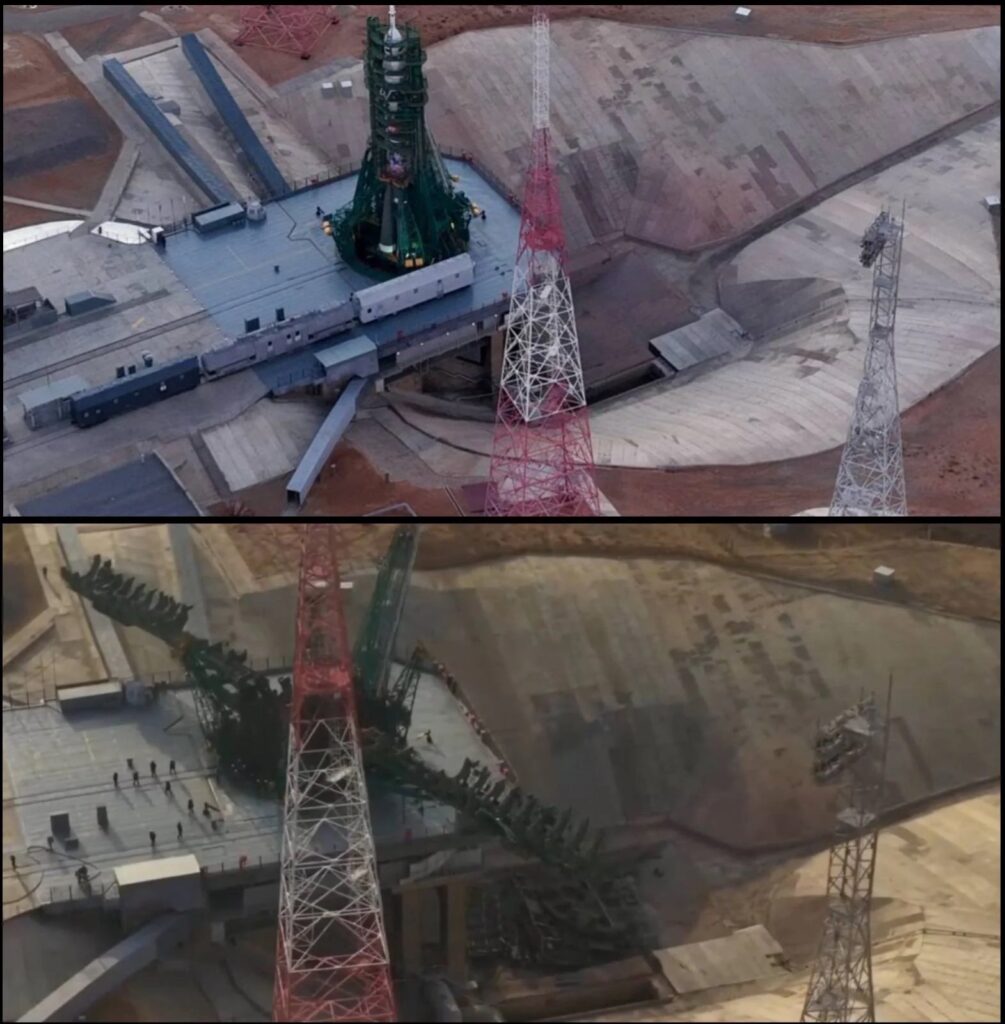
The point most relevant to this series is geographic. If early ROS flights launch from Baikonur, Russia’s future station will still depend on a pad complex in Kazakhstan, on land it leases through 2050. That is the same dependency that the Site 31 incident exposed.
China: Tiangong opens its door
Tiangong was built entirely by China, unlike the multinational ISS. It is now beginning to host visitors from other countries. China and Pakistan signed an astronaut cooperation agreement on February 28, 2025, and in April 2026 the China Manned Space Agency announced that two Pakistani candidates had been selected for training.
One of them is expected to fly to Tiangong on Shenzhou-24 for about a week as a payload specialist and return on Shenzhou-23. Launch trackers list Shenzhou-24 as no earlier than November 25, 2026. To make room, one Shenzhou-23 crew member, launched on May 24, 2026, is slated to stay roughly a year, which would be China’s first year-long mission. Shenzhou-23 also carried Hong Kong’s first spacefarer.
China has had its own contingency to manage. After a debris strike on Shenzhou-20 in late 2025, China launched Shenzhou-22 as an emergency replacement, and the Shenzhou-21 crew’s stay ran longer than planned. The station operates with fewer partners than the ISS, so its schedule rests largely on one national program.
China and Russia also signed a roadmap in 2021 for a joint International Lunar Research Station, which shows that Beijing and Moscow cooperate on the Moon even as Russia plans its own orbital outpost.
India: the Bharatiya Antariksh Station
India’s Union Cabinet approved the first module of the Bharatiya Antariksh Station, BAS-1, on September 18, 2024, as part of an expanded Gaganyaan human spaceflight program. The plan calls for BAS-1 to launch by 2028 on an LVM3 rocket, followed by four validation missions by December 2028, and a five-module station operating by 2035. India has also set a crewed lunar landing goal for 2040.
ISRO unveiled a full-scale model of the base module in August 2025. BAS is the least advanced of the four efforts in this article, but it is the one with the clearest government mandate and a fixed schedule on paper.
The United States: commercial stations and a changing plan
NASA’s Commercial LEO Destinations program funds private companies to build stations that can replace the ISS. The main contenders are Vast, Axiom Space, Voyager Space with Airbus on Starlab, and Blue Origin with Sierra Space on Orbital Reef.
The policy has not been steady. In March 2026, according to Payload, NASA officials said they did not believe a commercial business case yet existed and proposed buying a core module that would attach to the ISS, with private modules docking to it. Industry pushed back, and in June 2026 NASA said it would proceed with its original plan to support at least one commercial free-flying station. GovConWire reports that NASA has since issued its final solicitation, with proposals due December 8 and awards expected on April 15, 2027.
On hardware, the dates keep moving. Vast said Haven-1 would fly in 2025, then May 2026, and now targets the first quarter of 2027 on a Falcon 9. Axiom plans its first module for 2028, and Starlab targets 2029. These are company targets and have slipped before.
Reading the whole picture (SpaceInfo Club analysis)
This section is our interpretation, not an official position.
If the 2030 end date holds, the ISS will be the last station in orbit built and operated by a broad international partnership. Its successors are more likely to be national or commercial platforms, each with its own docking arrangements, its own launch dependence and its own political context. A reader should not assume they will be as interoperable as the ISS partners made their segments.
There is also a timing risk. The ISS ends in 2030, ROS and BAS are not due to be complete until the early to mid 2030s, and commercial stations have repeatedly slipped. A gap in continuous human presence in low Earth orbit is possible if schedules keep moving. Tiangong is the only station that is already operating and planned to continue.
What to watch next
- Shenzhou-24 and the first foreign astronaut on Tiangong, no earlier than late November 2026.
- Proposals due December 8 and NASA’s commercial station awards expected April 15, 2027.
- Haven-1’s launch in the first quarter of 2027, and whether that date holds.
- Roscosmos updates on the ROS first module for 2028 and its launch site.
- Progress toward BAS-1 and the Gaganyaan precursor missions.
Frequently asked questions
Can the Russian and US segments of the ISS operate separately?
Not as the station is built today. NASA says separation would face major logistical and safety challenges because of shared connections, attitude and altitude control, and software.
When does the ISS end?
The partners plan operations through 2030, followed by a controlled deorbit. NASA plans to use a SpaceX-built deorbit vehicle.
Where will Russia launch its new station from?
Early ROS flights are planned from Baikonur in Kazakhstan, with a later move to Vostochny reported for cargo launches. Plans have changed several times.
Who will be the first foreign astronaut on Tiangong?
One of two Pakistani candidates is expected to fly on Shenzhou-24. China has not named the crew member in the sources we reviewed.
Which commercial station will launch first?
Vast’s Haven-1 is the earliest target, at the first quarter of 2027, followed by Axiom in 2028 and Starlab in 2029. All dates are company targets.
Sources
- SpacePolicyOnline, Crew-11 on the way to ISS (ISS interdependence and deorbit plan)
- Flying Magazine, on NASA’s statement about separating ISS segments
- Universe Today, Cygnus boosts the ISS for the first time
- 1RU, Russia will begin assembly of the new orbital station in 2028
- 1RU, First ten Progress-ROS launches will take place from Baikonur
- Jamestown Foundation, The dubious future of Russia’s proposed orbital station
- Space.com, China’s Shenzhou 23 launch to Tiangong
- China in Space, Final two Pakistani astronaut candidates chosen
- Next Spaceflight, Shenzhou 24
- Press Information Bureau of India, Cabinet approval of BAS-1
- Payload, Commercial LEO Destination field guide
- GovConWire, NASA issues final RFP for commercial space stations
- Orbital Radar, Commercial space stations
Published November 2, 2026, by The SpaceInfo Club.