Join the mailing list Free weekly briefing, no spam.
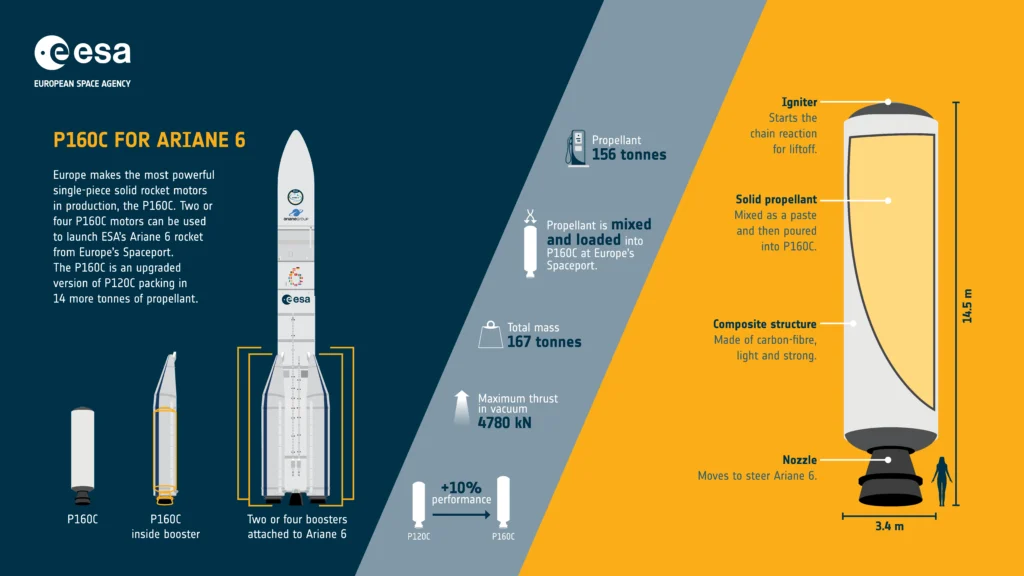
Cover Image: P160C boosters for Ariane 6 infographic – Credits: ESA
Europe has reached another major milestone in its journey toward independent access to space. ESA’s newest heavy-lift launcher, Ariane 6, has completed its most powerful mission to date, successfully placing 36 satellites for Amazon’s Kuiper broadband constellation into low-Earth orbit while establishing a new payload record for a European launch vehicle.
The mission, designated VA269, lifted off from Europe’s Spaceport in French Guiana on 17 June at 14:21 CEST, delivering its payload to orbit just over an hour later. The launch marked the eighth consecutive successful mission for Ariane 6 and demonstrated the rapid evolution of Europe’s flagship launcher only months after the introduction of its four-booster configuration.
Beyond the successful deployment of Amazon’s satellites, the mission showcased a significant performance upgrade that will strengthen Europe’s launch capabilities for years to come.

Astronomy Basics
🌠 Explore the Universe Like Never Before!🔭 Discover the secrets of stars, planets, and galaxies…
[Preview] Orbital Mechanics – An Introduction
Discover the fundamentals of orbital mechanics in this beginner-friendly course—no prior experience needed! Explore how…
Human Factors and Performances
Human factors and human performance in space are critical areas of study in spaceflight operations,…
Space Physics – Basics
Explore the dynamic forces that shape our space environment in this exciting journey beyond Earth’s…
A More Powerful Ariane 6
The defining feature of this mission was the first flight of four upgraded P160C solid rocket boosters.
Compared with the previous P120C boosters, each new booster carries 14 tonnes of additional solid propellant, increasing the propellant load from 142 to 156 tonnes. This enhancement allows Ariane 6 to generate considerably more thrust during the first minutes of flight, increasing its payload capability by approximately 15%.
The improved performance enabled Ariane 6 to launch 36 Kuiper satellites in a single mission, four more than previous launches for Amazon’s constellation.
This achievement also establishes a new European record for the heaviest payload ever launched by a European rocket. The previous record belonged to Ariane 5, which carried ESA’s ATV Albert Einstein cargo spacecraft to the International Space Station in 2013.
The milestone demonstrates that Ariane 6 is steadily expanding beyond its initial capabilities, validating the modular design philosophy adopted during its development.
The Technical Evolution of Ariane 6
One of Ariane 6’s defining characteristics is its modular architecture, allowing the launcher to be configured for missions of different sizes without redesigning the vehicle.
The rocket can fly with either:
- Two solid boosters (A62) for medium-lift missions.
- Four solid boosters (A64) for heavier commercial, institutional, and exploration payloads.
This flexibility enables Europe to cover a broad spectrum of launch requirements while reducing development and operational costs.
The New P160C Boosters
The latest mission introduced the P160C, an evolution of the P120C motor already used on Ariane 6 and Vega-C.
The upgrade includes:
- 156 tonnes of solid propellant per booster
- Approximately one metre of additional length, reaching 14.5 metres
- Up to 15% greater launch performance
- Around 2 additional tonnes of payload capacity to low-Earth orbit
Interestingly, despite the increased motor length, engineers maintained compatibility with Ariane 6’s central core stage. The connection interfaces remain unchanged, simplifying integration while increasing performance.
Like its predecessor, the P160C employs a carbon-fibre composite casing designed to maximise strength while minimising structural mass. This allows more of the launcher’s lift capability to be devoted to payload rather than the rocket itself.
Shared Technology with Vega-C
Another important engineering feature is the commonality between Europe’s launch vehicles.
The solid rocket motors used by Ariane 6 are derived from the same family powering Vega-C, Europe’s light launcher. Sharing propulsion technology across both rockets simplifies manufacturing, reduces production costs, strengthens the industrial supply chain, and supports a higher launch cadence.
This common approach is one of the key strategies behind Europe’s long-term launcher sustainability.
A European Industrial Achievement
The P160C reflects the collaborative nature of Europe’s space sector.
Development was carried out by Europropulsion, under contracts from ArianeGroup and Avio, combining expertise from multiple ESA Member States.
Manufacturing is distributed across Europe:
- The composite motor casing is produced in Italy.
- The nozzle is manufactured in France.
- The ignition system comes from Norway.
- Final assembly and propellant loading take place at Europe’s Spaceport in French Guiana.
The Ariane 6 programme itself involves an industrial network spanning 13 European countries, coordinated by ArianeGroup as prime contractor. ESA oversees the programme, while CNES manages launch operations in French Guiana and Arianespace provides commercial launch services.
Strengthening Europe’s Access to Space
The success of VA269 highlights more than a new payload record—it illustrates the gradual maturation of Europe’s next-generation launcher.
Ariane 6 was conceived to provide independent access to every major orbital regime, from low-Earth orbit to geostationary transfer orbit and deep-space missions. Its modular design allows Europe to tailor launch configurations according to customer needs while continuously improving performance through incremental upgrades such as the P160C.
With commercial demand for satellite constellations continuing to grow alongside institutional and scientific missions, Ariane 6 is becoming an increasingly versatile workhorse for European space transportation.
Rather than representing the final version of the launcher, this mission demonstrates that Ariane 6 has been designed with future evolution in mind. The successful debut of the P160C boosters shows that Europe is not only restoring its heavy-lift launch capability after Ariane 5 but also actively expanding it, ensuring greater flexibility and competitiveness in the rapidly evolving global launch market.
Beyond the Rocket Revolution: Connecting Space Innovation with Society
ESA and Vast: the new MoU and Europe’s future after the ISS
Image Credits: jonasphotto The European Space Agency has signed a new Memorandum of Understanding with…
Photonic Quantum Processor in Orbit: What the First Test Proved, and What It Didn’t
Illustrative image: CubeSats deployed into Earth orbit from the International Space Station’s Kibo module. Not…
Argotec and Rheinmetall Put an Air Defence Satellite in Orbit Argotec and Rheinmetall Put an…
Starship Flight 14 Recap: It Reached Orbit, Delivered 26 Satellites — and Came Home the Hard Way

Aurora and Saturn at Opposition: The Sky on October 2–4, 2026
Image Credits: NASA, Neil Zeller A weekend with two stars of the show Between October…
SpaceX Crew-13 Launches to the ISS: What the Mission Will Do and Why It Slipped
Image Credits: NASA SpaceX’s Crew-13 mission is set to launch today, October 1, 2026, at…
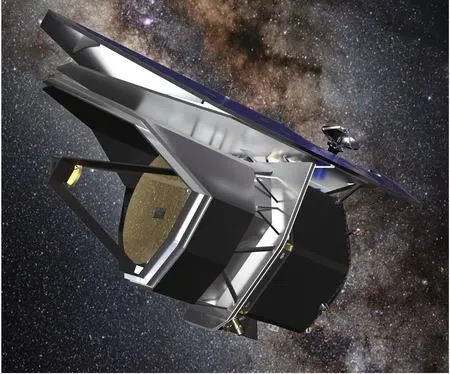
PRIMA Far-Infrared Telescope: NASA’s First Probe Explorer and What It Means for Astrophysics
Image Credits: NASA On September 23, 2026, NASA announced that PRIMA (PRobe far-Infrared Mission for…
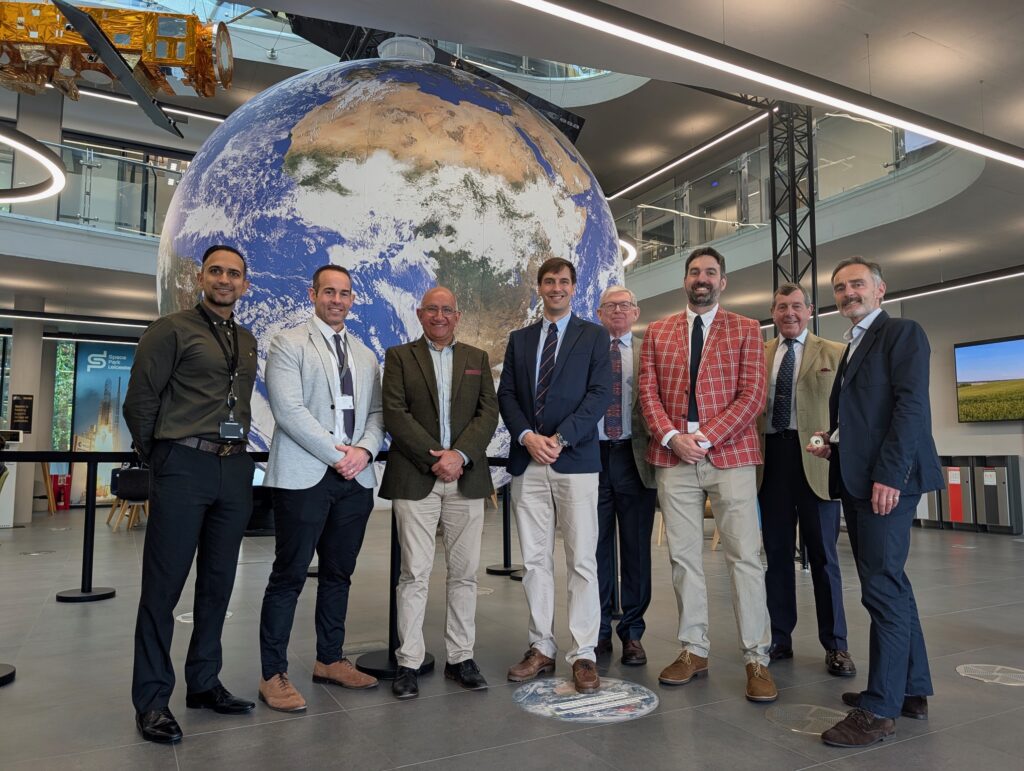
HMS Daring Representative Visit Space Park Leicester as Royal Navy and Space Sector Strengthen Ties
tag: Space Park Leicester Cover image credits: SPL Representatives of HMS Daring have visited Space…
Starship Goes Orbital – How Flight 14 is going
Starship Flight 14 has put the world’s largest rocket into orbit for the first time….