
Join the mailing list Free weekly briefing, no spam.
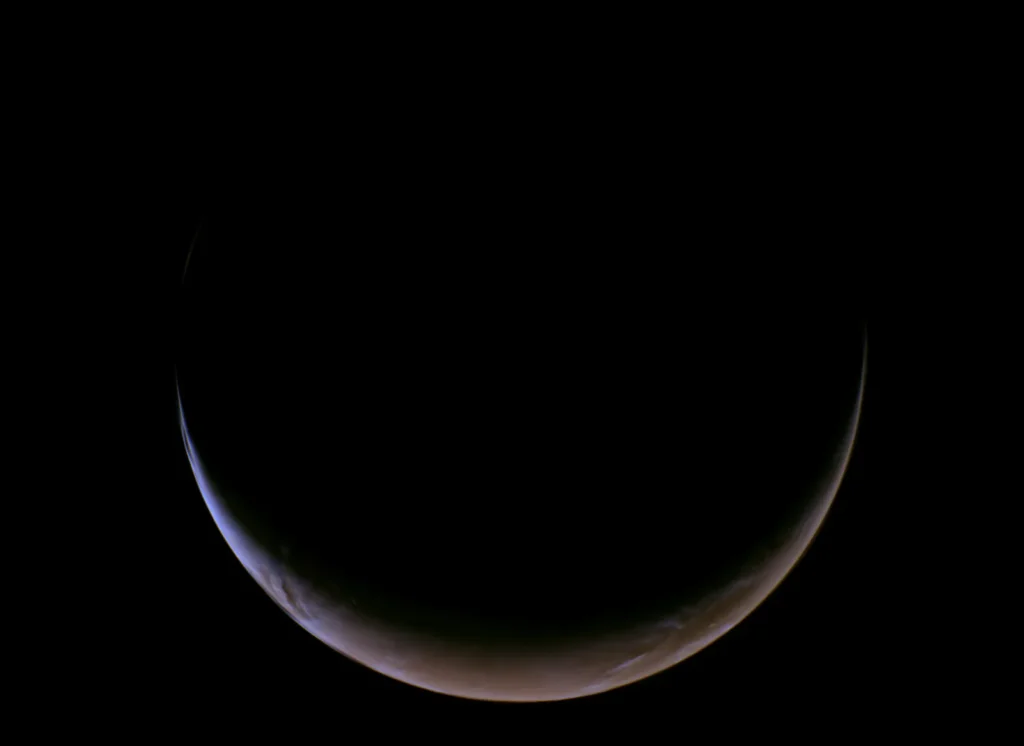
Cover Image: NASA Psyche Flyby May 2026 – Credit NASA/JPL-Caltech/ASU
Before heading toward one of the most intriguing objects in the Solar System, NASA’s Psyche spacecraft has successfully completed an important milestone. On 15 May, the spacecraft performed a close flyby of Mars, using the planet’s gravity to adjust its trajectory and gain the extra speed needed for its journey to asteroid Psyche, where it is expected to arrive in 2029.
The gravity assist was far more than a navigational maneuver. It also provided mission scientists with a rare opportunity to test every major scientific instrument under realistic operating conditions before the spacecraft reaches its final destination.
Mars became a natural testing ground. Unlike asteroid Psyche, the Red Planet has been studied extensively by orbiters, landers, and rovers over several decades. This wealth of existing data allowed researchers to compare Psyche’s measurements against well-established observations and verify that each instrument was performing exactly as expected.
Beyond the Rocket Revolution: Connecting Space Innovation with Society

ESA and Vast: the new MoU and Europe’s future after the ISS
Image Credits: jonasphotto The European Space Agency has signed a new Memorandum of Understanding with…
Photonic Quantum Processor in Orbit: What the First Test Proved, and What It Didn’t
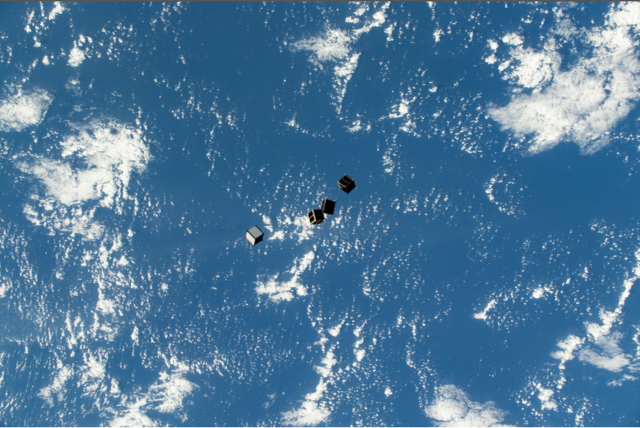
Illustrative image: CubeSats deployed into Earth orbit from the International Space Station’s Kibo module. Not…
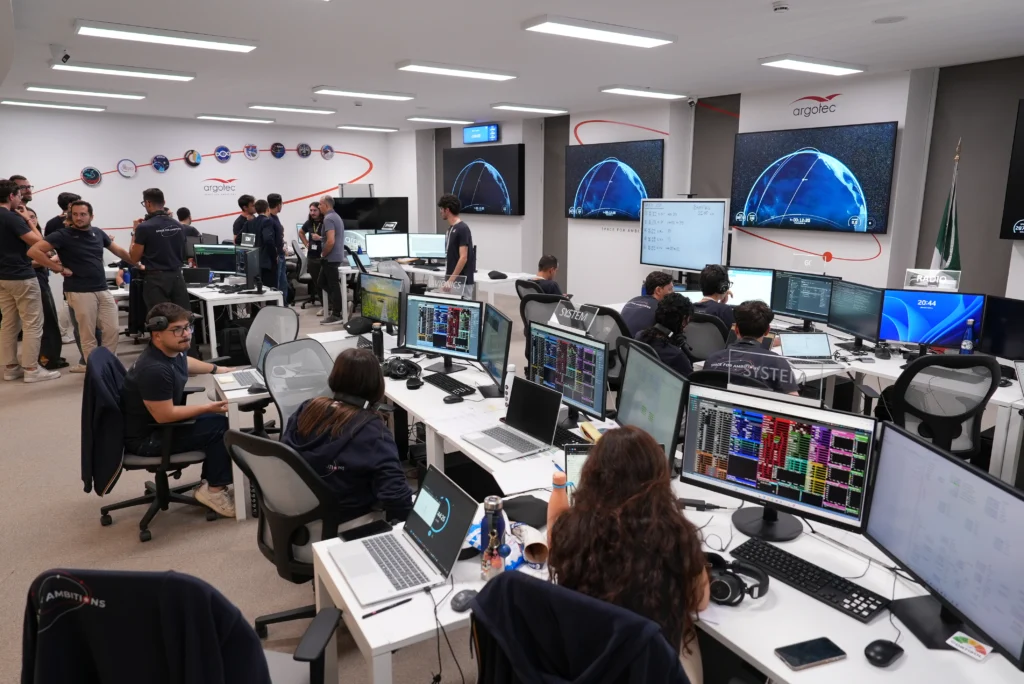
Argotec and Rheinmetall Put an Air Defence Satellite in Orbit Argotec and Rheinmetall Put an…
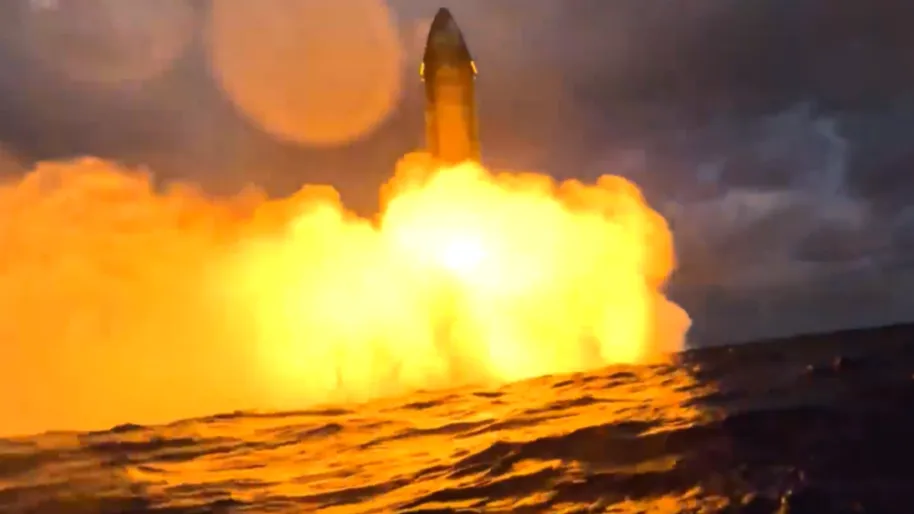
Starship Flight 14 Recap: It Reached Orbit, Delivered 26 Satellites — and Came Home the Hard Way

Aurora and Saturn at Opposition: The Sky on October 2–4, 2026
Image Credits: NASA, Neil Zeller A weekend with two stars of the show Between October…
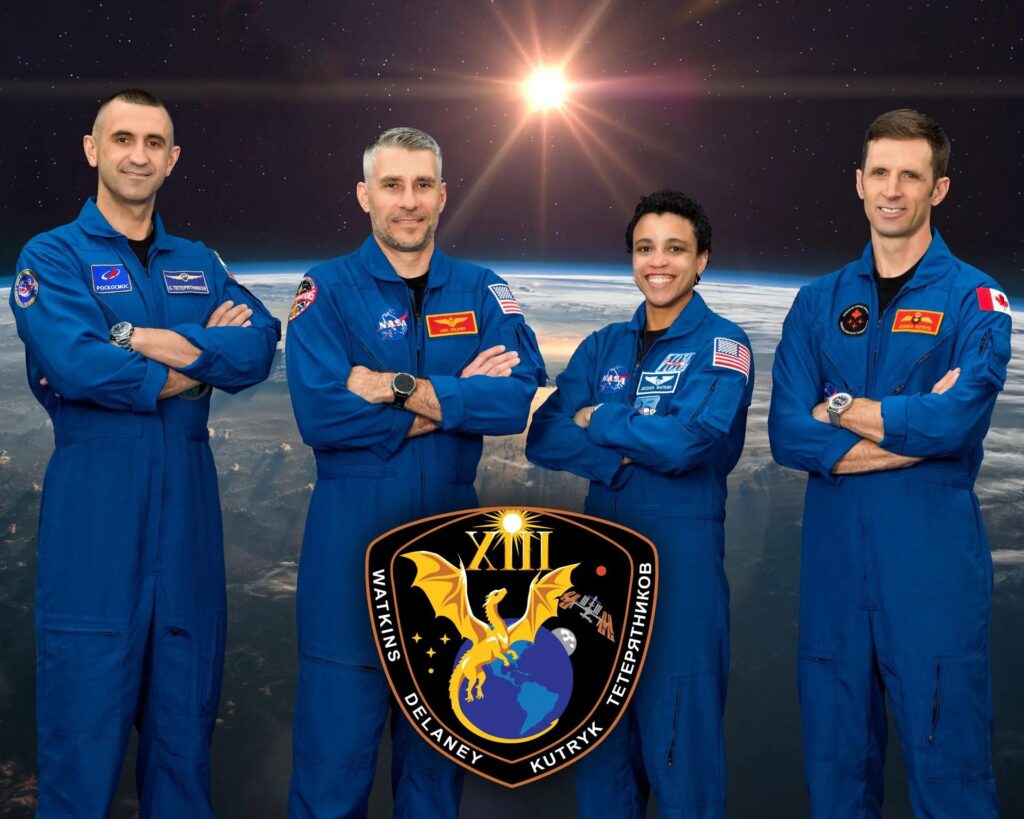
SpaceX Crew-13 Launches to the ISS: What the Mission Will Do and Why It Slipped
Image Credits: NASA SpaceX’s Crew-13 mission is set to launch today, October 1, 2026, at…
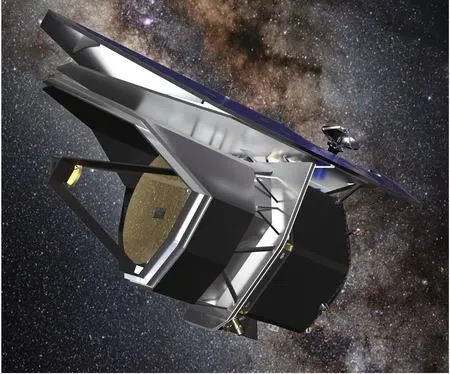
PRIMA Far-Infrared Telescope: NASA’s First Probe Explorer and What It Means for Astrophysics
Image Credits: NASA On September 23, 2026, NASA announced that PRIMA (PRobe far-Infrared Mission for…

HMS Daring Representative Visit Space Park Leicester as Royal Navy and Space Sector Strengthen Ties
tag: Space Park Leicester Cover image credits: SPL Representatives of HMS Daring have visited Space…
Testing the spacecraft’s scientific toolkit
Psyche carries three primary scientific instruments that will investigate whether asteroid Psyche could represent the exposed metallic core of an ancient protoplanet.
During the Mars flyby, each of these systems was put through a full operational test.
Looking beneath the surface with neutrons
One of the mission’s most important instruments is its gamma-ray and neutron spectrometer, designed to determine the chemical composition of asteroid Psyche.
The instrument works by detecting neutrons and gamma rays naturally emitted from a planetary surface after it is continuously bombarded by high-energy cosmic rays. Every chemical element produces a characteristic signature, allowing scientists to infer the composition of rocks and soil without physically sampling them.
Although the spacecraft remained about 4,600 kilometers above Mars at closest approach, too far away to detect gamma rays effectively, the neutron detector performed exactly as engineers had hoped.
It successfully measured an increase in neutron counts coming from the Martian surface, confirming that the instrument is fully capable of carrying out similar observations once it reaches asteroid Psyche.
Measuring Mars’ magnetic environment
Another key objective involved Psyche’s magnetometer.
Scientists are particularly interested in determining whether asteroid Psyche still preserves traces of an ancient magnetic field. Detecting remnant magnetization would strengthen the hypothesis that the asteroid may be the surviving metallic core of a young planet that lost its outer rocky layers during violent collisions early in Solar System history.
Since launch in October 2023, the magnetometer has continuously monitored the magnetic field carried by the solar wind. However, the Mars encounter marked its first opportunity to measure the magnetic environment surrounding a planetary body.
As the spacecraft crossed the bow shock, the region where the supersonic solar wind slows abruptly after interacting with Mars’ magnetic environment, the instrument recorded a clear increase in magnetic field strength.
These observations confirmed that the magnetometer can accurately capture rapidly changing magnetic conditions, an essential capability for future operations around asteroid Psyche.
A fresh perspective on the Red Planet
Psyche’s multispectral imaging system also took advantage of the flyby.
The spacecraft began photographing Mars weeks before closest approach. Initially, the planet appeared as a slender illuminated crescent because of the viewing geometry, offering an unusual perspective rarely seen by spacecraft approaching the planet.
As Psyche drew nearer, the cameras captured increasingly detailed images of familiar Martian features, including the south polar ice cap, numerous impact craters shaped by billions of years of geological history, and Huygens crater, one of the planet’s most prominent double-ring impact structures.
The mission also released a striking time-lapse video that combines images collected throughout the month-long encounter, showing Mars gradually growing larger before receding once again as the spacecraft continued on its interplanetary journey.
The cameras even detected Mars’ two tiny moons, Phobos and Deimos, from great distances. This observation serves as valuable practice for one of the mission’s future goals: searching for possible small moons orbiting asteroid Psyche.
Why this flyby matters
Planetary flybys often serve multiple purposes. While gravity assists reduce fuel requirements and reshape spacecraft trajectories, they also create valuable opportunities to validate instruments under real scientific conditions.
For Psyche, the Mars encounter has provided confidence that every major system is functioning properly years before arrival at its target.
The spacecraft now resumes its long cruise through the asteroid belt, where it will rendezvous with asteroid Psyche in 2029. Once there, it will investigate one of the Solar System’s most unusual worlds, a metal-rich object that could offer scientists an unprecedented glimpse into the hidden interiors of the rocky planets that formed more than 4.5 billion years ago.
If asteroid Psyche truly is the exposed core of an ancient protoplanet, the mission may allow researchers to study directly a type of planetary interior that normally remains buried thousands of kilometers beneath the surfaces of worlds like Earth.

Astronomy Basics
🌠 Explore the Universe Like Never Before!🔭 Discover the secrets of stars, planets, and galaxies…

[Preview] Orbital Mechanics – An Introduction
Discover the fundamentals of orbital mechanics in this beginner-friendly course—no prior experience needed! Explore how…

Human Factors and Performances
Human factors and human performance in space are critical areas of study in spaceflight operations,…
Space Physics – Basics
Explore the dynamic forces that shape our space environment in this exciting journey beyond Earth’s…