

Join the mailing list Free weekly briefing, no spam.
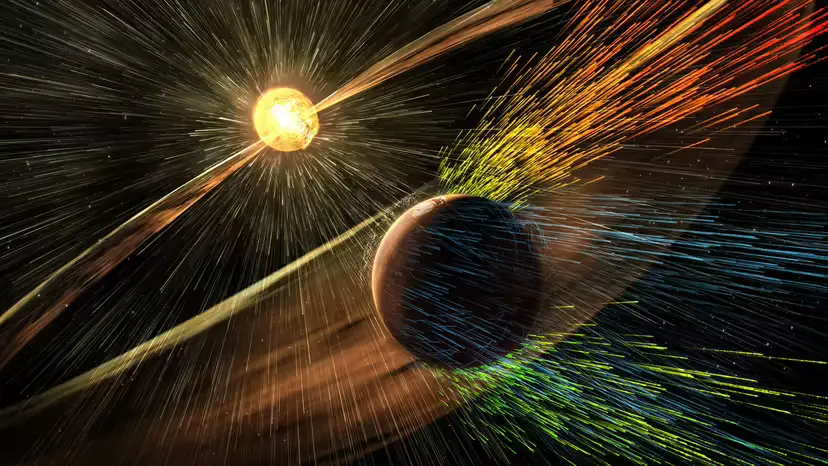
Artist’s rendering shows a solar storm hitting Mars and stripping ions from the planet’s upper atmosphere – Credits: NASA/GSFC
The SMILE mission (Solar wind–Magnetosphere–Ionosphere Link Explorer) is a joint mission between the European Space Agency and the Chinese Academy of Sciences, designed to investigate how the Sun interacts with Earth’s magnetic environment.
At its core, SMILE focuses on understanding a fundamental chain of processes:
solar wind → magnetosphere → ionosphere
This sequence defines how energy and particles emitted by the Sun propagate through space and ultimately affect Earth’s near-space environment. The mission’s name itself reflects this interconnected system, emphasizing the links between these regions rather than treating them in isolation.
Scariest Objects in Space: Ghost Nebula, Witch Head Nebula and the Demon Star
Griffin-1 Lunar Lander Completes Environmental Testing at NASA JPL

NASA 4-D Executive Space Programme: Eight Questions Answered by Paul Hawkins
Halloween Fireballs 2026: When to See the Orionid and Taurid Meteor Showers
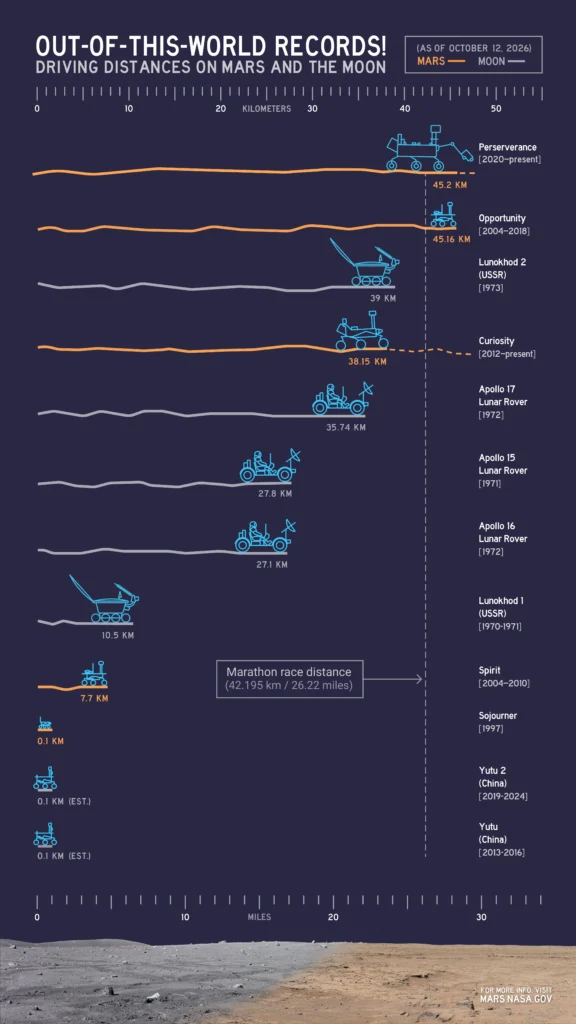
Perseverance Passes Opportunity’s Driving Record: What 45 Kilometers on Mars Really Means
Why Space Teams Fail: Paul Hawkins on NASA’s 4-D Leadership System

Leicester Scientists Help Train East Africa’s Next Generation of Climate Researchers
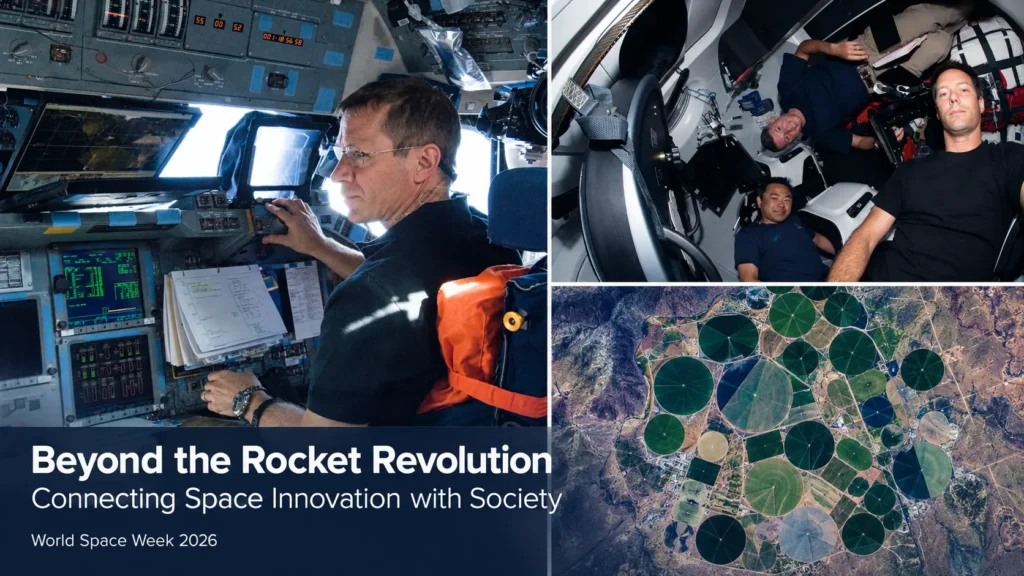
Beyond the Rocket Revolution: Connecting Space Innovation with Society

ESA and Vast: the new MoU and Europe’s future after the ISS
What It Will Study — and Why It Matters
Earth is constantly exposed to the solar wind, a stream of charged particles flowing outward from the Sun. Fortunately, our planet is shielded by its magnetic field, which deflects most of this radiation. However, the interaction between the solar wind and Earth’s magnetosphere generates a range of phenomena, including:
- Auroras (northern and southern lights)
- Geomagnetic storms
- Disruptions to satellites, navigation systems, and power grids
Understanding these effects is not just a scientific challenge—it has practical implications for modern technological infrastructure.
What sets SMILE apart is its ability to observe this system globally and continuously. Previous missions have provided highly detailed measurements at specific locations, but capturing the full picture has remained a challenge.
The overarching objective of SMILE is therefore clear:
to improve our understanding—and ultimately our prediction—of space weather.
What Makes SMILE Unique
SMILE introduces an innovative observational strategy by combining remote sensing and in-situ measurements within a single mission. This multi-layered approach enables scientists to connect large-scale structures with the physical processes driving them.
1. X-ray Imaging: A First of Its Kind
One of SMILE’s most groundbreaking features is its use of soft X-ray imaging to observe the boundary between the solar wind and Earth’s magnetosphere, known as the magnetopause.
This technique will produce the first-ever global X-ray images of this region, allowing scientists to visualize how it expands, contracts, and responds to solar activity in real time.
2. Ultraviolet Imaging of Auroras
In addition to X-rays, SMILE will use ultraviolet instruments to continuously monitor auroral activity.
Auroras are the visible manifestation of complex electromagnetic interactions, and tracking them globally provides valuable insight into how energy flows into Earth’s upper atmosphere.
3. Direct Measurements in Space
Complementing its imaging capabilities, SMILE will also carry instruments to directly measure:
- Solar wind particles
- Magnetic fields around Earth
This combination of imaging + direct sampling is what makes SMILE particularly powerful. It allows researchers to correlate what they see on a global scale with what is happening locally at the particle level.
Orbit and Mission Design
SMILE’s orbit is specifically engineered to support its scientific goals.
- A highly elliptical orbit extending up to approximately 120,000 km from Earth
- Long observation periods at high altitude
- A nominal mission duration of around three years
This trajectory is critical. By moving far from Earth, the spacecraft gains a global vantage point of the magnetosphere, enabling continuous observation of large-scale structures rather than fragmented snapshots.
A Step Toward System-Level Understanding
SMILE represents a shift in how we study space weather. Instead of focusing solely on localized measurements, it aims to capture the entire system in action.
By linking solar activity to its effects on Earth in a continuous, global framework, the mission will help bridge a longstanding gap in heliophysics. In doing so, it brings us closer to a future where space weather can be not only understood, but reliably predicted.
The SMILE mission is more than just another scientific satellite—it is a new type of observatory for near-Earth space.
Through its combination of global imaging, in-situ measurements, and innovative mission design, SMILE will provide an unprecedented view of the dynamic relationship between the Sun and Earth. Its findings are expected to play a crucial role in advancing both fundamental science and the resilience of space-based and ground-based technologies in an increasingly space-dependent world.


4xamro