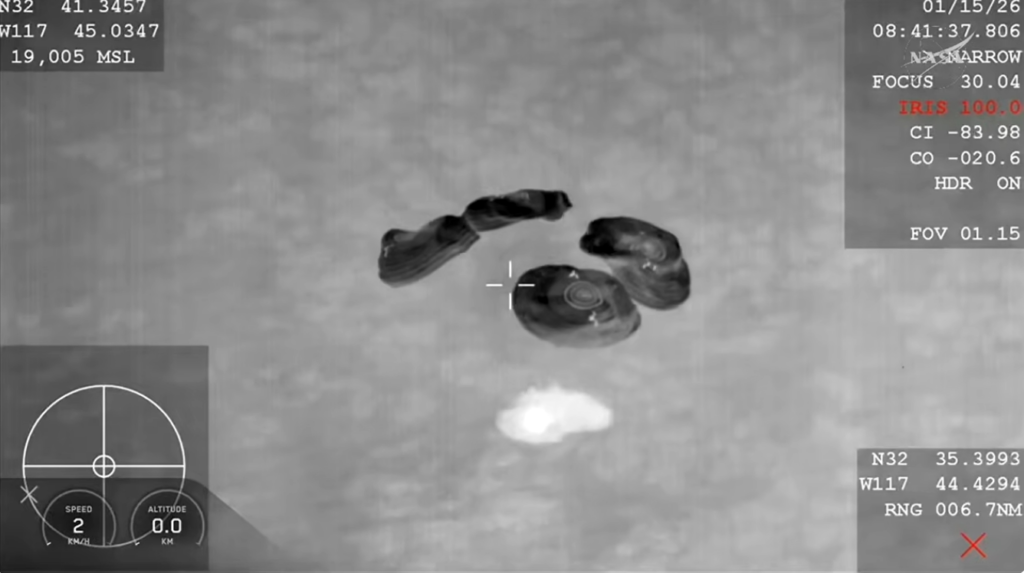
For the first time in the history of the International Space Station, NASA has carried out a medical evacuation from orbit, bringing four astronauts back to Earth weeks ahead of schedule. The unprecedented decision underscores both the risks of long-duration spaceflight and the growing maturity of modern crew-return systems.
The astronauts were part of a SpaceX-operated mission that had been living and working aboard the ISS since late 2025. Their return was accelerated after doctors determined that one crew member required medical evaluation and care that could not be fully provided in microgravity. While the agency has declined to release details about the condition, officials emphasized that the situation was handled methodically rather than as a sudden emergency.
A Controlled Departure from Orbit
NASA and SpaceX began preparing for an early departure once medical teams on the ground concluded that returning to Earth was the safest course of action. Planned station activities were adjusted, including the cancellation of a scheduled spacewalk, and remaining astronauts aboard the ISS were briefed on how to manage operations with a reduced crew.
The astronauts boarded their Crew Dragon spacecraft and undocked from the station on January 14. Less than half a day later, the capsule reentered Earth’s atmosphere and splashed down in the Pacific Ocean off the California coast. Recovery teams quickly secured the spacecraft and assisted the crew, who were then transported for medical checks.
All four astronauts were reported to be in stable condition following landing.
New Molecules, Old Questions: What Curiosity’s Discovery Really Means for Life on Mars
Cover Image: Curiosity Rover taking a Selfie – Credit: NASA/JPL-Caltech/MSSS In a discovery that is…

ESA and EDA Deepen Strategic Alignment on Earth Observation for Europe’s Security Future
The Global Space Industry in 2026: Geopolitics, Power, and the New Orbital Order

When the Hype Meets Physics: Space Radiation and the Reality of Living Beyond Earth

A New Map of the Asteroid Belt Is Rewriting the Solar System’s Origin Story

New Glenn 3: A Landmark Landing, an Orbital Miss — and What It Means for Blue Origin’s Future
When Silence Becomes Strategy: Voyager 1 and the Art of Letting Go

Space Radiation Doesn’t Sleep: Why Its Effects on the Human Body Are Never “Almost Zero”

From Leicester to Lunar Orbit: The Voice Behind Artemis II
Celeste Takes Flight: Europe’s Next Step in Satellite Navigation Innovation

Dallas Campbell to Bring the Story of Space Exploration to Life at Space Park Leicester

UK Space Science Sets Course for 2035: Leicester Event to Shape the Future
Boeing Starliner – Key Anomalies Analysis
Long March-10: The Rocket That Could Take China to the Moon
The Liqing-2 Engine: Powering China’s Commercial Reusable Rockets

China Tests a 240-Ton Reusable Rocket Engine

Taking AI to a New REALM: Space-Optimised Machine Learning Comes of Age at Space Park Leicester
Why This Matters
Although astronauts routinely return early for technical reasons or mission changes, a medical evacuation represents a new chapter for human spaceflight. Since the ISS became permanently inhabited in 2000, crews have experienced illnesses and injuries in orbit, but none severe enough to justify ending a mission early—until now.
The event highlights the importance of having reliable, rapidly deployable return vehicles permanently docked to the station. SpaceX’s Crew Dragon, capable of autonomous undocking and fast reentry, made the early return possible without placing additional strain on the remaining ISS crew.
Impact on the Space Station
With the departure of the four astronauts, the ISS is now operating with a smaller crew than usual. Core systems remain fully functional, but some research activities and maintenance tasks may be delayed until the next crew arrives. NASA is reportedly evaluating whether an upcoming mission should be moved forward to restore full staffing.
Despite the disruption, station operations are expected to continue safely.
Looking Ahead to Deep-Space Missions
NASA officials have framed the evacuation not as a failure, but as proof that contingency planning works. As space agencies prepare for longer missions—such as lunar surface stays and future voyages to Mars—the ability to respond effectively to medical issues will be critical.
In deep space, where a rapid return to Earth won’t be possible, lessons learned from this incident may help shape onboard medical capabilities, crew training, and mission design.
For now, the successful evacuation stands as a reminder that while spaceflight remains inherently risky, human space exploration is becoming increasingly resilient.