
Join the mailing list Free weekly briefing, no spam.
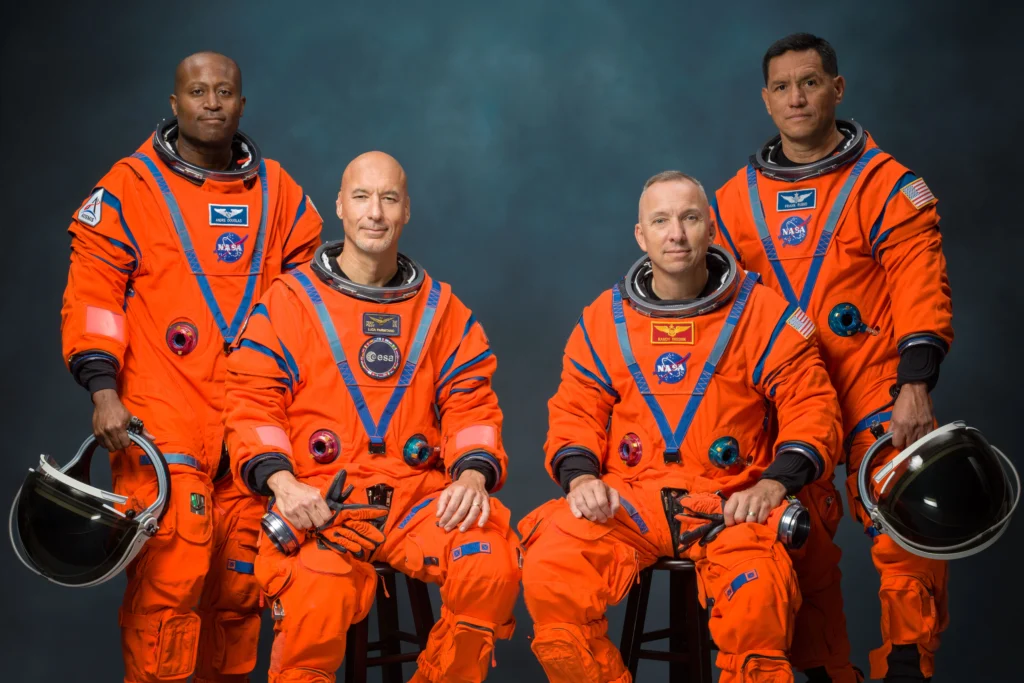
Cover Image: The Artemis III crew poses for an official portrait (from left: Andre Douglas, Luca Parmitano, Randy Bresnik, Frank Rubio). Credit: NASA/Bill Stafford
More than half a century after the Apollo era transformed humanity’s relationship with the Moon, NASA is preparing for another defining chapter in space exploration. With the announcement of the Artemis III crew and updated mission plans, the agency has taken a significant step toward establishing a long-term human presence beyond Earth.
Scheduled for launch in 2027, Artemis III represents one of the most ambitious and technically demanding missions ever attempted. While many space enthusiasts originally expected Artemis III to be the mission that returned astronauts directly to the lunar surface, NASA has refined its strategy. Instead, Artemis III will serve as a crucial proving ground for the technologies, spacecraft, and operational procedures that will enable future Moon landings and, eventually, human journeys to Mars.
A New Role for Artemis III
The Artemis program was conceived as NASA’s roadmap for returning humans to the Moon while creating the infrastructure necessary for sustainable exploration. Artemis I successfully demonstrated the Orion spacecraft in an uncrewed flight around the Moon in 2022, while Artemis II carried astronauts on a historic lunar flyby mission.
Artemis III now takes on a different but equally important responsibility.
Rather than landing on the Moon, the mission will conduct a series of complex operations in low Earth orbit. NASA’s Orion spacecraft, launched atop the powerful Space Launch System (SLS) rocket, will rendezvous and dock with next-generation lunar landers being developed by SpaceX and Blue Origin. These demonstrations will test the systems that future crews will depend on when traveling between lunar orbit and the Moon’s surface.
The mission is often compared to Apollo 9, the 1969 mission that tested the Lunar Module in Earth orbit before Apollo astronauts attempted the first lunar landing. Just as Apollo 9 paved the way for Apollo 11, Artemis III is designed to validate the architecture that will support future lunar surface missions.
The Crew Leading the Next Chapter
NASA has selected a highly experienced international crew for Artemis III:
- Commander Randy Bresnik
- Pilot Luca Parmitano of the European Space Agency
- Mission Specialist Andre Douglas
- Mission Specialist Frank Rubio
The selection reflects the increasingly international nature of modern space exploration. Parmitano’s assignment is particularly significant, marking a major milestone in cooperation between NASA and Europe as international partners contribute to the future of lunar exploration.
Together, the crew brings extensive experience in aviation, engineering, long-duration spaceflight, and International Space Station operations, making them ideally suited for a mission that will test some of the most advanced spacecraft systems ever developed.
Why These Tests Matter
The future of lunar exploration depends on more than simply reaching the Moon. It requires a transportation system capable of safely moving astronauts between Earth, lunar orbit, and the lunar surface.
Artemis III will verify that Orion can successfully rendezvous and dock with commercial Human Landing Systems developed by SpaceX and Blue Origin. These spacecraft represent a new era of public-private collaboration, combining NASA’s exploration goals with the innovation and rapid development cycles of commercial industry.
Successful demonstrations will reduce risk for future missions and provide engineers with invaluable operational data. Every docking maneuver, communications test, and systems evaluation will contribute directly to future crewed landings.
The mission also demonstrates NASA’s commitment to building a sustainable exploration architecture rather than pursuing a single symbolic landing. Unlike Apollo, Artemis is designed to create a long-term presence that supports scientific research, technology development, and preparation for eventual human missions to Mars.

Scariest Objects in Space: Ghost Nebula, Witch Head Nebula and the Demon Star
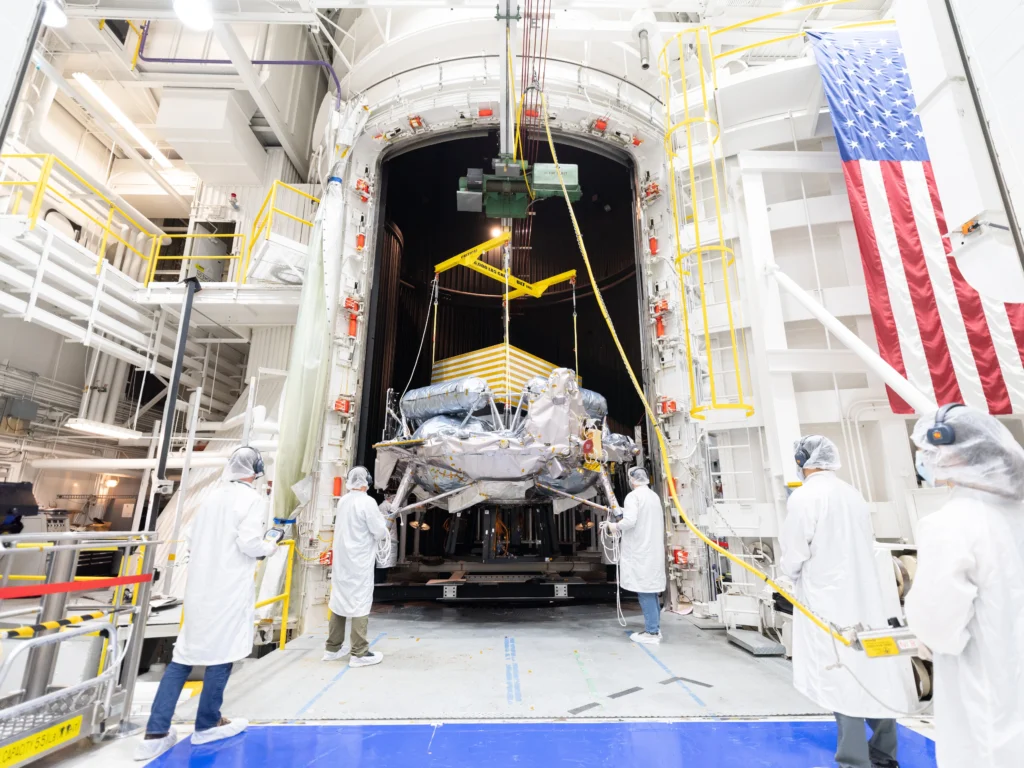
Griffin-1 Lunar Lander Completes Environmental Testing at NASA JPL

NASA 4-D Executive Space Programme: Eight Questions Answered by Paul Hawkins

Halloween Fireballs 2026: When to See the Orionid and Taurid Meteor Showers
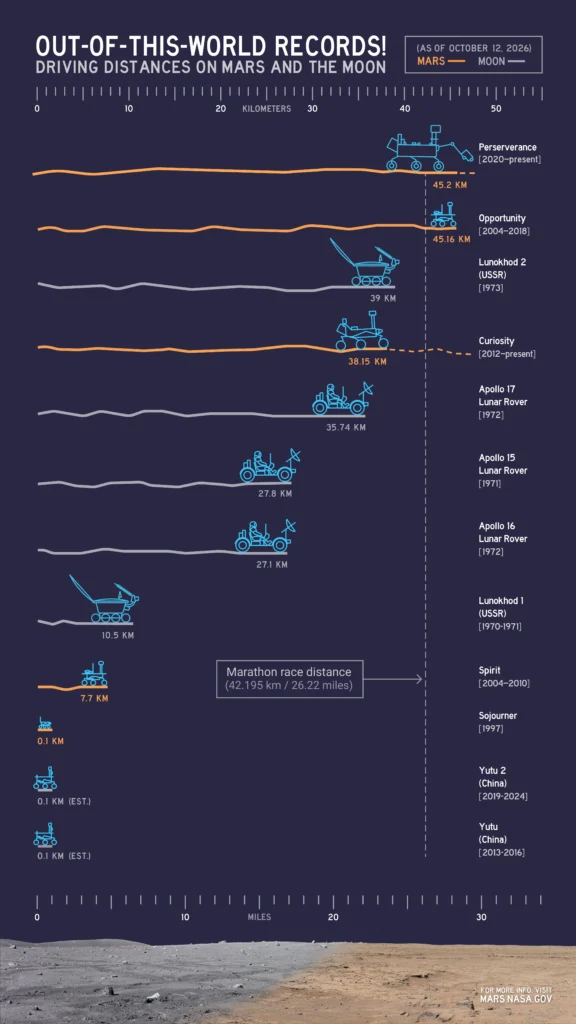
Perseverance Passes Opportunity’s Driving Record: What 45 Kilometers on Mars Really Means
Why Space Teams Fail: Paul Hawkins on NASA’s 4-D Leadership System
The Road to the Lunar South Pole
One of the ultimate objectives of the Artemis program is exploring the Moon’s south polar region. This area has become a major focus for scientists because permanently shadowed craters may contain significant deposits of water ice.
Water is far more than a scientific curiosity. It can provide drinking water for astronauts, generate breathable oxygen, and even be converted into rocket fuel. These resources could transform the Moon into a stepping stone for deeper exploration across the Solar System.
By validating the systems needed to reach and operate around the Moon, Artemis III lays the foundation for future missions that will establish a sustained human presence in these strategically important regions.
A Bridge to Mars
While the Moon is the immediate destination, Mars remains the long-term objective.
NASA views Artemis as a testing ground for technologies and operational experience that astronauts will need during future missions to the Red Planet. Deep-space navigation, life-support systems, surface operations, and long-duration crew missions can all be refined through lunar exploration before humanity attempts the far greater challenge of reaching Mars.
In this sense, Artemis III is much more than an orbital test mission. It is a bridge between today’s capabilities and tomorrow’s interplanetary ambitions.
Looking Ahead
Space exploration advances through carefully planned steps rather than giant leaps. Artemis III embodies that philosophy. Although it will not place astronauts on the lunar surface, its success will determine how quickly humanity can establish a sustainable presence on the Moon.
The mission represents a crucial transition from demonstration flights to operational deep-space exploration. By proving the technologies that future crews will depend upon, Artemis III may ultimately become one of the most important missions of the entire Artemis program.
When historians look back at humanity’s return to the Moon, they may see Artemis III not as a detour, but as the mission that made everything that followed possible.