
Join the mailing list Free weekly briefing, no spam.
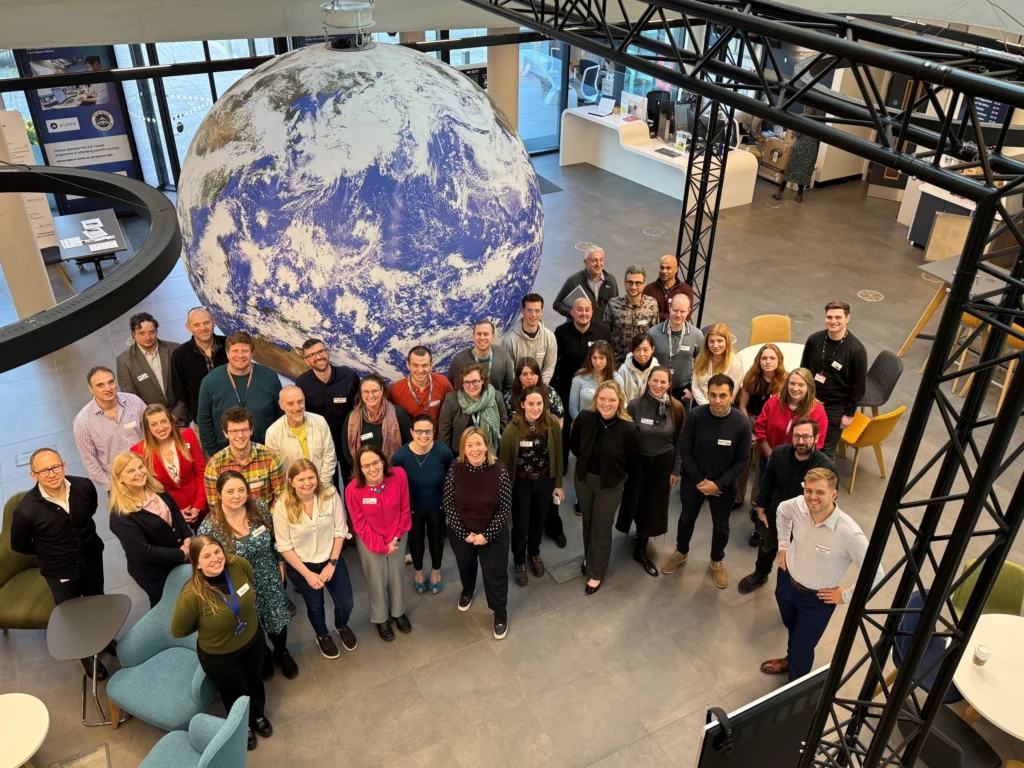
UK planetary science community – Credits SPL
An international group of planetary scientists and space experts gathered at Space Park Leicester to discuss a potential future mission to one of the most intriguing worlds in the Solar System: Saturn’s icy moon Enceladus.
The workshop brought together around 90 researchers and space professionals to explore the scientific goals and technological challenges of a proposed European Space Agency (ESA) L4-class mission to the Saturn system. The meeting was hosted at the University of Leicester’s £100 million space research and innovation hub, which has quickly become a key centre for collaboration in the UK space sector.
A Prime Candidate in the Search for Life
Enceladus has emerged as one of the most promising places to search for life beyond Earth. Beneath its icy surface lies a global subsurface ocean, kept liquid by internal heat and enriched by complex chemistry—conditions that may potentially support microbial life.
Evidence for this hidden ocean was dramatically revealed during the historic Cassini–Huygens mission. During multiple flybys, the spacecraft detected towering plumes of water vapor and ice particles erupting from fractures in Enceladus’ south polar region. These plumes vent ocean material directly into space, making it possible for spacecraft to sample the moon’s interior without drilling through kilometers of ice.
Scariest Objects in Space: Ghost Nebula, Witch Head Nebula and the Demon Star
Griffin-1 Lunar Lander Completes Environmental Testing at NASA JPL
NASA 4-D Executive Space Programme: Eight Questions Answered by Paul Hawkins
Halloween Fireballs 2026: When to See the Orionid and Taurid Meteor Showers
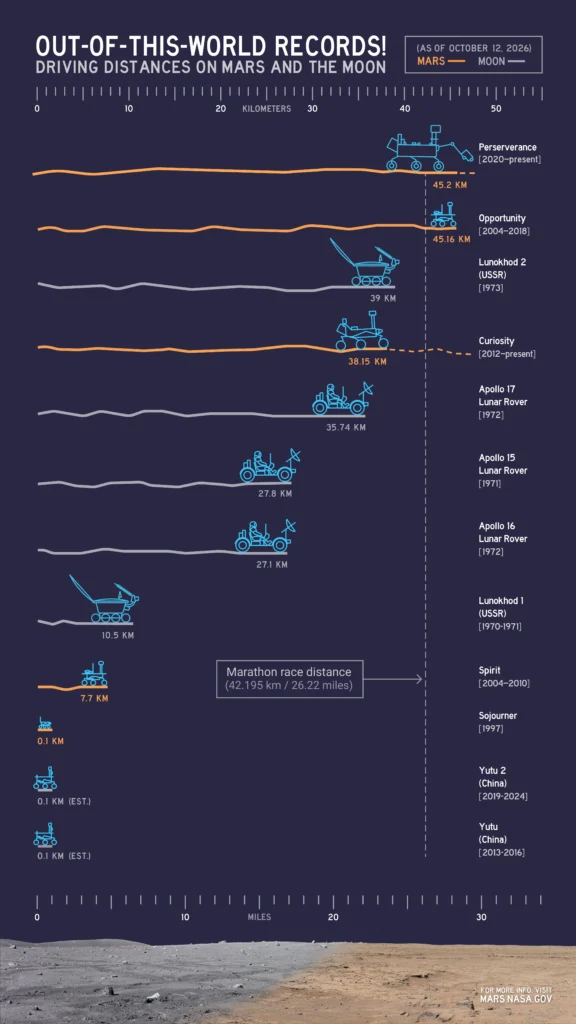
Perseverance Passes Opportunity’s Driving Record: What 45 Kilometers on Mars Really Means
Why Space Teams Fail: Paul Hawkins on NASA’s 4-D Leadership System
Leicester Scientists Help Train East Africa’s Next Generation of Climate Researchers
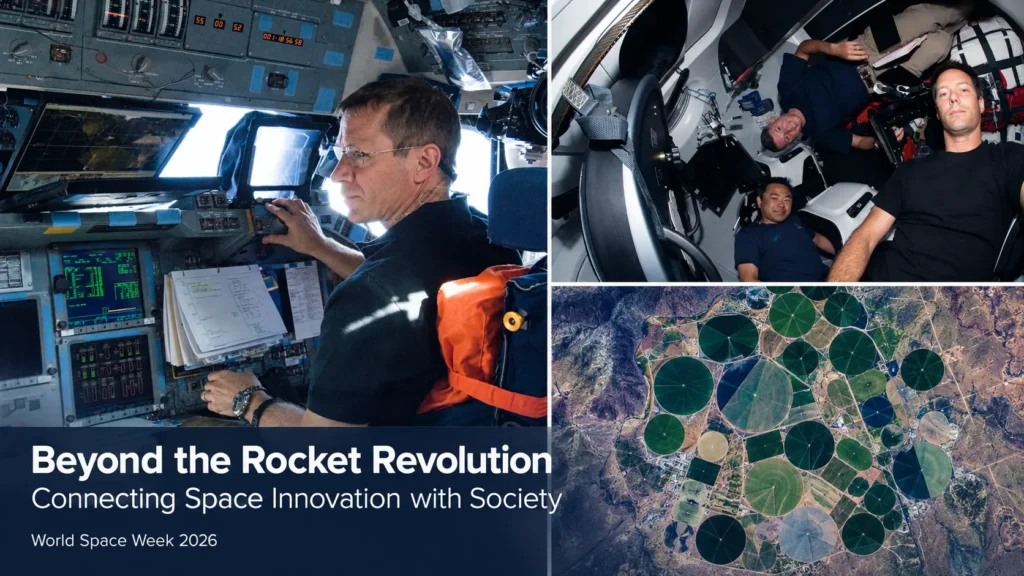
Beyond the Rocket Revolution: Connecting Space Innovation with Society
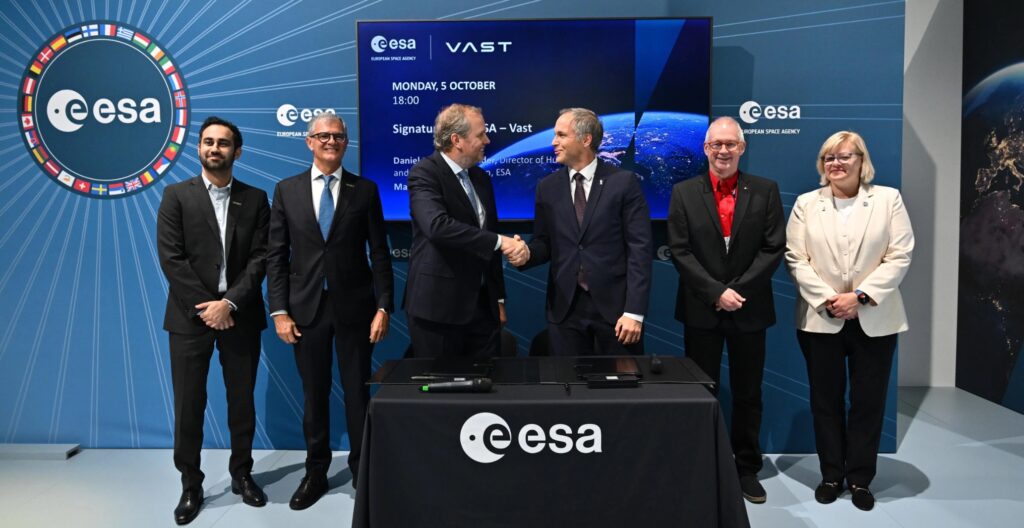
ESA and Vast: the new MoU and Europe’s future after the ISS
Photonic Quantum Processor in Orbit: What the First Test Proved, and What It Didn’t
Planning a Next-Generation Exploration Mission
According to Emma Bunce, Director of the Institute for Space at the University of Leicester and a member of ESA’s L4 Expert Science Committee, a future mission could launch in the 2040s, with scientific operations beginning in the 2050s.
This timeline is partly driven by orbital geometry: by that time, Enceladus’ southern hemisphere—where the plumes originate—will be illuminated by the Sun, allowing improved observation conditions. If realized, the mission would arrive roughly 50 years after Cassini first discovered the plumes in 2005.
The workshop featured contributions from leading scientists involved in the early mission studies, including:
- Zita Martins from Instituto Superior Técnico at the University of Lisbon, chair of the ESA Expert Science Committee
- Martin Haag, who is coordinating the L4 mission study at ESA
Martins highlighted the scientific potential of the concept mission, which could orbit Enceladus, sample plume material directly, and potentially deploy a lander to investigate the icy surface.
Developing the Science and Instruments
The workshop was organized by four UK scientists currently contributing to ESA’s preliminary mission studies:
- Rachael Hamp (The Open University)
- Emma Bunce (University of Leicester)
- Vassi Spathis (University of Leicester)
- Carly Howett (University of Oxford)
Participants explored a wide range of possible research areas and instrument concepts for the mission. Topics discussed included:
- Seismology experiments to probe Enceladus’ internal structure
- Detection of potential biosignatures in plume material
- Global thermal mapping of the moon’s surface
- Next-generation ultraviolet and X-ray instrumentation for studying the Saturn system
- Magnetic field investigations to understand interactions between Enceladus and Saturn’s magnetosphere
These discussions aim to shape the scientific roadmap and payload concepts that could eventually form the backbone of ESA’s L4 mission proposal.
Strong UK Involvement
The workshop also included participation from the UK Space Agency, reflecting the United Kingdom’s longstanding role in planetary science missions.
Jo Morris, Project Manager within the agency’s National Space Science Programme, emphasized the UK’s commitment to supporting the mission concept and ensuring strong British participation in its development.
A Growing Hub for Space Research
The event further highlighted the role of Space Park Leicester as a key centre for collaboration between academia, industry, and government in the UK space sector. Opened in 2022 by Tim Peake, the facility hosts advanced research, development, and manufacturing capabilities covering the entire satellite lifecycle—from spacecraft engineering to downstream data applications.
With increasing international attention focused on ocean worlds like Enceladus, the discussions held in Leicester represent an early step toward what could become one of the most ambitious planetary science missions of the coming decades.
If approved, ESA’s L4 mission could transform our understanding of ocean worlds—and perhaps bring humanity closer to answering one of science’s biggest questions: are we alone in the Universe?